Pope Notes 2.7: April 21-29, 2014

I’ve been struggling a bit to find the right way – i.e., the most useful, informative and ecumenical way – to include Pope Francis in these musings. As I indicated in my first “Pope Notes” a couple of weeks ago, I am enamored of the Christ-like presence he has brought to the church he heads, and like many millions across the planet – from every place and every religion – I see hope where before was stagnation, light where before was obfuscation, and intent to goodness that has rarely been so beautifully spotlighted as it has since his elevation to the Throne of Peter.

It was “I am a sinner” with which he introduced himself to his new protectorate and the world, giving each of us permission to admit the same in a new and more cleansing way than ever before. His humble gestures – the tiny car, the dormitory room, the plain white cassock, the iron cross – speak volumes, and his ability to draw forth profound lessons and cogent observations from even the most unheralded parts of the Gospel – and to deliver them in plain speaking that comes out sounding like down-home Shakespeare – has already hugely expanded the lexicon of scriptural insights available to us all, and promises to take us well beyond previous limits in the days and years to come.

A smiling Pope Francis greets his fellow believers in St. Peter's Square. It is said he hardly ever smiled before becoming Pope, and now he can't seem to help himself.

A smiling Pope Francis greets his fellow believers in St. Peter’s Square. It is said he hardly ever smiled before becoming Pope, and now he can’t seem to help himself.

And, therein lies the problem for me, since he is so prolific in so many ways – at least seven public addresses (homilies, sermons, speeches, exhortations) on a wide range of topics delivered every week, as well as a heavy slate of administrative actions, both bold and brave, occurring at a snowballing rate to prove his actions are as good as his words – that I could truly spend hours a day, and millions of words, trying to cover it all. Yet, I believe it is important to do this work because the example of a Christ-like life, so brilliantly played out by Francis, is far rarer than any pearl of great price, so beginning with this post, a new approach: A weekly “Pope Notes” report, as brief as possible, to highlight the best of his words and actions. I’m told by one of my good friends that such an approach would be of great value to him, and I can only hope that the same holds true for many of you.

Monday, 4.21: The Day After Easter

Tweet of the day: “Each encounter with Jesus fills us with joy, with that deep joy which only God can give.”

“Regina Caeli” Prayers:

At noon on Monday, Francis appeared at his study window to pray the “Regina Caeli” (or, Queen of Heaven) prayer – a traditional Catholic prayer to Mary used in the days following Easter – with those assembled in the square. An excerpt from his remarks:

“…Let us allow the joyous wonder of Easter Sunday to shine forth in our thoughts, glances, behavior, gestures and words…. If only we were so luminous! But this is not just cosmetic! It comes from within, from a heart immersed in the source of this joy, like that of Mary Magdalene, who wept over the loss of her Lord and could hardly believe her eyes seeing him Risen.

“Whoever experiences this becomes a witness of the Resurrection, for in a certain sense he himself has risen, she herself has risen. He or she is then capable of carrying a ray of light of the Risen One into various situations: to those that are happy, making them more beautiful by preserving them from egoism; to those that are painful, bringing serenity and hope.”

Wednesday, 4.23, St. George’s Day:

General Audience:

There having been no activities to report on Tuesday, the Vatican made up for it on Wednesday, with the Pope’s usual outdoor General Audience in St. Peter’s Square, but falling, as it did, between Easter Sunday and “Canonization Day” for the two Popes John XXIII and John Paul II, the crowds were great and Francis took longer than usual to direct his open-air platform through the people. Once he arrived at the altar, however, he was in rare form and I can’t resist the temptation to include an excerpt that is longer than I’d like:

“Dear Brothers and Sisters Buongiorno!

This week is the week of joy, we celebrate the Resurrection of Jesus. It is a true, profound joy, based on the certainty that Christ is now risen, He is dead no more, but is alive and active in the Church and in the world . This certainty dwells in the hearts of believers from that Easter morning, when the women went to the tomb of Jesus and the angels said to them, “Why do you seek the living one among the dead” (Lk 24,5) …

“‘Why do you seek the living one among the dead?’ These words are a milestone in history; but also a ‘stumbling block’ if we do not open ourselves to the Good News, if we believe that a dead Jesus is less of a nuisance than a living Jesus! Instead, in our daily journey, we often need to hear: Why do you seek the living one among the dead? How often do we look for life among dead things, things that cannot give life, that are here today and gone tomorrow. ‘Why do you seek the living one among the dead?’

“We need [these words] when we close ourselves within many forms of selfishness or self- complacency; when we allow ourselves to be seduced by the earthly powers and the things of this world, forgetting God and neighbor; when we place our trust in worldly vanities, in money, in success. Then the Word of God tells us: ‘Why do you seek the living one among the dead?’ Why are you looking there, it can’t give you life; it will give you joy for a day, a week, a month, a year, and then? ‘Why do you seek the living one among the dead?’ This sentence needs to enter into our heart! ‘Why do you seek the living one among the dead?’ Out loud! ‘Why do you seek the living one among the dead?’ And today when you go home say it in your heart, in silence ask why do I look among dead things for life? It will do us good!…

“You, why are you looking among the dead for one who is alive? you who close in on yourself after a failure or you who no longer have the strength to pray? Why are you looking among the dead for one who is alive, you who feel alone, abandoned by friends, and perhaps even by God? Why are you looking among the dead for one who is alive you who have lost hope or you who feel imprisoned by your sins? Why are you looking among the dead for one who is alive you who aspire to beauty, spiritual perfection , justice, peace?…

“Let us repeat the Angels question to have it in our heart and mind and let each of us answer in silence ‘Why do you seek the living one among the dead?’ Look dear brothers and sisters let’s not look among those many tombs that promise everything and give nothing. Let’s look for Him, Jesus isn’t in the tomb. He is risen! He is alive and gives life!” (For the full sermon: http://www.news.va/en/news/pope-audience-why-do-you-seek-the-living-among-the )

Pope’s Feast Day

For the second year in a row, St. George’s Day on April 23 was observed by the Vatican in “a special way” to honor the Pope, whose given name is, of course, Jorge, or George… just like mine :-).

Thursday, 4.24:

Tweet of the day: “A simple lifestyle is good for us, helping us better share with those in need.”

Santa Martha Mass:

Thursday was another day full of things to report, not the least of which was the Pope’s resumption of his more-or-less-daily morning masses in the chapel of the Domus Sanctae Marthae, or Santa Martha dormitory, where he lives. These brief but pointed homilies are my favorites because they are short, pithy and never fail to cast a new light on old ideas, and this one, focused upon Bat-like Christians, is no exception. From the Vatican report:

“Taking his cue from the gospel reading of the risen Christ appearing before his disciples, Pope Francis began by noting how instead of rejoicing over his resurrection, the disciples were struck by fear instead of joy.

“‘This is a Christian’s disease. We’re afraid of joy. It’s better to think: Yes, yes, God exists, but He is there. Jesus has risen and He is there. Somewhat distant. We’re afraid of being close to Jesus because this gives us joy. And this is why there are so many ‘funeral’ (mournful) Christians, isn’t it? Those whose lives seem to be a perpetual funeral. They prefer sadness to joy. They move about better in the shadows, not in the light of joy, like those animals who only come out at night, not in the light of day, who can’t see anything. Like bats. And with a little sense of humor we can say that there are Christian bats who prefer the shadows to the light of the presence of the Lord.”

“But, the Pope continued, Jesus through his resurrection, gives us joy, the joy of being Christians and following him closely, the joy of traveling on the path of the Beatitudes.
‘So often, we are either upset by this joy or fearful or we think we have seen a ghost or believe that Jesus is just a way of behaving. ‘We are Christians and so we must behave like this.’ But where is Jesus? ‘No, Jesus is in Heaven.’ Do you talk with Jesus? Do you say to Jesus: ‘I believe that You are alive, that You are risen, that You’re near me. That You will never abandon me’? A Christian life should be this: a dialogue with Jesus, because – this is true – Jesus is always with us, always there alongside us with our problems and our difficulties, with our good works.”
(For the full report: http://www.news.va/en/news/the-popes-mass-at-santa-marta-no-fear-of-joy-2)

Interfaith Outreach: Buddhist Feast of Vesakh:

I am amazed at the amount of time and energy Pope Francis seems to be dedicating to the task of uniting faiths, of removing divisions, of building bridges. And, last Thursday, in keeping with this thrust, the Vatican released a message of solidarity with Buddhists for the Feast of Vesakh. An excerpt:

“As Buddhists and Christians, we live in a world all too often torn apart by oppression, selfishness, tribalism, ethnic rivalry, violence and religious fundamentalism, a world where the “other” is treated as an inferior, a nonperson, or someone to be feared and eliminated if possible. Yet, we are called, in a spirit of cooperation with other pilgrims and with people of good will, to respect and to defend our shared humanity in a variety of socioeconomic, political and religious contexts. Drawing upon our different religious convictions, we are called especially to be outspoken in denouncing all those social ills which damage fraternity; to be healers who enable others to grow in selfless generosity, and to be reconcilers who break down the walls of division and foster genuine brotherhood between individuals and groups in society.”

Mass to Honor New Saint Jose de Anchieta:

Almost lost in the hubbub surrounding the Canonization Mass for Sts. John XXIII and John Paul II was the elevation earlier in the month of St. José de Anchieta (1534-1597), founder of both Sao Paulo and Rio de Janeiro. Among the Popes remarks at Thursday afternoon’s Mass to honor new St. José:

St. José de Anchieta knew how to communicate what he had experienced with the Lord, what he had seen and heard from Him … He was a boy aged nineteen. He had so much joy that he was able to found a nation: he put in place the cultural foundations of a nation, in Jesus Christ. He had not studied theology, and he had not studied philosophy; he was a boy! But he had felt the gaze of Jesus Christ, and he had let himself be filled with joy, and chose light. This was and is his holiness. He was not afraid of joy”.

Friday, 4.25:

Tweet of the day: “We must not let ourselves fall into the vortex of pessimism. Faith can move mountains!”

South African Bishops “Ad Limina” Visit:

Every five years, all Bishops are required to join with the others serving in their respective countries (or sometimes regions, where the countries are small) on a pilgrimage to Rome to meet with their colleagues and review the progress being made back home. They are also greeted on these visits by the Pope, who may take advantage of the opportunity to express his concerns, delights or congratulations to those in attendance, depending upon the circumstances. Pope Francis has not been bashful in expressing his opinions to his brother bishops on these occasions, including the Ad Limina Visit of the bishops serving in South Africa, Botswana and Swaziland, just concluded. From the report of his audience with them:

“[Pope Francis] notes the serious pastoral challenges [their] communities face, according to the bishops, such as the declining birth rate which affects the number of vocations, the tendency of some Catholics to drift away from the Church in favor of other groups who seem to promise something better, and abortion, which ‘compounds the grief of many women who now carry within them deep physical and spiritual wounds after succumbing to the pressure of a secular culture which devalues God’s gift of sexuality and the right to life of the unborn’. He adds, ‘The rate of separation and divorce is high, even in many Christian families, and children frequently do not grow up in a stable home environment. We also observe with great concern, and can only deplore, an increase in violence against women and children. All these realities threaten the sanctity of marriage, the stability of life in the home and consequently the life of society as a whole. In this sea of difficulties, we bishops and priests must give a consistent witness to the moral teaching of the Gospel”. (Full report: http://www.news.va/en/news/pope-meets-bishops-of-southern-africa)

Saturday, 4.26:

Tweet of the day: “None of us can think we are exempt from concern for the poor and for social justice.”

With Sunday’s dual canonization of two popular, recent Popes almost nigh, there was much focus on preparations for the unknown numbers who would be arriving. (It turned out to be approximately 800,000.) From the Vatican report:

“Over two and a half thousand volunteers will be working throughout the weekend to distribute four million free water bottles and hand out 150,000 free liturgical booklets. They’ll also be providing information about free access to the Mass and disability assistance points, which will be located in three areas close to St Peter’s Square… Up to a thousand extra portable toilets are being set up close to St Peter’s and surrounding areas, while 17 giant video screens will be broadcasting the Mass live around the city, including one at the Terminal 3 departure lounge of Rome’s Fiumicino airport.[emphasis mine]

“[Today, Saturday,] there will be a prayer vigil starting at 5pm in the Basilica of St Paul Outside the Walls, followed by adoration of the Blessed Sacrament and an exhibition of items pertaining to Pope John XXIII and the opening of the Second Vatican Council. Other prayer vigils, with the opportunity for Confession in different languages, will take place throughout the night in churches around the city centre, including the church of St Mark beside the Campidoglio for English speaking pilgrims and visitors…

Sunday, 4.27: Canonization of Saint John XXIII and Saint John Paul II

From Francis’s homily following the formal declaration of both former Popes as Saints:

“…Saint John XXIII and Saint John Paul II were not afraid to look upon the wounds of Jesus, to touch his torn hands and his pierced side. They were not ashamed of the flesh of Christ, they were not scandalized by him, by his cross; they did not despise the flesh of their brother because they saw Jesus in every person who suffers and struggles. These were two men of courage, filled with the boldness of the Holy Spirit, and they bore witness before the Church and the world to God’s goodness and mercy.

“They were priests, bishops and popes of the twentieth century. They lived through the tragic events of that century, but they were not overwhelmed by them. For them, God was more powerful; faith was more powerful – faith in Jesus Christ the Redeemer of man and the Lord of history; the mercy of God, shown by those five wounds, was more powerful; and more powerful too was the closeness of Mary our Mother.

“In these two men, who looked upon the wounds of Christ and bore witness to his mercy, there dwelt a living hope and an indescribable and glorious joy. The hope and the joy which the risen Christ bestows on his disciples, the hope and the joy which nothing and no one can take from them. The hope and joy of Easter, forged in the crucible of self-denial, self-emptying, utter identification with sinners, even to the point of disgust at the bitterness of that chalice. Such were the hope and the joy which these two holy popes had received as a gift from the risen Lord and which they in turn bestowed in abundance upon the People of God, meriting our eternal gratitude.

Monday, 4.28:

Tweet of the day: “inequality is the root of social evil.”

Fourth Meeting of Council of Eight Cardinals

One of Francis’s first acts upon being made Pope was the creation of a council of 8 Cardinals, drawn from all six populated continents, to help him re-write the “Apostolic Constitution” which governs the Curia, or administration, of the Roman church. They have already met three times (in October, December and February) and will continue meeting frequently for at least another year, or so, until all aspects of the church administration have been examined. Meanwhile, also today, the first meeting of a different Council of Cardinals, this one appointed to help rectify issues with the infamous “Vatican Bank,” was held to draft guidelines for their action.

Tuesday, 4.29:

Tweet of the day: “Who among us can presume to be free of sin? No one. Let us ask God to forgive our sins”

Santa Marta Mass:

In his homily this Tuesday morning, the Pope began to look at the community of Christians – not even yet called by that name – with which we are presented in the Book of Acts of the Apostles, calling the picture drawn there “an icon” made with three brushstrokes: Harmony, Testimony to the Risen Christ, and regard for the needs of the Poor:

“This is what Jesus emphasized…, the Pope said. For everything is the work of the Holy Spirit, ‘the only One who can accomplish this’. For ‘it is the Holy Spirit who creates the Church. The Spirit creates unity; the Spirit spurs you on to bear witness; the Spirit makes you poor, for He is true wealth; and he does this so that you may take care of the poor. That is why Jesus tells us: “The wind blows where it wills, and you hear the sound of it, but you do not know whence it comes or whither it goes. So it is with everyone who is born of the Spirit”. We don’t know how: the Spirit comes and goes, but he does all these things’.

“In closing, the Pope issued this invitation: ‘Let us think about our communities, about our parishes, about our movements, about our seminaries, about our dioceses. It will do us good to compare ourselves a little with this [icon]: is my community in peace and harmony or is it divided? Does my community give testimony to Jesus Christ or know that Christ is Risen, does it know it intellectually while it does nothing, does not proclaim it? Does my community care for the poor? It is a poor community?’ May the Holy Spirit, he said, ‘help us to take this path, the path of all those who are reborn in Baptism’. (For full report: http://www.news.va/en/news/the-popes-mass-at-santa-marta-4)

* * * * *

With that, dear readers, I finally bring this first weekly synopsis of the works and words of Pope Francis to a close. I’m sorry it seems so sterile, and I know it is too long. I look forward to alleviating both of these conditions in the weeks ahead as I refine my technique.

And, you should know that, even as long as it is, I have omitted a great deal more than I have related about this seventh week of the second year of the startling Papa Bergoglio!


Posted in Angels, belief, God the Father, Holy Spirit, Living Water, Love, miracles, Pope Francis, prayer | Tagged , , , | Leave a comment

Betty’s Bradford Pears

In 1973, when my mother, Jane, died at 50 of pancreatic cancer, everyone agreed it was much too soon for one so vibrant, so giving, so clearly an instrument of the God she served to leave the earth. It’s a long story, but she died only two-and-a-half months after our family had relocated to a new town in a new State, Fort Valley, GA, and even so, the First Methodist Church was filled to capacity at her funeral with those whose lives she had already touched in such a short time. Further, as testament to her long years of generous service to others, her obituary took up a full column in the Methodist Christian Advocate and both the Rev. C. Everett Barnes, Head of the Council on Ministries of the South Alabama/West Florida Conference of the Methodist Church, and the Rev. Edwin Kimbrough, Senior Pastor of First UMC Birmingham, the largest Methodist Church (at the time) in the North Alabama Conference, had traveled for hours to jointly officiate.

So it is no wonder that I was very confused by her death. How could it be that God would find it necessary to remove one so young, so marvelous, as Mama; to elevate her to the next plane when there was still so much for her to do on this one? How could there possibly be any sense in that? What on earth was He up to?

Well, the Holy Spirit is a mysterious loveliness, and, dear readers, while we may not understand every move She makes, if we can just be patient, things do eventually make sense. I will always, of course, believe that Mama died too young, because she did, but looking back now, through the long lens of time, I can also discern the blessings that grew out of our sorrow, and at the top of that list would be my second mother, Betty Gates Wilson. I say “second mother” because, when I was 40, Miriam 37 and Mary 28, she adopted the three of us out of love both for us and our father, and so she literally was, from that time until her death, our mom.

I’ve been thinking of her a lot lately because the Bradford Pears have finally bloomed in New York City. I’m sure they came and went in the south in early March, as they are wont to do, but up here, they have only now appeared. If you don’t know what a Bradford pear tree is, they are prized all across the country for their dense white blooms that appear in the early spring and turn the trees into gigantic balls of cotton. You have certainly seen them, since they seem to be everywhere these days. They were all the rage, and something relatively new, when Betty built her Fort Valley dream house in about 1982, and she planted a grove of them in the front yard where, for the next sixteen years, they were her pride and joy. Nothing made her happier than when, just as she had planned it, they flushed out each March with their display of bright white set against the dark brown brick of her house.

Bradford Tree in full bloom shading Strauss Park, April 23, 2014

Bradford Pear tree in full bloom shading Strauss Park, April 23, 2014

And so, it was perhaps only right that they were at their absolute densest blooming point on the night that she died. Richard and I had been vacationing in Costa Rica, but, due to her failing health after years battling emphysema, had rescheduled our return trip to go to Georgia rather than New York, and arrived on a Friday night. She knew when we would be arriving, and Daddy told us that all week long, as each day came and went, she had asked him, “Is it Friday today?” and every day, when he said, “Not yet,” would look crestfallen as she continued pushing those tortured breaths in and out and in and out. She was determined to be there to greet us when we arrived, and by grace and her own stubbornness, when we drove up about four that afternoon, she was still very much herself, if a diminished version of the Betty we knew. We visited for a short while and then she rested for a bit while I helped get supper ready, then we gathered around her bed to eat while we showed her the photos so she could share in our trip with us. I also told her that her trees, which she couldn’t see from the bedroom, were in riotous display and looked wonderful, and that brought a huge smile to her face. Ours was a lovely, touching, loving reunion, even as we knew we were nearing the end. At four a.m. that morning, she died.

The next night, after the women of the “Fort Valley Funeral Brigade,” as I called them, had cleaned up the mess and headed home (the same four wonderful Methodist mothers that had kept the kitchen humming when our first Mama had died nearly a quarter-century earlier), I sat in Betty’s easy chair and wrote a poem about her pears that we ended up using on the back of the program for her funeral service the next day. And that is why I never see the cloudy whiteness of a Bradford pear that I don’t remember Betty.

Betty’s Bradford Pears

Her Bradford pears were peaking in a flush of radiant white
And clouds began to form above as day moved into night.

I would have wheeled her out to see, but she was just too weak,
So I settled for effusiveness when I began to speak.

I told her just how glorious, how flower-full they were
(Because I knew she knew I knew how much they meant to her)

And, soon enough, my tack began to generate a glimmer
That turned into a twinkle, as her mind began to simmer;

She looked at me with knowing eyes and said, “I’m thrilled to death.”
Then said it yet again, after a pause to gather breath.

As darkness fell, the sky began to shed its rainy tears;
The thunder boomed throughout the night as lightning lit our fears,

And as the roiling clouds moved on to other destinations,
Our Betty climbed aboard, at last relieved of respirations.

But as the sun returned to start our first dark day without her,
Her trees stood firm, homage to light that ever shone about her.

For hers was love that knew no bounds nor compromised devotions —
Outlasting every thunderstorm, outdistancing the oceans,

And as we make our way through time, through storms and trials and strife,
May every blooming pear tree be a paean to her life.

                                                                            — George Thomas Wilson

Posted in Angels, belief, Death, faith, God the Father, Holy Spirit, Love, poetry, prayer, religion, Uncategorized | Tagged , , , , , , , , , | 1 Comment

Angels in Action: Daddy’s Motorboat

I’m truly hoping to be able, over time, to share angel stories of all sorts with you, and I encourage you to please send along any experiences you may have that you are willing to share with the rest of us. To kick off this weekly feature, it seems only right that I should share the story of how I first became aware of my angels in a very dramatic way.

I was about four-and-a-half, when one of Daddy’s friends gave him a used Mercury outboard motor, and, being the true child of the Depression that he was, he spent an entire winter building a 14′ fishing boat in his workshop – a converted basement garage under our house – so as not to waste the gift. Consequently, for months on end, we all anticipated the day when his work would be finished and we would all enjoy a fishing excursion on Brushy Creek, just down the road from our house.

Since he worked hard as a forester all week, the only possible times for boating were all day Saturday or in the window on Sundays between morning church and evening church. Unfortunately, when the designated Saturday for the launch of his boat  – now sporting a shiny coat of white paint with fire-engine red trim – finally arrived, it rained cats and dogs all day, so the excursion was postponed till the next afternoon. After spending months to build it, Daddy was not about to wait another entire week for some gratification.

Brushy Creek, in North Alabama, is a truly magical setting, when it's not a raging torent. (photo: Judy Ranelli)

Brushy Creek, in North Alabama, is a truly magical setting, when it’s not a raging torrent. (photo: Judy Ranelli)

So, the next day, he hitched a borrowed boat trailer to the back of our boxy, new ’54 Ford and, with Mama’s help, pushed the shiny skiff over the rollers and strapped it in. We climbed into the car and soon were on our way to a makeshift fisherman’s landing about fifteen minutes away where the road that ran in front of our house crossed the creek. If you go there today, County Road 63 still crosses the Brushy Creek, but you will not find the landing because it is deep under water. In the early Sixties, the Alabama Power Company flooded thousands of acres in the area behind a hydroelectric dam, and the Creek’s banks were transformed for much of its length into lakefront property. Today the creek flows imperceptibly and the new bridge is far longer and higher than old one, which was only a hundred feet long and just far enough above the water to allow trawling fishermen to pass underneath. Built in the ’30s of poured concrete, its rudimentary design included “battlements” sticking up on either side to prevent people from driving over the edge – a guard rail without the rail. Over the years, the bridge had weathered to the point that cabochons of pea-sized quartz poked out from the dull cement and shone in the sun like golden pearls on the day when we were there.

There was a turnoff to the right, just before the bridge, that went down to the landing. Daddy turned us around without too much difficulty and then backed down the slope until the stern of the boat was deep enough to float off the trailer. He told us to wait in the car while he tied it and made everything ready, and, after a few minutes, he called to us to join him. We piled out to walk down the incline to the boat, and that was when I saw it, and the fear started moving up my spine.

Most days, the water of Brushy Creek ran unhurried through a dense wonderland of overhanging trees and lichen-covered cliffs. It was, most days, an ideal choice for a Sunday-afternoon outing. But, not that day. That day, the Brushy Creek that suddenly had my full attention was one I had never seen before: a roiling, violent torrent the color of butterscotch that was so swollen from the previous day’s washout it lashed the bridge with tongues of water as it roared underneath; so much higher than normal that Daddy had actually tied the boat to the first concrete post on the bridge, which on any other day would have been much too far above and behind us to be used for that purpose.

Perhaps that should have told him something, but he was determined that we would have our family outing, and the fact that the force of the rushing water held the boat fairly steady against the side of the abutment made it possible to board directly from the bridge. It rocked back and forth, but not too badly, as Daddy got in first, then took Mama’s free arm (she had Mimi, who was about 18 months old, in the other) to hold her as she stepped over the side and settled into the center seat. Next, he turned back and told me to step onto the prow, where the plywood cover gave me a place to stand, then he would be able to take my hand and help me into the boat from there. I was only four, remember, and a skinny slip of a boy, so I can’t imagine my stepping onto it had any effect one way or the other, but in the instant I moved from the edge of the bridge onto the bow of the boat, I knew – knew, not thought or suspected or felt or had an inkling, but knew – that the boat was going to capsize and it was going to do it right that instant. Simultaneously, some clear and compelling inner command said, “TOMMY! JUMP! NOW!” So, I did. In all, I couldn’t have been on board for more than half a second, which was a good thing. A full second could have been fatal.

The best I can figure, as the boat went lower in the water from the weight of all the Wilsons, the strong current pushing against the upstream side ran underneath the canted bottom and gave it just enough lift that the water being pushed up between the solid bridge and the downstream side was able to spill over the edge. As a result, by the time I had regained my footing back on the bridge, that boat had completely vanished. The raging water had just been too much, and, in a flash, it had flipped and tossed everything in it – including Mama and Mimi – toward the bridge before completely surrendering to the pull of the rushing torrent toward some unknown destination. Quicker than you could say “lickety-split,” it was gone, utterly gone.

As it threw them into the water, Mama had managed to grab one of the bridge stanchions with her left arm even as she held Mimi in her right, and I will never forget that image. The current was so swift that Mama’s legs were being sucked completely horizontal up against the bottom of the bridge as she held on in a death-grip, all the while yelling to Daddy, who had jumped back onto the roadway as the boat went over, to come and take Mimi out of her arms. I’m sure I wasn’t much use at that point since I seem to remember jumping up and down and screaming wildly for him to help Mama, who was only hanging on by the sheer force of her determination to save my baby sister and, if possible, herself.

I am very grateful for the athleticism of both my parents that day since Mama was saved in the first place by her own ability to grab onto that nubbly concrete post and hold it fast for the – seemingly eternal – seconds required of her, and then saved a second time by the sheer brute strength of my father as he struggled against the current to pull her out from under the bridge. There is no doubt that Mama saved Mimi’s life that Sunday afternoon, nor that that Daddy saved Mama’s. But it was something else, entirely, that saved mine.

To tell the truth, I don’t remember anything about the ride back home. If I had to say, I would conjecture that it was a pretty quiet ride except for the rattle of the empty trailer still hitched to the car. We all learned some lessons that day, and they weren’t particularly happy ones.

As for me, there were new grains that found their way into my truth-thimble that day. The first of these was related to trust, because, if  I couldn’t depend upon my bright, devoted parents to be aware and vigilent in even the most extreme, life-threatening situations – much less, much lesser ones – how could I trust anybody? We all, I believe, become disillusioned with our parents at some point, but my reality-slaps came early and required a new mindset altogether. If I couldn’t trust Daddy not to put me in mortal danger even when it was obvious on its face, then I pretty much couldn’t be absolutely sure of anyone, anytime.

But do not weep too much for my lost innocence. All this disillusionment might have been the first step toward hard and heartless cynicism, which would have been tragic, but it didn’t turn out that way because there was another grain of truth I had discovered in my half-second on that boat to conclusively inoculate me against it: that in my aloneness, I was not alone. They say God never closes a door without opening a window, but that woefully understates what began in my life that day. Yes, I gained an important understanding of the limitations of trust in humans, but I was also allowed to glimpse the limitless possibilities of trust in God. When that unmistakeable, clear, authoritative voice literally whisked me off the boat, the veil was lifted just enough for me to get a glimmer of the Light, to confirm absolutely that something, someone, some something, was in my corner and had my back. This had been, however brief, a close personal encounter of the third kind.

We’ve been through many decades together, now, my angels and I, so I can say with some conviction that they were behind the “urging” that moved me back to the bridge. I have no doubt that they saw the danger well before we even got out of the car, and were primed, alert and cleared to do whatever was required to keep me safe (even as the angels attending Mimi, Mama and Daddy were all, in the end, equally successful), but, however all that may work, the spiritual connection I first discerned on the prow of Daddy’s boat was undeniable, and my relationship with my angels was born. It would grow much stronger over the coming months and years, but it all began – this journey of discovering what I believe – in that instant when my life hung in the balance. They said “jump!” I jumped. And with that step our dance began.

– GTW

Posted in Angels, belief, faith, miracles, prayer, religion, Uncategorized | Tagged , , , , , , | 1 Comment

Pope Notes

I was fully ten years old before I met a Roman Catholic. After all, there were only two of them in my childhood home of Century, Florida: Miss Nellie and Miss Mary Moylan, elderly sisters who, with their two massively obese basset hounds, were the very embodiment of Southern eccentricity. Of course, being somewhat eccentric, myself, we bonded easily in spite of a 60-year age difference, and I was their frequent visitor once I was allowed to ride my bike across Highway 29 to their sagging turn-of-the-century dogtrot with verandas on three sides.

I might not even have known about their religion were it not for all the Roman Catholic art on the walls for me to ask about, including a particularly gruesome bleeding heart pierced with a crown of thorns, and multiple portraits of both Pope John XXIII and the Madonna, and they were only too delighted to fill me in on what it all meant. They explained about going to Mass instead of church, and one time we even piled into their car so they could show me their tiny little chapel just over the Alabama line in Flomaton – which remains to this day the smallest functioning house of worship I have ever visited. In those days, it was still a mission outpost of Brewton’s St Maurice Church (about 16 miles further north), but even then, the number of parishioners was so small that Mass was only said there once a month.

In other words, in my childhood, Catholicism was almost entirely foreign, so it is perhaps unexpected that I would include as a regular feature of this blog the wisdom of Pope Francis, but from the very beginning of his ascendency he has been hitting on two very specific themes that are precisely aligned with my own, and that has got my attention. The first are his frequent references to “Beauty, Goodness and Truth” as the indicators of, signs of, promises of God the Father – something that I clearly believe, as well[1] – and, second, a few months back he actually tweeted the exact words that my Sunday School teacher, Mrs. Lethcoe, said to me when I was only five to launch me on my personal journey of faith: “Jesus just wants to be your Friend,”[2] words that, until he said them, I had never heard repeated anywhere else in all the years since, in spite of a lifetime of churchly experience. After that, I was hooked, at least to the point of paying attention to what this new kind of Pope – this reinvented leader of the Catholic Church – has to say.

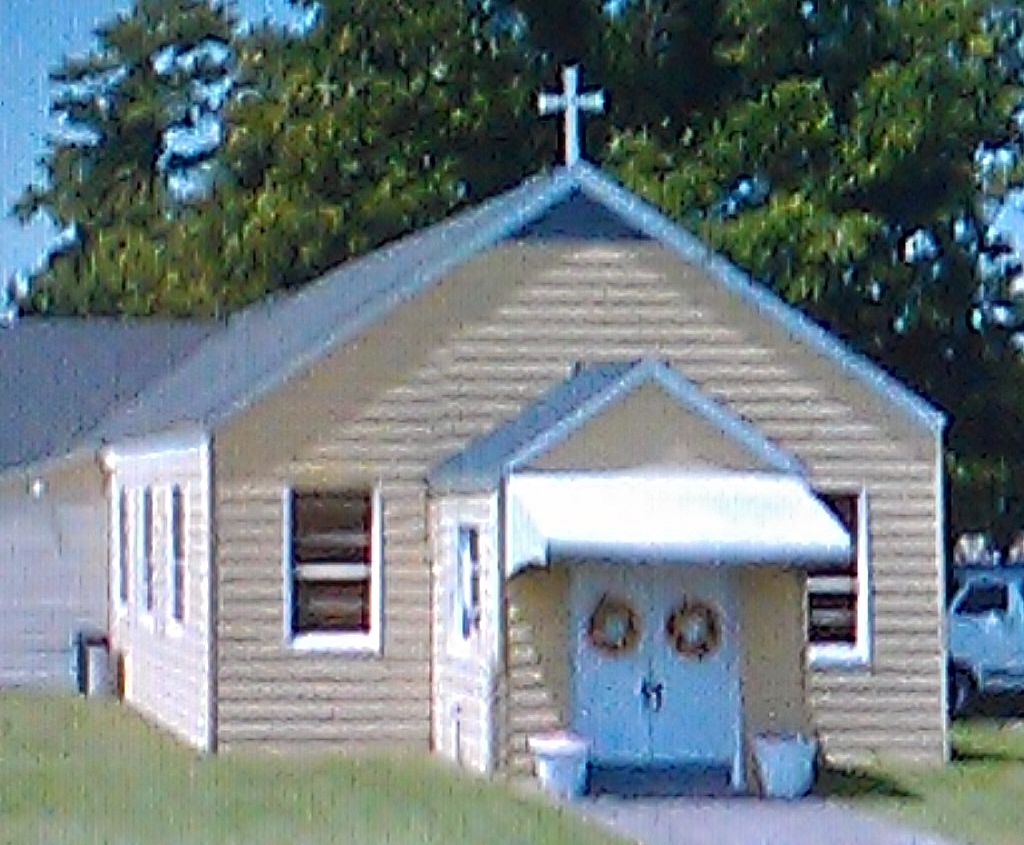
No longer used by the Roman Catholic church, but once the pride and joy of the Moylan sisters.

No longer used by the Roman Catholic church, but once the pride and joy of the Moylan sisters.

In my hope to include a photo of that little Flomaton church to illustrate this post, I called Father Adrian Cook at St. Maurice’s this afternoon to see if he could help me find it on Streetview (which he clearly did), but aside from that, we had a lovely short conversation about his new boss and, in particular, Pope Francis’s remarkable gift for finding lessons within scripture that, while perfectly obvious once he relates them, we’ve never really thought of before, no matter how many times we may have read or heard them.

For example, in his Palm Sunday sermon just this week, rather than focusing upon the actions and suffering of Jesus as most sermons do this time of the year, he chose to focus upon all the other people in the story, the bystanders, spectators, participants in the crucifixion story as it unfolded, that we might, through them, take a good, long look at our own lives, our own priorities, our own emerging souls. His words:

“We have listened to the Passion of the Lord. It will do us good to ask the question, who am I? Who am I before my Lord? Who am I, before Jesus Who enters Jerusalem on this feast day? Am I able to express my joy, to praise Him? Or do I keep my distance? Who am I, before Jesus Who suffers?

“We have heard many names: the group of leaders, some who are priests, some Pharisees, some doctors of the Law, who had decided to kill Him. They waited for the opportunity to take Him. Am I like one of them?

“We have also heard another name: Judas. Thirty coins. Am I like Judas?…

“Am I like Pilate, in that when I see that the situation is difficult, I wash my hands of it and do not assume my responsibility and condemn people, or allow them to be condemned?

“Am I like that crowd that does not know if it is in a religious meeting, a court of judgement or a circus, and chooses Barabas? For them it was all the same: it was more entertaining to humiliate Jesus.

“Am I like the soldiers who strike the Lord, who spit on Him, insult Him, who amuse themselves by humiliating the Lord?

“Am I like the Cyrenian who returned from work, weary, but who had the good will to help the Lord carry the cross?

“Am I like those who passed before the Cross and made fun of Jesus: ‘He was so brave! If he comes down from the Cross we will believe in Him!’ Making fun of Jesus”.

“Am I like those brave women, such as the Mother of Jesus, who were there, who suffered in silence?

“Am I like Joseph [of Aramathea], the secret disciple who carried the corpse of Jesus with love, to bury him [in the tomb he had made for his own]?

“Am I like the two Marys, who remained before His tomb crying and praying?

“Am I like the leaders who, the following day. went to Pilate to say, ‘Look, this man said that he would be resurrected. Careful that this is not another trick’ and blocked the life, blocked the entrance to the tomb to defend doctrine, so that life does not come out?

“Where is my heart? Which of these people do I resemble? May this question accompany us throughout the week”.

There are many ways to respond to the story of Jesus, to His life, His promise, His resurrection. May we all aspire to emulate those who act out of love, and, whether our celebrations this week are of Easter or Passover or just the rites of Spring, I pray that we may each find renewal and strength as the days lengthen and the sun warms.

Tomorrow: an angel story. Have a great night!

GTW

——-
[1] https://inpraiseofangels.wordpress.com/2014/03/09/the-living-water-boson/ Part Four
[2] https://inpraiseofangels.wordpress.com/2014/02/09/uncle-jesus/ The Second Thread

Posted in belief, faith, God the Father, prayer, religion, Uncategorized | Tagged , , , , , , | Leave a comment

YIPPEE!

My Daddy once bought a case of Kahlil Gibran’s The Prophet and kept it in his pickup so he would have extra copies handy to give out to friends and acquaintances when opportunities arose. He was particularly fond of Gibran’s poem “On Children,” the last verse of which says:

Hank Wilson pulling us along (with my sister Miriam and me, Grayson, AL)

Hank Wilson pulling us along (with my sister Miriam and me, Grayson, AL)

“You are the bows from which your children
as living arrows are sent forth.
The archer sees the mark upon the path of the infinite,
and He bends you with His might
that His arrows may go swift and far.
Let your bending in the archer’s hand be for gladness;
For even as He loves the arrow that flies,
so He loves also the bow that is stable.”

I thought of this when I was rejoicing during my prayers this morning, rejoicing because, with the publishing here of yesterday’s overlong post, “Uncut Diamonds,” I have completed the hard work – the pulling back of the bowstring, if you will – that will now allow me to release the arrow of this blog and let it fly without further heavy lifting and long-winded pontification.

If I were a Southern Baptist, or a Roman Catholic, or a Jehovah’s Witness, for that matter, I could have started a blog about my faith without any concern that others might not know what I believe or where on the faith-spectrum I stand. But my faith, distilled over decades, is my own, and while it rests solidly on my friendship with Jesus as well as my reverence for His Example, for the work of the Holy Mother Spirit, and for our Heavenly Father’s constant companionship, the thimble of truth-grains I have collected in my life includes some unique perspectives, so it was important to me to share with you as best I could at the beginning – to lay a solid foundation for anyone who cares to understand the basics of my beliefs – a job that, I am thrilled to say, is now complete. If you’re just now joining our conversation, these three foundational posts are:

“I. Uncle Jesus:” https://inpraiseofangels.wordpress.com/2014/02/09/uncle-jesus/
“II. The Living Water Boson:” https://inpraiseofangels.wordpress.com/2014/03/09/the-living-water-boson/
and “III. Uncut Diamonds:” https://inpraiseofangels.wordpress.com/2014/04/13/uncut-diamonds/

They are long for blog posts, but hopefully not difficult, and I invite you to read them as you can.

Now, with that said, today inaugurates something new: my daily posts, which will be much, much shorter and, I hope, both fun and worthwhile. There will be a loose structure in the days to come, with poetry on Mondays (mine and others), Pope Francis quotes on Tuesdays, Angel stories on Wednesdays, etc., and I invite any and or all of you to comment and or contribute, particularly if you have any angel stories to share with the rest of us. Please bare with me as I continue to refine my technique for posting on wordpress (and, secondarily, Facebook), which remains a learning curve (it would help if FB would stop changing its settings every other day), but I look forward to getting it right soon enough.

Finally, I want to take this opportunity to thank my Heavenly Father for His loving inspiration and willingness to let me do this my way. Or, as I said a few years ago in this short poem – our first Monday Morning Poem:

Slack

The perfect proof of a
Benevolent God
Is our astonishing
Facility for wondering
Why.
No king so kind
Will come to mind
Who’d welcome analytics,
Nor president
Of such a bent
That questioning
Of his intent would
Ever be good politics.
And yet, the very Source of life,
The Center of this field of strife,
Is so secure about His plan,
So loving,
When it comes to man,
That He, alone, among the vast
Array of leaders, now or past,
Has said to all his subjects here:
I AM not going to make it clear,
For wisdom’s more than simply knowing.
It only glows within the growing.
–GTW


Posted in Angels, belief, faith, God the Father, poetry, prayer, Uncategorized | Tagged , , , , , , , | Leave a comment

III. Uncut Diamonds

“We have nothing, if not belief.”
— Sir Reepicheep, Chief Mouse of Narnia

“Do the arithmetic or be doomed to talk nonsense.”
— John McCarthy, A.I. trailblazer [1]

We are the uncut diamonds of God.

Naturally occurring diamond crystal

Naturally occurring diamond crystal

Thus I begin this third and final installment of my unintended series of observations arising from my daily prayers, which has been as much a journey of discovery for me as for anyone else, since it is surely true that however much you may believe in something, until you put it into words, it remains a benign knowing untouched by the light of discernment; a happy faith in things suggested or implied or impossible to avoid as other known truths come together, but otherwise unexcised, unexamined and unexplained even to oneself. And, so, as I have lit out on this new adventure, have set my sail upon the Great Digital Sea, these first three essays have turned out to be exercises in self-clarification as I have drilled, as best I could, to the bottom of my faith to share it with you. And, while this writing has turned out to be much more challenging than expected, the marvelous bonus has been the process, itself, as I have mined the golden veins of understanding wherever they have led in my determination to forge a solid chain of plausible beliefs from link to link and start to finish.

And, while there is still much, very much, that remains well outside my understanding, as far as I can see, it all has to begin with an acceptance that there is nothing, absolutely nothing, incompatible in the two ideas that 1) we are the beloved, known, embraced children of the personal Source of the Course of the Universe and are just exactly the family of material children He intended us to become when He conceived and put into motion the processes that made us, and 2) that the earth and everything on it has eventuated along a scientifically delineable path of growth and evolution that began with the sun’s release of the matter from which we are made some four billion years ago, continued with the arrival of Life to mobilize some of that matter into living beings some one billion years ago, was diversified over eons into the astonishing array of wondrous creatures whose bones populate our museums and that – step by agonizing step – took their turns in the great parade of earthly life from the single-celled, self-replicating amoebae of that “Original Life Moment” to the birth of our primordial human ancestors about a million years ago, or so.[2] Indeed, I truly don’t understand how anyone who believes in a living, loving God has any choice but to accept both of these propositions.

Yet, astonishingly, this view – that God initiated what science discovers, and science confirms the wonder of His inventions – is roundly criticized from both sides. To the atheistically-leaning scientist, it is anathema. To the literalist Christian, it is blasphemy. I suppose you might say I’m swimming upstream here to embrace an idea so easily rejected by almost everyone who is going to read it, yet I persist, because, to me, this truth is the ultimate proof of our Loving Father, and the necessary foundation of any plausible explanation for our lives on earth.

Of course, To believe in both science and God begs all sorts of questions that, in the end, must be resolved, not the least of which is the one I just alluded to: is evolution is a real, living process? Well, forgive me, but really? Of course it’s real, and I seem silly even writing such an obvious point, but if love is blind, denial is blinder, since it owes its very existence to sightlessness, and it is a tragic scourge on both houses as they sail right past each other – and truth in the doing – with science insisting upon material provability of spiritual realities – a non-sequitur if ever there was one – and a great swath of believing Christians refusing to even consider facts uncovered over and over again by 21st Century archaeologists because they don’t conform to a poetic telling of our creation story as put to parchment by exiled Hebrew scribes nearly three millennia ago.

Yes, I suppose it is possible that God waved a magic wand and fabricated everything in six days – from stars to tigers to Adam and Eve – and then filled His beautiful work with practical jokes in the form of dinosaur bones or ancient ruins for some whimsy of His own, but I don’t believe that makes any sense at all. As I have said before, the God I know and love is not wasteful,[3] and neither is He a jokester who would steer His beloved children down some false maze of paleontological ephemera. And, anyway, how much more elegant, astonishing and worthy of His magnificent creative abilities is the other option: that He graced our planet with the beginnings of Life – the first single-celled organisms capable of dancing to His energies[4] – a billion years ago, or so, with everything required even in those microscopic creations – the full recipe – for building a succession of living beings, bit by bit, that we might ultimately, at long, long last, evolve organically, stably, fully, into persons: distinctly individualistic personalities capable of independent thought, creative insights, social engagement, analytical perspective, and, most importantly, active faith – a proclivity to worship; physical beings crafted from nothing but the elements all around us, yet miraculously endowed with the capacity to love and be loved, to know and be known, even by Him who so long ago planted those little seeds expressly, I believe, for the purpose of coaxing into being a family of earthly children who would turn out to be as marvelously diverse as possible.

God’s Miraculous Little Dynamo

When you really think about it, the largest unit of life on earth is much too small to see. Every creature, from the clump of grass to the blue whale, is but a gathering together of millions, billions, even trillions, of cells like so many Lego blocks, but unlike those static, plastic pieces, these little dynamos of God are anything but empty, and everything but still. Unfortunately, in 1665, when a Fellow named Robert Hooke, of the Royal Society of Fellows, first looked at a leaf through the newly invented microscope – each part surrounded by a stiff cuticle – it reminded him of a monastery laid out with rows of spare, tiny rooms, so he called those little segments “cells.”[5] But surely in all the annals of science nothing has ever been so inaptly named, for, while it may have been beyond the power of his lens to see, within each one of those “walls” was everything required – the complete book of instructions and a full set of potentialities – to assemble the entire tree from which his leaf had sprung.

The wonder of our making is almost beyond words. Two little cells do a waltz in the womb and that is all it takes. Only two little cells, yet everything required to make a person is included and, in a very short time, their descendants diversify to become bone cells gathering calcium, or liver cells cleaning toxins, or blood cells delivering oxygen harvested only seconds before by lung cells. We are so used to these things that the wonder is taken for granted, but it all happens 24/7: trillions of cells working together in perfect harmony, without hitch or hiccough, generating heartbeat after heartbeat, breath upon breath, and thoughts that grow into more thoughts.

I have always prayed for good health, of course, but it was when I was struggling to quit smoking after decades of addiction that I found myself asking God to heal, if He would, those parts of my physical self that were most afflicted by my bad habit, and as my focus sharpened over time and I came to realize that the real seat of the harm I was doing was on the cellular level, I began praying for forgiveness not only from the Father I was surely offending, but as well from the lung cells I was physically assaulting on an hourly basis. I tried to identify with them as best I could in the hope of truly understanding their suffering, the harm I was doing to each of them, and this proved to be a useful tactic, as the more I inclined my heart to such admirable workers and appreciated their dedication and indefatigable efforts to keep me alive, the more absurd my abuse became, and I was ultimately able to put out my last cigarette nearly two years ago.

Of course, by the time that occurred, I had gained an affinity for my dedicated little building blocks. In spite of how little credit we may give our cells for the hard work they do, or poorly we may provide for their needs with our deficient diets and sedentary lives, they work like Oompa-Loompas twenty-four hours a day, seven days a week, never stopping even once from the time they are born until their last secretions, and some of them live as long as we do.[6] Physically speaking, we are nothing more than the sum total of the absolute commitment of these indomitable self-replicating, self-diverging, self-organizing, self-monitoring and self-regulating beings. Their “constancy to purpose” is staggering and their rate of success is nearly perfect – far more perfect than any of us could ever hope for – as almost all one-hundred-trillion of them are born, live and die without error, just as they were designed to do.

And, so, when I pray these days, after I have asked for God’s help in aligning my mind and heart with His,[7] but before I move on to my prayers for you and all of our Earthly cousins,[8] I ask Him to bless each of those one-hundred-trillion cells[9] that comprise my physical body, that they might be as perfectly aligned as possible with His incoming energies.[10] And, it never fails when I reach this point in my praying – and you may believe this or not, as you like – but that I can actually feel the rush of realignments passing through me. Then, since it is far beyond my ability to communicate on their level, I ask our Father for whom all things are possible to please tell each and every cell how grateful I am for the astonishing work it does solely for the purpose of giving me eyes to see and ears to hear, feet for mobility and hands to play a Beethoven Sonata, work the kink out of a loved one’s shoulder, or type this sentence. And, finally, I ask Him to watch over their combined efforts as they continue to give my soul an extraordinary ‘sensory experience machine’ that my mind and spirit may expand and stumble, assess and invent, and, most importantly, learn to exhibit “reverence for life” at every level – from the God who made me to the grass I tread – that I might be loved by life in return.

Over a Billion Years in the Making

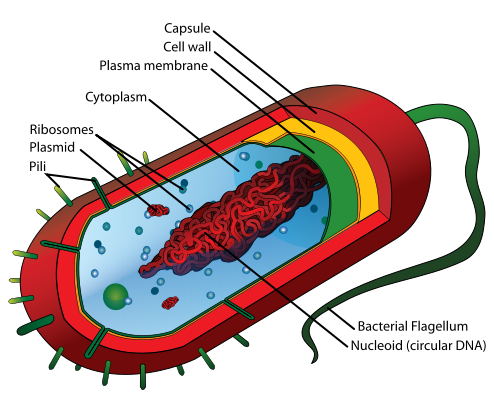
Of course, thanks to science, we now know that what those two little cells do when they grow over nine short months into a fully-developed infant is but a rapid reflection of the process that began over a billion years ago with those initial single-celled living beings that inaugurated the great parade of Earthly life. The simplest known living cell and presumed first living thing on earth is called a prokaryote, and many scientists would have us believe that it simply sprang into life all by itself thanks to a fortuitous bolt of lightning, or some such, hitting exactly the right chemical compounds in exactly the right way at exactly the right time. But truth be known, there is nothing even the least bit simple about a prokaryote, and for any such “spark” to truly work, a whole host of very specific and diverse elements would have had to assemble themselves, unaided, into outrageously complex structures – including DNA and three different kinds of RNA.[11] Does it not torture logic in the extreme to believe that such a spontaneous chain of events could ever have happened? And, even if, by some stroke of outrageous fortune all those little atoms did somehow line up in all the right sequences of sequences, even then, what naturally occurring electro-chemical phenomenon could possibly have happened to transform static chemicals into living, moving, eating, reproducing life capable of evolving into us? I submit that, absent the hand of God, it could not have happened, and of all the arguments for believing in a living, loving Creator, this one, it seems to me, is the most compelling.

cross section of prokaryote cell

cross section of prokaryote cell

For over a billion years those little seeds of life were nurtured as they grew from single cells to chains of cells to multi-celled creations that, in turn, became larger and larger life forms, each new strain more complex, more startling, more capable than the last, until, in the end, one-hundred trillion cells strong, humans walked upon the earth. For a billion years and more, I believe, our Father and His angels have nudged and cajoled us forward, ever looking toward the day when we might, ultimately, be His beautiful, worshipful family of man.

He must truly value us greatly to have expended so much time and effort on our making. The old hymn prays, “Thou art the potter, I am the clay,” but what an ambitious and strikingly daunting task our potting turns out to have been. How deeply He must care! How great His desire for our love must be to have gone to so much trouble that we might live and breathe upon the earth, and how greatly He must love us in return after having worked so long and assiduously to bring us into being. Every gardener knows how precious life becomes as one watches impatiently, day after day, for even the least little signs of growth, and that love is only for a season. How much more dear, then, we must be to our Father who has tended our garden over aeons.

Of course, that is just the Earthly expense of creating human beings. If you truly want to calculate the almost unimaginable costs of making a peopled universe, our mere billion years of growth on earth is but the last and least of the burdens God undertook when He decided to make us. Consider:

►Matter, itself, is extraordinarily expensive. To explain simplistically without getting too much in the weeds, when you split atoms and get an atomic explosion, it’s because you have released all the energy that had been holding those atoms together in the first place. And that’s just the energy contained in a few atoms. Now, if even you could, multiply that up to the billions of galaxies with billions of stars and all of if made of atoms. The total energy required for such a creation is beyond mind-boggling.

►Beyond the energy required to make the matter we can see, there are the other energies and forces that are brought to bear in our universe, both those recognized by physics – gravity, electromagnetic, etc. – as well, I would add, as those ever flowing gifts of God – Life, Love, Light, Beauty, Goodness and Truth – that also require His constant attention.[12]

► Then, if you believe as I do, He has also created the hosts of angels who are ever and always watching, recording, urging, and helping us to find the light and grow into our best possible selves; to be both more aware of God’s love and more loving of Him in return. Of course, I can’t prove my angels – or yours – are truly there, but I believe they are, and I believe they are yet another gift from our loving Father, assuring that every last one of us is sponsored and supported in every moment of every day by remarkable spiritual guardians, and that is an enormous undertaking!

►Finally, as if all that wasn’t enough largess for Him to expend on our creation and care, our Father sent the ultimate gift, in spite of the enormous emotional cost, when He allowed His Son to be incarnated as a human being, to tread the sands of His own creation that He might know us from the inside-out even as He also gave to us His example of Life Perfected.

Given all this time, effort and costs required of our Father, it is hard not to come to the conclusion that we are truly unappreciative and astonishingly cavalier in our utilization of the marvelous gifts He so constantly lays at our feet. You may not believe that everything the Father, Son and Mother Spirit have accomplished since that first Big Bang (we can call it that, however it all began) has been done specifically and expressly for the eventual emergence of material children like you and me, but I do.

Of course, this begs the obvious question: What makes us so special that the Creator of Everything, Himself, would do all this maneuvering of energies, would set into motion processes for an eternity of time for our sake? If there really is a Father God and Mother Spirit, and they really did create worlds for people, and angels to care for us, over billions and billions of years, and even went so far as to send His Divine Son, Jesus, that He might get to know us as one of us, even unto crucifixion, why? What makes us so incredibly valuable? Could it really be that we are the point of all this creation? Could it really be that this was all put here for us out of His Infinite Love? Well, yes, I believe so, and it is both my privilege and my challenge to tell you why I have come to that conclusion; to explain, as best I can, how I believe that Heavenly accounting book actually balances.

You see, I believe that it is not only about Love, though it is surely that, it is also about experience. God delights in experience, and nothing pleases Him more, I believe, than to join with each of us – every last one of his material personalities – one at a time, as we lead our one-of-a-kind, individual lives. Of course, He hopes that we will lead productive lives in preparation for an eternity of association with Him, but even when our actions may disappoint, or our choices reject His path, our experience still counts as it adds to the sum total of His own. God, I believe, wants to do every righteous thing there is to do, be every beautiful, good and true thing there is to be, to join with each and every one of us as we live out our material lives.

Being above and beyond the limitations of time and place, it is not possible for the Totality of Our Father to live linearly, to slice up existence into little bits of experience, so we do it for Him even as He lives through us. Even the angels, who were created whole and perfect – who lovingly descend to assist us even as we ascend with their help, in time, to the Father  – cannot help God experience anything new, since He created them out of His own cloth. No, it takes a random, happenstance, higgledy-piggledy sort of evolution implanted across billions of worlds within billions of galaxies to truly cover the possibilities, to ever be generating something  never before seen or done or even conceived. That is why, I believe, no two personalities are ever alike. We were made to be unique and creative, to deliver a life distinctly ours in every moment of every day, and that is what we unquestionably do. Whether for good or ill, for better or for worse, we inevitably deliver on the promise of our creation, just as He has designed us. And that, dear reader, is why He loves us so much, and why, even at such great expense to Him, I believe the scales balance out.

I believe God has created an enormous universe of planets where every conceivable life scenario may be lived out, and in the doing, through His absolute love of His ascending children and the love we return to Him, the Infinite Being also gains the knowledge of finite experience. I also believe He has made it possible for us to  draw ever closer to Him through multitudes of increasingly spiritual graduations, attaining, one after another, ever higher levels of existence over an eternity of time that we might, finally, become His children-in-full, having finally polished our rough edges to a fine sheen, corrected – on plane after plane – our imperfections, and brightened, over millions of years, our faces.

Uncut Diamonds

Did it ever strike you as strange-bordering-on-amazing that the most iconic and beautiful of natural materials, the diamond, is also the hardest? I remember learning that in elementary school and being astonished that something so brilliant and seemingly delicate as the ring on my mother’s slender finger was basically indestructible. But the secret to both the beauty and the strength of diamonds is found in their origins, the slow, intense burn under which they are born.

That any diamond was ever formed, given the difficult and rare conditions needed, is something of a miracle. Structurally, each one is a latticework that grows from a simple square of four carbon atoms that, first, must be bonded at depths of a hundred miles underground within a narrow range of very intense pressures (45-60 kilobars), and a narrow range of temperatures that are uncharacteristically low for that depth (900°-1300° C.). And, once all those conditions are met, it has to stay put, unmoving, to slow-cook for at least a billion years. Finally, after growing for all that time, if it just happens by some stroke of extraordinary fortune to be in the right place at the right time to be thrust up to the surface by a volcanic eruption at the right speed (at least 30 to 40 mph or it can turn to graphite),[13] it may actually, one day, become anything from the stuff of legend like the Hope Diamond, to the sharp end of a drill bit.

But, of course, you’d most likely not even notice one if it was lying at your feet since, when they emerge, they are just rough rocks of no particularly interest to any but the well-trained eye. They come out rough, uneven, knobby, occluded, dirty, and most of the time without any hint whatever of the astonishing beauty, clarity and light they carry within.

Well, like diamonds, it has taken a billion years or more to make human beings, and like diamonds, no two of us are ever alike, in spite of our common origins. And, I would submit, like diamonds, we are rough around the edges and often filled with imperfections, but, like diamonds, that is only natural given the rough and tumble way we are born, live and die on planet earth. And as the eagle-eyed prospector sees the potential within the river rock that becomes the fancy diamond, our Father also sees the jewel that we have residing within, the jewel for which He first ideated each one of us, individually, knowing that, one day, perhaps while still on the earth but more likely in the ever more spiritual levels of life to come, the rough edges will become polished, the occlusions cut away, and we will each, facet by facet, become perfected as the radiant realization of our Father’s idea.

How can it be that we suffer both for taking ourselves too seriously, and, yet, not seriously enough? After all, at best, this earth, this material plane, is but a seed bed, a place where each of our personalities may take root and gather understanding and strength for the eternal life to come. It is a place where we can find our way to walking and talking, to smiling, to loving, to embracing or even to rejecting, but even the most wizened and ancient of us is still but an infant in the universal scheme of things. No one – especially a loving father – would punish an infant for wetting his diaper, yet, even though we are no more than infants on the cosmic level, we are an astonishingly unforgiving race of beings, both of each other, and even more so, sadly, of ourselves. Yes, we take ourselves, and our sins, entirely too seriously.

On the other hand, we don’t even begin to take ourselves seriously enough. I’m not talking now about the infant selves we all remain for at least as long as this life lasts, but about our real selves, our child-of-God selves, for we truly are His uncut diamonds, His treasure trove long nurtured and greatly beloved, the end result of His billion-year effort to make us strong and true. And, however rough and unformed we may feel we are, however dirty and flawed we may appear to ourselves or others, it is ever and only the polished, faceted gemstone within that Our Father sees as He waits and watches, longing for us to answer His knock and respond to His love, so that we may ultimately be seen, in accordance with His divine design, as the beautiful ascending jewels of earth we truly are.

———

[1]He remained an independent thinker throughout his life. Some years ago, one of his daughters presented him with a license plate bearing one of his favorite aphorisms: ‘Do the arithmetic or be doomed to talk nonsense.’”
— from the Oct. 25, 2011 New York Times obituary of John McCarthy, coiner of the term ‘Artificial Intelligence,’ (or “AI”) and one of the pioneers in its pursuit, who died on October 24, 2011 at the age of 84.

[2]There are widely varying theories on when the first humans appeared. Here’s one article: http://www.sciencemuseum.org.uk/whoami/findoutmore/yourgenes/wheredidwecomefrom/whowerethefirsthumans.aspx

[3] https://inpraiseofangels.wordpress.com/2014/03/09/the-living-water-boson/ (first paragraph)

[4] https://inpraiseofangels.wordpress.com/2014/03/09/the-living-water-boson/ (fourth section, fourth paragraph)

[5] http://en.wikipedia.org/wiki/Robert_Hooke

[6] 2 Sep 2005, uncredited article in Times Higher Education, http://www.timeshighereducation.co.uk/198208.article “Each kind of tissue has its own turnover time, related at least partially to the workload endured by its cells. Epidermic cells, forming the easily damaged skin of the body, are recycled every two weeks or so. Red blood cells, in constant motion on their journey through the circulatory system, last only 4 months. As for the liver, the human body’s detoxifier, its cells’ lives are quite short – an adult human liver cell has a turnover time of 300 to 500 days. Cells lining the surface of the gut, known by other methods to last for only five days, are among the shortest-lived in the whole body. Ignoring them, the average age of intestinal cells is 15.9 years, Dr Frisén found. Skeletal cells are a bit older than a decade and cells from the muscles of the ribs have an average age of 15.1 years. When looking into the brain cells, all of the samples taken from the visual cortex, the region responsible for processing sight, were as old as the subjects themselves, supporting the idea that these cells do not regenerate. ‘The reason these cells live so long is probably that they need to be wired in a very stable way,’ Frisén speculates. Other braincells are more short-lived. Dr Frisén found that the heart, as a whole, does generate new cells, but he has not yet measured the turnover rate of the heart’s muscle cells. And the average age of all the cells in an adult’s body may turn out to be as young as 7 to 10 years, according to him.”

[7]https://inpraiseofangels.wordpress.com/2014/03/09/the-living-water-boson/

[8] https://inpraiseofangels.wordpress.com/2014/02/09/uncle-jesus/

[9] http://en.wikipedia.org/wiki/Cell_%28biology%29

[10] [10]https://inpraiseofangels.wordpress.com/2014/03/09/the-living-water-boson/

[11] http://www.dstoner.net/Math_Science/cell1.html

[12] https://inpraiseofangels.wordpress.com/2014/03/09/the-living-water-boson/ (part four)

[13] http://en.wikipedia.org/wiki/Diamond


Posted in Angels, belief, biology, cells, diamonds, faith, God the Father, Uncategorized | Tagged , , , , | Leave a comment

Fractals

Well, dear readers, I was convinced that, by now, I would have finished the the third in my trio of essays based upon my daily prayers, but even though I’ve spent about 20 hours working on it this weekend, it is still not ready for posting, so, once again, I’m posting one of my poems.

It does, I have to say, seem to fit, following upon the heels of “The Living Water Boson.” I hope you enjoy.

FRACTALS

When God inked up His fountain pen
To fashion His designs —
To strategize proportions and
Deliberate the lines —

He set His mind awhirl to sow,
As far as mind can see,
A garden grown for Love, of Light —
Galactic husbandry;

A grove of Beauty, Goodness, Truth,
Of Justice right as rain,
Of Mercy’s loving majesty and
Wisdom’s birth in pain.

He studied stripes and polka dots,
Tried solids, strong and bright,
He pondered plaid’s potential
To illuminate the night.

He pictured possibilities —
Batik to bas relief —
Until His mind, at last, refined
The ultimate motif:

Brilliant stars in graceful swirls
Would be His signature,
Like iridescent strands of pearls,
Milky-white and pure.

Ere long His strokes fell sure and swift,
As details came to view,
Revealing ever greater depth
From which we might ensue,

As every star did then unfurl
A swirl of worlds to tend.
And when he placed a special pearl,
A wonder there he penned…

Where gentle winds could waft just right,
Dews form at end of night,
Where lacy swirls of purest white
Filtered out relentless light,

He brushed the softest stroke of all
From His All-Knowing Mind —
The mark to make the Masterpiece:
The swirl of humankind.

Posted in Uncategorized | Tagged , , , , | 1 Comment

Metamorphosis

One of the great joys of Fire Island is the annual migration of the Monarchs. These two came through in ’96, when they were plentiful and you might see dozens on a single bush. Last year we didn’t even see a dozen all year. The mighty Monarchs need all the help we can give them.

It’s been a really long, cold winter in New York City, and I gather in many other parts of the country, so you’re probably just as delighted as we are to see some glimmers of springlike sunshine, and maybe a crocus or two popping up through the snow. And, in the spirit of the changing seasons, here’s one of my personal favorites that I wrote in the 80s:

Metamorphosis

1. Larva

Chomp chomp chomp chomp
Chomp chomp chomp, burp
Adjust legs
Glide ahead…
Chomp chomp chomp chomp
Chomp chomp chomp, burp
Adjust legs
Glide…
RED ALERT!
SHEILDS UP!
BLEnd in,
Blend in,
Blendin,
Danger passed
Adjust legs
Glide ahead…
Chomp chomp chomp chomp
Chomp chomp chomp, burp
A thousand eyes,
A thousand sights,
In every millisecond.
Adjust legs
Glide ahead…
Chomp chomp chomp chomp
Chomp chomp chomp
Burrrrrrrrrrrrrp.

2. Chrysalis

Ooooooooh, I’m sooooooo full…
My senses dull
Must be a lull in my metaaaaaabolism….
Sleepy.
Very sleepy, yes.
And, OH!, what’s that?
Woo-wooooh!
Now seeping from my hinny?
Must go ‘round,
And ‘round again,
And ‘round and ‘round and ‘round and ‘round
Till I’m surrounded…

There.
That’s better.
How convenient this
completely unexpected
little sleeping bag.
I think I’ll just
Suspend myself right here.
Oh, yes…
And sleep…
Deep, deep sleep…
So fulll…
So dulllllll…
So sleeeeeepyyyyyyyzzzzzzzzzzzzzzzzzzzzzzzzzz…

3. Imago

Goodness, me,
How long have I hung?
How long have I slept here?
And, what’s going on here?
I feel odd.
I feel hungry, but, no,
Not quite hungry.
Something, uh, I don’t know
something different;
Eating a leaf is a sickening thought.
To glide on the air…
Do what did I say?
To glide on the air
That’s the thing! To FLY!
But who ever heard of a worm who could fly?
Oh! My stars!
Would you look!
I’ve got wings!
Really, wings!
I grew glorious gossamer wings in my sleep!
In my dreams
I fluttered
From flower to flower…
Danced in the sunshine and
Served.
Served?
What’s serve?
I’m sure I don’t know what that means.
But, no matter, my dear
The urge is sincere
The leading is clear
The time is here
Must fight the fear…

Awaaaaaaaaaaaaaaaaay!

-GTW

© 2018 by George Thomas Wilson. All rights reserved.

Posted in belief, faith, Uncategorized | Tagged , , , , | Leave a comment

II. The Living Water Boson

The Living Water Boson

“Then the angel showed me the river of the water of life, bright as crystal, flowing from the throne of God…”

– Revelation 22:1

Are the Science…

I have never doubted that we live in a vigorously populated universe. I’m not sure how I first subscribed to this notion, but I suspect it was one of the lessons I learned during those afternoon teas with Uncle Jesus and my imaginary lady friends.[1] Or, it is equally possible that I came to believe that there are millions of planets teeming with intelligent life deep in the velvet of the midnight sky simply because it is the inescapably logical extension of a larger idea: that our Father in Heaven, while loving and generous, is never wasteful (after all, He recycles everything) and would not likely have expended so much wealth and energy for aeons of time across infinite space just to give us earthlings, so recently arrived and rarely deserving, a starry, starry night.

Please note the word “logical” in that sentence. You see, while I believe God is vastly/ immeasurably/infinitely smarter than I will ever be, even I have enough sense to know that to operate illogically is to live in a fool’s Paradise, and the Paradise I picture as the seat of my Heavenly Father does not belong to a fool. So what does that mean in practical terms? It means that the logic – the science – of the universe He created flows from Him just as surely as the inspiration of a moving hymn or stunning sunset. In other words, the operating, actual rules of physics must also, by definition (if you believe in a Heavenly Creator), be the actual rules of God, and we do ourselves – and truth – a profound disservice when we dismiss demonstrated physical reality just because it conflicts with some long-held dogma or doctrine, however venerated it may be. “Though science courses from the Source//Who spawned, as well, the spirit//The Source cannot be proven//So, they socialize over coffee//And miss the point.”[2]

Thus, I was particularly pleased when the popular media started talking about the “God particle,” also known as the Higgs Boson, since I thought they were onto something (though I should here note that many scientists loudly poo-poo the designation as silly).[3] For the uninitiated, the Higgs Boson is a “flash in the pan” sort of impossibly small particle that, in and of itself, is not all that important, but the fact that it exists, as was so recently proven in the Large Hadron Collider, has enormous significance since it confirms the existence of something infinitely greater, the Higgs Field, which is described as a vast circular skirt (or “sombrero,” since the scientific models show a big bulge in its center) of energy particles/waves that constantly proceed from the centerpoint of the mass of creation to its very edges; a never-ending Mexican Hat Dance of universal ripples gliding inexorably across the inky pond of space.

and the Spirit…

Now, having said all that, allow me to shift the light from science to spirit for a moment and consider something that might, at first, seem entirely unrelated: the oft repeated idea of  “living water,” or the “water of life,” which is surely one of the most cryptic and mysterious concepts in the Bible. According to the site Openbible.info, there are twenty-nine scripture verses about “living water” and exactly one-hundred about the “water of life.”[4] Isaiah,[5] Jeremiah,[6] and Zechariah[7] all mention “living waters” in some form or another, the book of Revelation is overflowing with citations,[8] and perhaps the most famous Biblical reference of all is found in the story of Jesus and the “woman at the well,” when Jesus, having no ladle of His own, asks her for a drink and then uses the opportunity to invite her to partake of the living water “and never be thirsty again.”[9] But, all that said and for all the mentions in our revered writings, what, exactly, are all these sages talking about? Just what on earth is this living water, anyway, and how the heck do we get some?

I suppose almost all Judeo-Christian seekers have asked this question at some time or another, but probably not for very long since, this side of unwieldy theological dissertations, there is very little to go on. Many writers speak of it in vague generalities, but none explains it in any tangible way. To be honest, I never really gave the idea much thought, myself, until I backed into it when – just like my Uncle Jesus epiphany – it grew out of my ever-evolving daily prayers.

If you happened to read my “Uncle Jesus” post a few weeks ago, you are already familiar with the part of my prayer that seeks to expand my embrace of – and supplications for – our “cousins,” from the neighborhood to the city to the world.[10] But, if one is going to presume to pray for those who are both the beloved spiritual children of God, Himself, and the literal physical family of His Son, Jesus Christ, it strikes me as advisable to first ask for guidance in aligning oneself with Divine will. It is surely, after all, the over-arching goal of all sincere prayer to coordinate with the will of God. Even Jesus began with “Thy kingdom come, Thy will be done.”

So, I begin simply with a thank you to our Heavenly Father – whom I perceive to be both at the center of all things, as well as within my heart – for the day ahead and all the opportunities and challenges it contains. Then, in concert with my angels, I ask Him to please accompany us as we go from “moment to moment and place to place, task to task and person to person,” that whatever we may choose to be, do, say, or write, is in accordance with His leading; that every joule of energy we may expend is used to accomplish His desires. Then – and this is where, for me, at least, the science and spirit begin to merge – I ask for His help in aligning myself as perfectly as possible with the steady flow of His living water, that I might drink deeply from those energizing gifts of the spirit He sends so very far, even to our little orb of jewel-encrusted iron spinning so silently through space, isolated, but never alone. 

…Two Sides of the Same Sombrero?

Now, theoretical physicists tell us that without the Higgs Field there would be no material reality at all, and that would be that; that those invisible spokes of radiating energy are the foundational warp  through which the weft of coordinate forces are woven into the fabric of time and space. In other words, to go back to our earlier analogy, if those ripples weren’t constantly conducting the energy of creation on its journey outward, all of it – every star, every planet, everything down to the last atom of hydrogen – would simply cease to be. But, that said, and however true that may be, I think the physicists are underselling their idea. They’ve discovered our Father’s conveyance, but neglected His cargo, for this phenomenon – this flow from the very heart of God to each and every person made in His image – carries with it so much more, I believe, than mere being. Rather, it arrives filled to the brim with inestimable gifts pouring ever and always out upon us, even unto that day long hence when we, having finally followed His flow all the way back to its Origin, may find ourselves in awe, standing before the very Source of the Universe, Himself, to offer our thanks.

Higgs field two

Just to make it perfectly clear, what I’m proposing here is that both the “matterizing” Higgs Field and that mysterious Biblical “living water” are actually the same phenomenon, merely seen through the lenses of different disciplines and different times, requiring different words to have meaning. After all, even if you were a Son of God who completely understood the science behind these concepts while living as an itinerant prophet in First Century Palestine, how would you even being to explain it to your flock without any common vocabulary of physics? Given His situation, the “living water” description is about as accurate as He could be. How else could He have described it, if His goal was to assure His followers that the love of the Father is always engaged, and the more we are able to align with it – the more we can drink in of His largesse – the more we will be able to utilize the gifts He so generously and constantly delivers?

As I have prayed my prayers over the years, consciously striving to align myself with the Father and His flow the better to absorb it, I have also gained an ever-growing appreciation of these treasures. Consequently, while it is possible that there are more of them that I have yet to find and unwrap, I am settled in my belief that our Father has graced us with at least seven identifiable gifts, invaluable life forces to help us along. “Be ye perfect, even as your Father in heaven is perfect,”[11] would be an impossible assignment without these endowments that, first, expand our awareness a hundredfold, then launch our otherwise merely animistic potential into practical infinity.

Our Doting Granddaddy God

If Jesus is truly our flesh-and-blood Uncle and, according to both of them, God is His Father (if you include that overhead voice heard when Jesus was baptized[12]), then the Source in the Center must also be our Heavenly Grandfather, and, like all grandparents everywhere, Granddaddy God is overly generous, especially considering what an unappreciative, even unnoticing, crop of offspring we truly are. Nevertheless, our Father forgives and forgets, apparently, and we are the most fortunate recipients of His never-ending beneficence.

As I have come to appreciate each of these gifts over time, they have fallen, really, into two groups of three, plus one outlier. The first three are gifts of energy, and absolute necessities for the lives we lead. The next three are gifts of discernment and must be gifts from the Heart of God since we could live perfectly well without them – biologically speaking – but because, I presume, He wished His children to share the wonder of His vast, utterly magnificent universe – the stunning results of His astonishing artistry – He has given us the means to do so. And, the outlier? That would be a marvelous gift arising naturally from the fruits of the first six, a loving grace note adroitly placed to complete our Father’s grand embrace of every single person. And, all of these gifts have one extraordinary quality in common: each is universally accepted as something real by everyone – even the most cynical of philosophers – but none has any provable origin. These seven gifts of God exist simply because He said so.

The first, of course, is the energy we call Love. Now, you may not think of love as a form of energy, but, if so, you have forgotten your youth. Surely one is never more fulsome than when first flung into the throes of love. And as for the Love of God, well, that must surely predate all except God, Himself even before the “Alpha” since it is the only conceivable reason for building the Universe in the first place. You might even say the big bang was actually God’s own love in action, and the miracle of the Love that even now continues to ride astride His open arms is the ability it gives Him to hold each and every one of us tightly to His breast, one-by-one and One-on-one. “Were there not Love//Would be no fear//For there would be nothing to lose,//Would be no hope//For there would be nothing to gain,//Would be no life//For there would be no reason.”[13]

The second gift of energy riding the Father’s waves is Light, itself: physical, mental, emotional and, most mysteriously of all, the Light of Spirit. Of course, photons – the substance of visible light – would require the Higgs Field/living water to exist in any case, but the Divine flow is also illuminated by an undeniable inner Light “that passes understanding,” the alluring, consoling, protecting, adjusting, rewarding, distinctive energy of She whom many call Holy Spirit, with hosts of angels by Her side.

And, the third of the energy gifts is that ineffable force called Life. Of course, if there were no bosons, and thus, no matter, then neither would there be any living thing. But even if the atoms and molecules required for life could somehow be assembled, I submit – in spite of recent claims to the contrary by overly optimistic biologists – that without the touch of God, the assemblage would simply sit, inert. The Love of God demands us, the Light of God designs us, and the breath of God gives us Life.

But, even as beautifully, lovingly created as we are, without the next three gifts – those of discernment – almost all of creation’s blessings would tragically pass by us utterly unnoticed. Truly the keys to life well lived, the discernment of Beauty, Goodness and Truth are capacities that I presume to have come from God since I can conceive of no other possible source. Consider: it contributes nothing to our evolutionary success to be awed by the Beauty of an isinglass dragonfly or transported by the colors of a sunrise, and yet we are. Goodness? Find me any other species in all the great array of nature’s diversity that has ever even approached the ideas of “right” and “wrong” – the “knowledge of good and evil” – and yet we are consumed by such judgments from birth until our very last breath. And, Truth? Well, we could discuss the “truth of Truth” forever, but no one can deny the healthy instinct that resides within each of us for telling truth from fiction.

No, our appreciation of Beauty, longing for Goodness and allegiance to Truth are discernments that must have come from somewhere, but they didn’t arise organically. Nature cannot account for them, only Heavenly nurture. No other beings throughout the entire history of the planet have even come close to conceiving of such things, much less attaining the levels of perception necessary to build great museums to beauty, great temples to goodness or great tribunals for truth, and yet, by God’s own Grace, we have.

Finally, the seventh gift of the flow of the Father is a special one to me, because it is not carried across the universe on waves of living water like the others, but springs from the human heart in response to their arrival: the gift of Hope. For, even the most destitute, downtrodden or abased of us, once attuned to the flow of God’s Love, Light, Life, Beauty, Goodness and Truth, cannot fail to find Hope there, as well. Who could remain discouraged when showered with such rich and wondrous treasure in a constant stream from a loving Heavenly Father? Hope is the bridge that carries us safely over life’s chasms, the light at the end of every tunnel, and our never-failing spiritual salve, always at the ready to embrace us with its assuaging power, to lift us up and carry us forward past the inevitable disappointments of a material life. The living waters of the Father are the fount of all hope.

I could, of course, be entirely wrong, simplistic and presumptuous in my analysis of the science of all these things, and I expect our cousin Dan, who actually studied with Dr. Higgs, will let me know if I’ve somehow slipped past the truth, but even if the Nobel Laureate’s ideas have nothing to do with it, there is still that Biblical “living water” to account for, and however they may be borne from the Father’s heart to ours, I believe the gifts I have described are the components of that flow.

Tools of Glass

To receive such beautiful gifts from God, it goes without saying, is to be inspired to share them – which, after all, is why I am doing all this writing in the first place – so, once my daily prayer for alignment has harmonized my will with His as much as I can manage, I do ask for one final gift before moving on to the rest of my prayer: a trio of crystal tools to help me share the bounty received from Him with as many others as possible; to help me multiply the fruits of His gifts, as best I can.

First, I ask Him, please, for metaphorical mirrors – mirrors of all shapes and sizes – that I might enlarge and distribute the wonders of Paradise I have received  by reflecting the Light, Life, Love, Beauty, Goodness, Truth and Hope out in as many directions as possible, to as many of my fellow travelers as are willing to receive them.

Secondly, I ask for lenses to gather the light and focus it into dark corners where fears form and shadows linger, or to spotlight the gifts of Beauty, Goodness and Truth whenever and wherever I find them.

And thirdly, I ask for prisms to unfold the light, for nothing more perfectly demonstrates to me our Father’s love of beauty than the rich jewel colors of His unfolded light. And once such beauty has been appreciated by His children – has delivered a foretaste of the infinite possibilities residing in His Heavenly paintbox – the pull of such a Divine Designer, Caring Maker, Generous Host, and Loving Father is well-nigh irresistible.

Thus, finally, fully aligned and equipped,  my metaphorical toolbox at the ready and my mind in a state of worshipful allegiance – as I literally feel the current of the Father’s flow right down to the marrow in my bones – I turn my supplications to the causes of the Mother Spirit, the needs of others and the issues of the day. But, dear cousins, that part of the story will have to wait until the next and last of this unintended  series exploring my daily prayers, when we will also consider the unavoidable question, “What is He thinking?!? How could we humans – frail, foolish and corruptible as we are – possibly be worthy of so much Divine attention?”

If you’ve made it this far, thank you for sharing your time with me as I continue to climb the learning curve of the blogosphere, and, as Pope Francis is so fond of saying to the crowds at the end of his Sunday prayers, “Have a good lunch!”

GTW

March 7, 2014

aaprint_net(2)-jpg


[1] https://inpraiseofangels.wordpress.com/2014/02/09/uncle-jesus/ , the Second Thread, paragraph 6.

[2] https://inpraiseofangels.wordpress.com/2014/02/25/wet-weathered-sunday/ fourth verse.

[3] The God Particle: If the Universe Is the Answer, What Is the Question? by Leon M. Lederman, Dick Teresi (ISBN 0-385-31211-3)

[4] http://www.openbible.info/topics/water_of_life

[5] Isaiah 58: “10 if you pour yourself out for the hungry and satisfy the desire of the afflicted, then shall your light rise in the darkness and your gloom be as the noonday. 11 And the Lord will guide you continually, and satisfy your desire with good things,and make your bones strong; and you shall be like a watered garden, like a spring of water, whose waters fail not.”

[6] Jeremiah 2: “12 Be appalled, O heavens, at this, be shocked, be utterly desolate, says the Lord, 13 for my people have committed two evils: they have forsaken me, the fountain of living waters, and hewed out cisterns for themselves, broken cisterns, that cn hold no water.”

[7] Zechariah 13: “1 On that day there shall be a fountain opened for the house of David and the inhabitants of Jerusalem to cleanse them from sin and uncleanness.”

[8] Revelation 22:1 (epigraph); 21:6: “It is done! I am the Alpha and the Omega, the beginning and the end. To the thirsty I will give from the spring of the water of life without payment.”; 7: 17: “For the Lamb in the midst of the throne will be their shepherd, and he will guide them to springs of living water, and God will wipe away every tear from their eyes.”

[9] Gospel of John 4: 1-15: “Now when the Lord knew that the Pharisees had heard that Jesus was making and baptizing more disciples than John (although Jesus himself did not baptize, but only his disciples), he left Judea and departed again to Galilee. He had to pass through Samaria. So he came to a city of Samaria, called Sychar, near the field that Jacob gave to his son Joseph. Jacob’s well was there, and so Jesus, wearied as he was with his journey, sat down beside the well. It was about the sixth hour. There came a woman of Samaria to draw water. Jesus said to her, ‘Give me a drink.’ For his disciples had gone away into the city to buy food. The Samaritan woman said to him, ‘How is it that you, a Jew, ask a drink of me, a woman of Samaria?’ For Jews have no dealings with Samaritans. 10 Jesus answered her, ‘If you knew the gift of God, and who it is that is saying to you, “Give me a drink,” you would have asked him, and he would have given you living water.’ 11 The woman said to him, ‘Sir, you have nothing to draw with, and the well is deep; where do you get that living water? 12 Are you greater than our father Jacob, who gave us the well, and drank from it himself, and his sons, and his cattle?’ 13 Jesus said to her, ‘Everyone who drinks of this water will thirst again, 14 but whoever drinks of the water that I shall give him will never thirst; the water that I shall give him will become in him a spring of water welling up to eternal life.’ 15 The woman said to him, ‘Sir, give me this water, that I may not thirst, nor come here to draw.’”

[10] https://inpraiseofangels.wordpress.com/2014/02/09/uncle-jesus/, the First Thread

[11] Matthew 5:48, King James Version

[12] Matthew 3:13: “13 Then Jesus came from Galilee to the Jordan to John, to be baptized by him. 14 John would have prevented him, saying, ‘I need to be baptized by you, and do you come to me?’ 15 But Jesus answered him, ‘Let it be so now; for thus it is fitting for us to fulfil all righteousness.’ Then he consented. 16 And when Jesus was baptized, he went up immediately from the water, and behold, the heavens were opened and he saw the Spirit of God descending like a dove, and alighting on him; 17 and lo, a voice from heaven, saying, ‘This is my beloved Son, with whom I am well pleased.’” Revised Standard Version

[13] https://inpraiseofangels.wordpress.com/2014/02/14/love-notes/

Posted in Angels, belief, faith, God the Father, Higgs Boson, Higgs Field, Living Water, particle physics, physics, poetry, prayer, quantum theory, religion, Uncategorized | Tagged , , , , , , , , , , , , , , , , | 1 Comment

Wet-Weathered Sunday

I’ve been working on a longer piece since last week that I had hoped to post on Saturday, but it was an eventful weekend – way up there on the emotional scale – which has necessitated my taking a little more time to get it right. However, I’m really committed to two ideas here: First, to keep this blog vigorous by updating it at least once a week, and, second, to be selective in what I post, so there is an inherent tension involved in getting it right. Fortunately, thanks to Pope Francis, I have an idea to help me meet this week’s quota.

In his daily sermon at Casa Marta this morning, the Pope said, “Think of the children starving in refugee camps. These are the fruits of war. And then think of the great dining rooms, of the parties held by those who control the arms industry, who produce weapons. Compare a sick, starving child in a refugee camp with the big parties, the good life led by the masters of the arms trade.”

And, this contrast, so stark, reminded me of a point I was trying to make in one of my most popular poems, “Wet-Weathered Sunday”, though the hypocrisy I was highlighting, nearly 30 years ago, was that between a gilded church and its needy flock, rather than armorers versus refugees. That said, I am thrilled to be able to say that, since the advent of Francis, I find myself inclined to be a little more kindly disposed to bishops dining “on linens fine” than I have ever been before. This poem was a favorite of our late, great friend Joseph Mann, who succumbed to AIDS nearly 25 years ago, and I post it in his memory.

Wet-weathered Sunday

Sere Sarah had a son
Four thousand years ago, or so,
And so, on this dreary, wet-weathered Sunday
Church bells ring at eight o’clock
And people put on heels and hose
Then congregate to subject themselves
To hearty castigation
So they can socialize over coffee
Once the ordeal is over.

A bush burned in the desert
Three thousand years ago, or so,
And so, on this dreary, wet-weathered Sunday
The stoops are strewn with “surplus stock,”
Enfrocked in rags and garbage bags,
While Bishops dine on linens fine
And never see the ruse.
Then they socialize over coffee,
As weeping angels hover.

A babe was wrapped in swaddling clothes
Two thousand years ago, or so,
And so, on this dreary, wet-weathered Sunday
The Shepherd stands beside His flock,
Awash in radiant love’s release,
But ill-amused at such confused
And needless tragedy,
As we socialize over coffee
With conscience under cover.

Galileo lost his cause
A half a thousand years ago,
And so, on this dreary, wet-weathered Sunday
The Truth has hit a stumbling-block.
Though science courses from the Source
Who spawned, as well, the Spirit,
The Source cannot be proven,
So they socialize over coffee
And miss the point.

But a bush did burn on Sinai’s slopes
And Sarah’s son had sons;
The Son of Man did show the way
That someday crags in Hefty bags
Need sleep in stoops no more,
And Light and Life can stand, instead,
Where darkness stood before.

– © George Thomas Wilson, NYC, December, 1985

aaprint_net(2)-jpg

Posted in Uncategorized | Tagged | Leave a comment