 Mama was dying, and that was that.
There just wasn’t any way around it.
It was what it was.
And I couldn’t sleep for the worry of it all.
If ever there was an “annus horribilis” for our family, it was surely 1973, and that fateful year was already half over by the time I found myself tossing and turning on my screechy top bunk that sultry midsummer’s night. Only a year-and-a-half out of Birmingham-Southern, I was blazing an easy trail as North Alabama Methodism’s first fulltime youth director, serving at First Church-Birmingham, and one of my most pleasant annual duties was to spend two summertime weeks in the woods counseling senior high youth at the denominational retreat, Camp Sumatanga. A rustic, well-used refuge nestled in the Appalachian foothills just north of Oneonta, it was an idyllic setting where, on most nights, the country air and hypnotic song of a thousand chirping crickets would quickly send me into deep, sound slumber. But not on that night, the night of the dragonfly.
I had called for “lights out” only a few minutes earlier – after every camper in the room had added his own words to our communal prayer – and a chorus of snorts and contented snores were already layering bass notes onto the nighttime sonata, but as I strained in the dark to see the rafters up above – nearly close enough to touch but barely visible – I was in torment. I knew that if I was to be of any benefit at all to my deserving campers, it was important to forget during the day just what our family was going through, to hold at bay the weighty emotions bearing down so constantly and growing so inexorably with each passing hour. But on that night in the dark, with the day done and the pressure of keeping up appearances lifted, it had all finally overwhelmed: my optimism, my surefire faith, and my general deft ability to outdistance any boogeyman on my fleet feet, defang any serpent in my scared-proof clothes, or disarm any brigand with a quick riposte. This time, for the first time in my life, really, my quiver was utterly empty and I had no foil to parry the painful thrust piercing my heart.
It was as if the year, itself, were cursed, since it had all begun on January first. That was the day Mama first felt a pang that hadn’t been there before, one that took hold of her lower back and wouldn’t let go. Of course, if ever there was a day when her back should have hurt, that was it, since, for several weeks before, she had done nothing but pack boxes, shift furniture and generally over-extend her wispy, five-foot-three self, because that day was moving day, though not, for her, a happy one. That was the day she was leaving behind her beloved bespoke house – built in Jasper only three years before – for an unavoidably depressing and entirely inadequate four-room apartment – about five hours to the south in Elba – that was so small, the bulk of her furniture had to be stacked to the ceiling in a stand-alone, four-room house out back that Daddy had rented just for the purpose. (A typical farming community of about two-thousand people, Elba is nestled on the banks of the Pea River in South Central Alabama, and is perhaps most-remembered as the birthplace of the late Cornelia Snively, second (and only divorced) wife of Governor George C. Wallace, Jr..)
It was just as well that both I and my sister, Miriam, then in her second year of music studies at Birmingham-Southern, had already flown the nest, since we simply wouldn’t have fit. That apartment was completely filled with only those furnishings too precious to pile (i.e., the baby-grand piano and great-great-grandmama Hogan’s Regency-revival parlor suite, so lovingly restored by Mama just a few years before), plus the necessities: a small kitchen table and chairs, two small chests of drawers, and beds (the usual four-poster for Mama and Daddy, and a pair of twins that barely made it into the teensy second bedroom to which little sister Mary B., only eleven, had been condemned for the duration).
Yes, if ever there was a day when Mama should have had a backache, that was surely it. And, as any reasonable person would, she assumed her aches and pains were related to the move, and waited for them to abate. But they didn’t, and after two long weeks – her soreness only getting worse – she finally asked around at church for a good physician, and was soon keeping an appointment with one of the only two doctors in town. Perhaps, if he had known her as we did – athletic, stoic and almost never sick – he might have given her more credence from the start, but that was not the way it was, and after a cursory physical examination revealed nothing obviously wrong, he sent her home with some muscle relaxers.
And, so it began. She continued to worsen from week to week, and continued to see her doctor, who continued to find no problems. It is tempting to think he didn’t try hard enough, but the truth is that her malady was well-hidden, and given the state of the medical arts in 1973, even a doctor who had known her for decades might have missed it. Of course, it didn’t help matters that she was also having to make do as best she could with almost everything she owned still out of reach in the storage house out back.
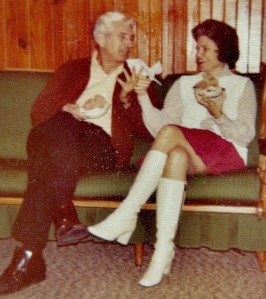
Mama’s Fiftieth birthday was celebrated in that little Elba Apartment with big bowls of ice cream. She was already feeling poorly, but none of us would have dreamed how quickly things would end. This is the last known photograph of her, taken by me only five months before she died, though none of us had any clue, at the time, what lay ahead.
By now, you must be questioning just why we had pulled up stakes so precipitously that it was necessary to cram everything into such odd housing, and you would be right to wonder. Briefly put, the Elba adventure – and I call it that since it only lasted, in the end, for four torturous months – was the most unsettling consequence of a separate trail of woe that had begun the summer before. Clearly, once it arose, Mama’s illness was our greatest concern, but it was only the worst of a catalog of misfortunes that had already begun to manifest, Job-like, and would continue to multiply for some months more. It was as if life, itself, was bent on determining just how much we could take.
To draw the full picture, I have to take you on a somewhat complicated journey, but I promise to do it in as few paragraphs as possible: Beginning on the second day after he married Mama in December of 1948, and for nearly twenty years thereafter, Daddy, a Navy veteran of WWII with degrees in forestry from both Georgia and Yale, worked for a man called Clancy. Initially hired as forester and, somewhat improbably, bookkeeper, for the Clancy Lumber Company in the North Alabama hamlet of Grayson, we remained there until relocating, on the first of April, 1957, to Clancy’s new and much more spectacular domain, a remarkable time-capsule of the Victorian Age called Century, FL, located on the Alabama/Florida line. There we remained for precisely one decade – until the first of April, 1967 – as Daddy rose from logging superintendent to company general manager. The perfect roundness of these dates arose directly from the ten-year term of Clancy’s plum contract to harvest the million-acres of mature, second-growth Longleaf Pine comprising the Alger timberlands (and you may be sure that he managed to cut pretty much all of it by the time we left).
Of course, the finite nature of this deal was always understood (by the adults, at least), and with such generous advance warning, Daddy had plenty of time to look for another job, and managed to land a good one that would take us back north to Decatur, AL, located on the southernmost point of the Tennessee River as it swings through the top of the State. The Domtar Paper Company, a Canadian concern, was planning to build an enormous mill on the river that would require vast quantities of pulp wood, and had hired Daddy to procure it for them. So, for the next two years – as Mary B. started her First Grade and I finished my Twelfth – he courted every North Alabama tree farmer and casual land owner he could find, ultimately placing hundreds of thousands of forested acres under contract.
Unfortunately for Domtar, it wasn’t the only paper company attracted to the area, and when Georgia-Pacific made it clear they were staking a claim for themselves and would be building their own mega-mill in the same place, Domtar cut its losses and pulled up stakes, leaving Daddy with instructions to please negotiate the sale of his contracts to G-P, who, after all, would need the pulp wood just as much as they had. And, fortunately for us, G-P saw the wisdom of putting him on the payroll to manage the deals he had so adroitly executed, so, though there was perhaps a moment of insecurity around our dinner table, it was very brief, and I think he was ultimately pleased to be working with his new colleagues, most of whom he already knew from his many years of service to the ten-State Southeastern Section of the Society of American Foresters (including two years as its president).
Now, even as his new work for Georgia-Pacific was prospering, another company came knocking – indeed, two other companies, and those none other than U.S. Steel and U.S. Plywood – to propose yet another opportunity: the presidency of Birmingham Forest Products, which was being constructed near Jasper, and would be the largest forest-products manufacturing facility ever built in the State (for the staggering sum, in those days, of $13,000,000). The idea looked brilliant on paper: U.S. Steel had millions of acres of Alabama timber growing on lands it had purchased solely for the rich veins of coal and iron ore running underneath, and U.S. Plywood had the expertise, it was presumed, to spin all those trees into gold, so work had already begun building the State’s first serious plywood plant in Cordova, about ten miles southeast of Jasper. And, as it turned out, they wanted Daddy to take the reins and make it work.
That was August of 1969, and I was just beginning my sophomore year at Birmingham-Southern when Daddy got the call, and he and Mama were so excited they loaded Miriam and Mary B. in the car and drove the two hours to Birmingham just to pick me up and take us all to dinner. It was a well-deserved affirmation for Daddy’s long, hard work, and a time of rejoicing for us all, but it also, as it turned out, would prove to be the pinnacle of our time as a family. We could hardly have guessed, as we dined on Joy Young’s Chinese delicacies that day, but we were also marking the start of a precipitous slide that would catch us all by surprise, and ultimately send Daddy reeling.

Maybe someday I’ll find a better copy of this announcement that appeared in the Decatur Daily of Daddy’s appointment as President of Birmingham Forest Products in 1969.
But those concerns were still far in the future as, for the third time, Mama began to make her relocation decisions. She bought a whole rack of house-plan magazines and, with Daddy, toured Jasper until they agreed on a beautiful, densely-forested double lot on Quarry Hill Road. The next thing you knew, we were moving into our brand-new, even more perfect, house. Like the one in Decatur, it included a brick-floored recreation room big enough for the Ping-Pong matches that had become a family staple, and enough space in the living room for a new baby grand from Forbes Brothers in Birmingham that soon stood proudly in the corner, its wing-shaped cover taking flight, just as we all seemed to be.
My first inkling that all might not be as wonderful as it appeared came a few weeks later when Mr. Clancy stopped by for a visit. Leon Clancy was one of the most knowledgeable sawmillers on the planet, and Daddy was eager to have him look over the new construction and make any suggestions he might have for improvements. Beaming with pride, Daddy let me tag along as he showed off his new plant from the debarkers right on through a succession of impressively gargantuan saws and lathes that would ultimately spit out finished four-by-eight sheets of plywood made of the best Alabama hard- and softwoods.
We were only about half-way along when Mr. Clancy got a curious look on his ruddy face, stopped, and then stared first one way and then another at the ten-ton machine looming over us, from the top right down to the massive bolts securing it to the concrete floor.
“Hank,” he barked matter-of-factly, then paused for effect as we turned and waited to hear what he had to say. “This thing is backwards.”
“What?” Daddy said.
“Look. See here?” he said, pointing, “It’s gotta be thataway. I thought these damn Yankees were supposed to know what they were doing!”
“Hmmm,” Daddy said as he made a note in the little top-spiral pad he always kept in his pocket, “I’ll have to have them look at that.”
Unfortunately, as it turned out, a backwards bandsaw would prove to be the least of Daddy’s worries. The larger ones all seemed to revolve around labor unions. Both the United Steelworkers and the Lumber & Sawmill Workers had been trying for years, without much success, to make inroads into Alabama, and both saw Birmingham Forest Products – after all, the progeny of two thoroughly unionized industry leaders – as the long-sought key that would finally get them through the door. Consequently, they pulled out every trick in the book in their efforts to organize those back-country sawmillers – hardscrapple men for whom Daddy had nothing but respect, and whom he had hopes of mentoring even as his bosses had done for him – into a labor force that saw him as the enemy! After a year or so, it had reached the point that there seemed always to be another group starting another labor action for another unforeseen grievance, and this to such a great degree that it became basically impossible for the company to meet – or even come close to – projected revenues.
Hank Wilson had succeeded, always, on his ability to motivate workers through hale-fellow-well-met camaraderie and the example of his strong work ethic, but as the months turned into years of confrontation and obstruction, he found himself on uncharted waters where, rather than being motivated by the pride they took in making the best possible product, his employees were being urged to do the least possible work for the greatest possible reward. He might as well have been trying to make meringues on Mars.
There was, of course, a Board of Directors to supervise all this, and in keeping with the origins of the company, it included three members of the Board of U.S. Steel, three members of the Board of U.S. Plywood, and Daddy. And, to their credit, they did their best to back him up for over two years, as the company crept closer and closer to making a profit, but the expectations had been so great, and the realities so meager, that, after two losing years, someone had to shoulder the blame and, well, it was clear enough who the scapegoat would be. Thus, in the summer of 1972 and just shy of his third anniversary at the helm, Daddy was relieved of his command.
It is telling – and somewhat ameliorating – that Mr. Brown, the union-busting specialist they brought in to replace him, fared no better than he had, and within three years, the dream having turned into hopelessness, BFP was completely closed down, and Cordova went back to being the sleepy little town it had always been. Unfortunately for all concerned, what had seemed such a logical joint venture in the beginning turned out to be anything but, and while the union issues were perhaps foreseeable, in all the lead up – throughout all the design and construction, hiring and launching of the company – I never, ever heard the word “union” mentioned by anyone, not even once.

Photo of the Jasper house under construction on Quarry Hill Road in 1969
Now, while dashed in his hopes for making BFP hum, Daddy was hardly without options, and it is a real testament to his skill and reputation that Georgia-Pacific, still reaping the rewards of his good work in Decatur, called him right away and soon made him head of forest procurement for the entire State of Alabama, a choice post that had the benefit, we all thought, of allowing him to continue working from Jasper, where, by then, he and Mama had made many good friends, enjoyed active leadership roles in the church and local social life, and built their beautiful home. But it was not to be. I think Mama truly thought they would live out the rest of their lives there, and I know she wanted to stay, but, in the end, his well-publicized failure at BFP (and, I think, the inevitability of encountering reminders of it at every turn in such a small town – e.g., his replacement Mr. Brown in his Sunday School class, or his former employees at the grocery store, etc.) proved to be just too difficult. It was simply no longer possible for him to find the personal peace of mind and self-respect required for any life to be full and whole and spiritually healthy in a place where everyone knew he had failed, and failed hugely, and however understandable or inevitable that failure may have been, such reasoning was of no comfort to him whatever. Regardless of how sensible it may have seemed to stay where he was – to Mama, to me, to, really, everyone else – life in Jasper, for him, had become impossible, and all he really needed was for someone to show him an exit. He wouldn’t need a second invitation.
And, so it was in early December that he got a call from a fellow named Jimmy Rivers, of Rivers Industries – a young and ambitious holding company headquartered in Macon, GA – who presented him with an escape route that was hard to resist: president of their newest acquisition, Windham Power Lifts, a small but profitable and well-respected maker of industrial fork lifts located in Elba. Jack Windham, who founded the company in the 40s and had nurtured it for over three decades to produce machines of his own design, had decided to retire, and the Rivers had met his price. But Mama wasn’t convinced. Not a bit. For starters, she was happier where they were that she had been in years, and more than that, she was not shy about letting Daddy know she didn’t really trust the Rivers or the opportunity they presented.
Ordinarily, that would have been enough to stop the discussion right there, and it almost did, but Jimmy Rivers was determined and, when faced with Mama’s opposition, flew his entire Board of Directors the three-hundred miles from Macon to Jasper on the company plane just to take her to a fancy dinner and convince her of their sincerity and trustworthiness. It didn’t really change her mind, but she had to admit it was a strong gesture and that, combined with Daddy’s eagerness to move anywhere but Jasper – and as soon as humanly possible – turned the reluctant tide. The rest of that December was all about packing, with the moving vans scheduled to reach Elba on the morning of January first.
And, so they did, along with her curious backache. Of course, the move had all happened so quickly that there was much still to be done, and the first few weeks were necessarily consumed with finding their way in another new town, our third in six years. Mary B. was introduced to her new school with the advent of the spring semester, and as they were invited to several churches by the locals, the three of them tried a different one every Sunday for the first few weeks before, predictably, joining the Methodists. They also bought a lovely wooded lot in Elba’s newest sub-division, and, once again, Mama started looking through house-plan books in the hope of making this, to be her fourth custom-built house, even better than the last. If it hadn’t been for that persistent back pain, life was beginning to find its rhythm again and, almost, get back to normal.
Then, on Valentine’s Day and out of the blue, came the next big whammy, at least for me, when a dire case of non-infectious hepatitis took me as close as anything ever has to my own near-death experience. (This was before they gave the disease the letters “A,” “B” and “C” to distinguish different kinds. In those days, hepatitis was either “infectious” or “non-infectious,” and mine, as it turned out, was the latter.) It had tip-toed in and blindsided me completely. I knew I had been unusually fatigued, but since I had been working triple-overtime at the church – including all the cooking for a seven-course “Evening in Paris” Valentine’s Banquet the previous Saturday for sixty kids (from French onion soup to œufs à la neige) – I had shrugged off my fatigue as something only to be expected. That is, until I awoke on the 14th to find myself unable to get out of bed.
What I could do, though, was reach my phone, and I wasted no time calling Fran Vincent, the Church receptionist and membership secretary (whose chiseled beauty – even at seventy – was only broken by the smile lines of her well-played life and still deserves a mention, even now), both to let her know that I didn’t expect I would be coming in that day, and to ask if we had a doctor among our 3800 members that I might call (it not yet having occurred to my young self that I might need one). She instantly gave me a name and number that I was soon calling, but the woman who answered explained in her gentle southern drawl that the doctor I had asked for was “not accepting new patients at this time, but he has a new young associate who has an opening next Tuesday afternoon. Could you come in then?”
“Honey,” I said (it was Alabama in the ‘70s, after all), “if that’s the best you can do, then fine, but you’ll have to send a hearse to pick me up.”
“Oh,” she said. “I see. In that case, can you be here in half-an-hour?”
I must have been really, really sick, because I remember almost nothing of my first week in the hospital except the tube in my arm and the constant, maddening smell of onions. (This was surely somehow related to the half-bushel I had sliced for all that soup a few days earlier. Some quirky side-effect of the disease had lodged the odor into my brain and simply wouldn’t let it go for, really, my entire two weeks in the hospital. As you might imagine, I have not made one ounce of French onion soup in all the forty-one years since.)
If you’ve ever had hepatitis, you know that the first and most insidious symptom is loss of appetite. Eating anything whatever is the last thing you can stomach, so the first priority of my doctors was to thoroughly infuse me with a strong solution of glucose and meds. Unfortunately, even after a full week of this treatment, my newfound doctor – and, by then, the world-class hepatologist from the University of Alabama Medical Center he had recruited to help him– were still shaking their heads as they stood at the foot of my bed, wondering why there was absolutely no improvement whatever in my blood work. Finally, the decision was made to take out a tiny piece of my liver the next morning so they could examine it more closely.
But then, that night – thank you angels – something clicked. I suddenly had an urge for chocolate milk. Maybe because it was the absolute opposite of onions in taste and smell, or maybe – more likely – because the intravenous feeding was finally doing the trick. But whatever it was, I wanted some chocolate milk, and then more and more of it, of which there was an apparently endless supply. And, one might say miraculously, by the next morning when the doctors came around to check on me before operating, my jaundice was so diminished that they decided the treatment must be working, after all, and called off the biopsy.
My turnaround came on a Wednesday, but it was Saturday afternoon before I finally saw Mama, Daddy and Mary when they made the five-hour drive, long planned, to hear Miriam sing the leading role of Lauretta in “Gianni Schicci” at Birmingham-Southern. In any other time in my life, they would surely have shown up on day one, but under the peculiar circumstances of those days – Mary in a new school, Daddy trying to get a handle on his new forklift company, and Mama trying to get past her pain – they simply couldn’t have come any sooner. We had spoken on the phone, of course, and by then I had added pineapple sherbet to my short list of edibles, so they brought me a half-gallon and visited for a spell, but even then, something was off. Mama was not herself. I could not know, of course, how much she was suffering, and she would never have let it show if she could help it, but her visit did not bring the healing energies I craved, though it did give us the opportunity to settle on arrangements that assured we would be seeing more of each other soon enough.
It takes a long time to recover from hepatitis and, since you can hardly move, most of it must be spent in bed. That meant I would need a place to be, and be nursed, once my two weeks in the hospital came to an end, so while we were all together in that hospital room it was agreed I would go to Elba for a few weeks while my recovery took its course. And, so, for the entire month of March – with the understanding and blessing of First Methodist, for which I am still very grateful – I necessarily imposed upon Mary B. and occupied the second bed in her tiny room.
This turned out to be a minor blessing of sorts on two fronts: First, with me around to help with Mary, Mama was freed up to go into the local hospital for fourteen days of extensive tests. And, secondly, it gave Mama and me a full month of precious time together, however poor the quality of that time might have been, and, at least, we were together for her 50th birthday that March 19th, though the sad truth is, I don’t remember much about it. We were both in a fog, but perhaps that was for the best, given all that was going on, and especially since yet another, totally unanticipated, complication was about to be thrown on top of everything else.
Old Jack Windham, it turned out, was a lot cannier than the Rivers Boys had given him credit for. Since the Windham Power Lifts product line was based entirely on his designs, he, of course, also held all the patents, and in their delight at getting the company for a song, the Rivers had failed to notice that they had not, at the same time, acquired the patents for the machines it manufactured. And, not unpredictably, when he saw some young whippersnapper, i.e., Daddy, coming in and changing things around, he refused permission for the use of those patents, which, of course, made the Rivers’ purchase worthless, and Daddy truly redundant.
This news all came down in late March, just about the time my month was up, and pretty much simultaneously with the doctor’s very discouraging pronouncement that after two weeks of in-hospital procedures, he could find nothing whatever wrong with Mama, and he just didn’t know what else he could do. At that point, I really believe he thought it must all be in her head.
Those last few days I spent in Elba, the atmosphere in that little apartment was so thick you could cut it with a knife. There was the fear: Daddy’s, so well hidden but impossible to avoid, knowing he had gotten us all into a mess and he wasn’t quite sure how he was going to get us out; Mama’s, also well hidden but I’m sure she already knew, at least subconsciously, what was happening to her. There was the sheer exhaustion: Mine from the hepatitis; Daddy’s from the fear; and Mama’s from all of it: the house, the move, the regrets, the pain that no one could find. And, then there was the disappointment, so much disappointment.
As the month ended and I prepared to return to Birmingham, I was much improved, though still very weak, Daddy was so thwarted in his plans that he was utterly useless, and Mama was in serious pain. Only Mary B., God bless her, was full of excitement. She had already made a covey of new friends at church and school, and all she knew at that point was that Mama and Daddy had found a great new lot to build on, and Mama had settled on a house plan. There may have been troubles ahead for all of us, but at least for a season, Mary B. knew them not, and, embracing her new adventure like a pro with her wide bright eyes and toothy smile, she was, in those days in that place, truly our only ray of light; our only link to sanity.
Now, having left my First Church duties for six full weeks to my associate, the unshakable Reverend Fletcher Thorington, my desk was piled high with catching up to do when I finally returned on the first of April, and the month fairly flew by as I did what I could to make it up to the kids for my six-week absence and the gamma globulin shots they all been required to suffer when I first came down with my illness.
April was also a busy month for the Rivers boys, who, having agreed to pay Daddy a considerable salary, found themselves looking for another company for him to run. As it turned out, they didn’t have to look far, since they located a business that could use some help only a few miles from their Macon headquarters, in the little town of Fort Valley, GA. Called Pearson Mills, it had seen better days as a peach crate factory, but, by then, the peach growers had switched to cardboard boxes, and the Rivers reckoned that any factory that could peel off thin sheets of wood for peach crates should be able, with a little jiggering and Daddy’s experience, to produce fine veneers for the furniture industry. And, so, in addition to everything else, by the end of April another move was also in the offing – to another town in another state, no less – and this one needed to happen even more quickly than the last.
Of course, none of this was shared with Miriam or me until Mama told us, somewhat casually, that they would be flying to Macon and back the next Saturday in the Rivers Industries’ plane to look at houses in a town that, up until that very moment, we’d never even heard of. It was Tuesday, May 1st, when we spoke, and though her pain had continued unabated throughout the month, she was not sure what else she could do for it if even her doctor had run out of ideas, and I think, even through the pain, the idea of looking at some real houses – of finally getting out of that tiny apartment and helping Daddy land in a better situation – was a more than welcome distraction.
But, then, on the Friday night before their trip, something occurred to change everything. She felt with her fingers, for the first time, a hard lump in her lower abdomen, and surely that must have been the moment when her world was finally, well and truly, turned upside down. If, until then, she had only suspected what was wrong with her, it was suddenly undeniably clear, and she finally knew – for sure – not only what was happening to her body, but what most likely lay in store for all of us in the days to come.
She called her doctor the first thing the next morning in the hope of seeing him before their plane was due to take off, and he told her to head right over. Once she arrived, he quickly realized the truth. In Mama’s words, when he felt that lump, “He turned as white as a sheet, picked up the phone, and dialed the surgeon in Montgomery from memory.” The exploratory operation was scheduled right then and there for the following Tuesday at St. Margaret’s Hospital in Montgomery.
I can’t even imagine what that airplane trip to Macon must have been like. I’m sure Daddy was in denial behind a façade of optimistic hope, and equally sure Mama already saw the whole picture, right down to the end, but, for his sake, would never have let it out of the bag; never have let anyone know what she now knew, or see her fears, and, as best she could, she even kept them from herself for as long as possible.
They were met at the airport by a Fort Valley real estate agent who had been lined up in advance by the Rivers, and within minutes they were touring what available housing there was. The county seat of Peach County, Fort Valley boasts thousands of acres of orchards all around it to justify the name, but the town was put on the map by the success of its biggest employer, the Blue Bird School Bus Company. By the 80s, one out of every three school buses sold in the U.S. was a Blue Bird. But, in spite of its bustle, Fort Valley didn’t see much movement. It had reached a sort of equilibrium in which the people who lived there, and their children after them, tended to stay in place and keep things humming along the way they were, and, without any new industry or prospect of change, there were very few newcomers. Consequently, of course, neither were there many available houses that were both large enough to accommodate all our worldly goods, and reasonably priced. But, at least, there were more in Fort Valley than Elba, which had none.
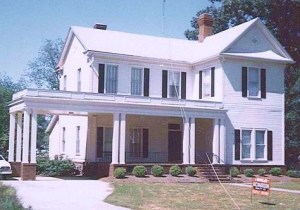
The Fort Valley house where Mama died, seen and bought in a single afternoon on May 5th, 1973, the day she discovered just how sick she was.
According to Mama, there were, in fact, two houses that would do, both of the late Victorian variety (large, drafty, wooden, rambling, and demanding), one a plain white two-story clapboard with a nice porch and carport, and the other a rather more imposing red brick option vaguely based on the White House with an imposing semi-circular colonnade on the front supported by four great white pillars. Since both houses were similarly priced, the latter one might have been the obvious choice, except for the fact that Mama had noticed, as they drove into town, an almost identical portico adorning the Rooks’ Funeral Home, and so, as they headed back to Macon and had to make an immediate decision, she opted for the plainer one, saying with incredible poignancy, “I’m sorry, but I’m just not going to live in a house that looks exactly like the funeral home.”
That decision made, they only had one more stop to make before flying back to Elba, and that was the carpet store. Aside from a few structural issues, some painting and a serious cleaning, the only updating that absolutely had to be done on the house was replacing the old, stained carpeting in every room, including three large bedrooms upstairs and four rooms downstairs: living room, dining room, den and a spare bedroom. It was a huge purchase to be made with so little time to consider the options, but there was no time and Mama could be decisive when she needed to be, so the choices were made in minutes: velvety plush piles in muted tones for the more formal downstairs rooms, and in a nod to the latest in carpet fashion, brightly colored shag for the bedrooms above.
Of course, we children knew nothing of the doctor’s visit or the lump. We only knew about the trip to Fort Valley and were eager to hear about it, so I was pleased to find a pink message slip awaiting me when I returned from lunch on Monday saying that Daddy had called, but then taken aback a bit when I realized he had called from an unknown phone. I returned the call.
“Hello,” he said.
“Where are you?” I asked.
“Well, your mother and I are in Montgomery, at St. Margaret’s Hospital,” he replied.
“What’s going on?” I asked, my heart sinking fast.
“Well, son, we don’t really know yet, but the doctors decided they want to do an exploratory operation tomorrow morning to see if they can finally get to the bottom of what’s been ailing her.”
“I’ll be there tonight,” I said, already thinking through what I would have to do to get there.
“No. No, son. You stay there. There’s nothing you can do here, in any case. I’ll call you tomorrow as soon as we know something,” he said.
Unfortunately, as it turned out, Montgomery was short of the blood type required for Mama’s operation, so the surgery had to be postponed until Wednesday, May 9th. And so it was that fully four months and nine days after her first discomfort, they finally did their exploration.
Miriam had classes scheduled throughout the day, but knew that Daddy would be in touch with me once the surgery was done, so we planned for her to call between her classes for any updates. She called at ten, and again at noon, but there was no news, and I stayed in my office through lunch to be there whenever the phone rang. Finally, around 2:00 p.m., Fran put the call through to my desk.
“Hello,” I said.
“Tombo!” Daddy said instantly and with considerable energy, and, for a nanosecond, I was relieved.
“Hello, sir? I have a person to person call for Mr. Tommy Wilson,” the operator interjected.
“This is he,” I said.
“Thank you,” she said. “Go ahead, sir” and clicked off.
Silence.
More silence.
He had been all ready to be upbeat and strong and put the best possible face on the situation, but the operator’s interruption had undone him. It was the longest silence I ever heard.
“Pop,” I finally said, “What’s wrong?”
More silence, then a long intake of breath. “Well, Tom, the doctor was just here and all I can really tell you is what he told me. Your mother has a tumor on her pancreas and it has already spread to her spleen and her liver, so it was too far gone for them to remove. They just sewed her back up.”
“So what does that mean,” I asked.
“He said she has six months to live,” he said. (He had really said “three-to-six,” but Daddy just couldn’t bring himself say it at the time.)
“I’m coming down,” I said.
“There’s really no need for that,” he responded, stubbornly, determinedly self-sufficient in all things. “There is nothing you can do for her.”
“It’s not her I’m concerned about,” I said. “I’m coming down for you.”
Now, I knew Miriam would be calling again at any moment, but it was simply not possible for me to give her this news over the telephone, so I pleaded with Fran to please lie for me if she did happen to call in the few minutes it would take me to get to the B-SC music department.
“But what can I say to her?” she asked.
“Oh, just tell her I’m in the bathroom and to please call me back in a few minutes,” I instructed as I ran out the door.
Of course, when I arrived at the music department parking lot, Miriam was already there, sitting on some sidewalk steps leading down to the cars. She had called, as I feared, but my subterfuge didn’t work because when she protested my absence – even to go to the bathroom – big-hearted Fran Vincent caved, and told her that I was actually on my way to the school and she would see me soon.
I walked from the car to where she sat with my heart in my throat, then followed Daddy’s lead by saying, “Well, all I can tell you is what Daddy said the doctor told him…” It was so utterly unbelievable, so entirely against the grain of good fortune that had always followed our family, that her first reaction was actually a laugh, “You’re kidding,” she said, even as it began to sink in that I wasn’t.
“I wish to God I were,” I replied, and then the two of us embraced on the sidewalk and held each other up as we bawled our eyes out until we were literally heaving right there in the sight of God and anyone else who might have been in the vicinity (though, blessedly, I don’t remember there being any others around).
The legendary Hugh Thomas, concert pianist, master chorister and, for many years, head of the Birmingham-Southern Music Department, was not only a magnificent, warm-hearted and truly old soul, he was also Miriam’s faculty advisor and the man who, as the long-time Music Director of First Church, had gotten me my job. And, as it happened, his office was literally the nearest enclosed space to where we were standing and crying, so once we recovered our equilibrium sufficiently to move inside the building, we went straightaway there, where he, mercifully, happened to be working alone. He was instantly supportive, you might even say sympathy personified, enfolded us into his space, and kept us company even as we sat on his couch and continued to deal with the emotional whiplash of the moment. He had met Mama on several occasions, including two times when she had fed whole choirs under his direction at our house – the first time in Decatur my freshman year when, with only one day’s warning, she fed lunch to the entire B-SC Men’s Chorus (and a couple of Miss Alabamas we had on the bus with us) as we traveled to a gig in Nashville, and the second time was in Jasper, my senior year, when she served dinner to the 30-voice Concert Choir after we sang in a wedding there – so HT, as we called him, was well-qualified to join in our grief, and when he did have to leave to conduct the afternoon’s rehearsal, he left us to sit there as long as we needed, though it was only a few minutes before Miriam got up to retake her place in the choir practice, and I headed back to my office with a promise to pick her up that evening before heading to Montgomery.
I’m fairly certain that when she left that little Elba apartment to go to the hospital, Mama had every expectation of returning there soon enough, but as it happened, she never saw it, or Elba, again. Instead, she remained in St. Margaret’s for two weeks of recovery and her first round of chemotherapy before being moved into a spare bedroom at the home of her sister, our Aunt Peggy Morgan, in Moultrie, GA. This solved several problems all at once: the house was modern, clean and much better equipped for nursing Mama back to health than the little Elba apartment; Aunt Peggy would be able to watch over Mary B., who had just turned twelve only a couple of weeks earlier; and it was only an hour-and-a-half from Fort Valley, where work to upgrade our new house was already underway. It was expected that Mama would stay in Moultrie until mid-June, by which time the new house should be ready and, for the first time since leaving Jasper, the Wilson’s house might once again hold the Wilson’s furniture and Mary B. might finally be able to sleep again in her own bed.
Unfortunately, at least two of the several weeks Mama was in Moultrie were spent in the local hospital, since her reaction to the chemotherapy was severe and unrelenting and required constant monitoring. Her hair fell out almost instantly and her tumor (or, really, tumors) had grown by then to the point she was beginning to look a trifle pregnant, which occasioned her saying a cussword for only the second time in my memory when, underselling herself enormously, she said, “You know, Tommy, the only two things I’ve ever had to be proud of were my waistline and my hair, and this damn disease has taken both of them.” (The first and only other time, since I brought it up, was just a year earlier in the Jasper kitchen when she accidentally dropped an iron on her toe.)
Moultrie is about a seven hour drive from Birmingham, but I managed to get there twice during the weeks she was there, with stops in Fort Valley on the way back to check on the house renovations. Meanwhile, Daddy was dividing his time between what business he had left in Elba (including selling the lot he had just bought two months before), his wife and daughter in Moultrie, and the new house and veneer mill in Fort Valley, doing his best to make sure everything would be ready by moving day, June 13th.
Wednesday was my off day (church people work on weekends, of course), and with Daddy in Elba where the vans were being loaded for the move, I left Birmingham as soon as possible on Tuesday, the 12th, to be at the new house in Fort Valley when the movers arrived. It was late night when I got there, but the first thing I did was stop by the house to make sure that all the carpeting, which was to have been installed that day, had been laid.
Well, it had been laid, alright, but without anyone around to supervise, every single yard of it was on the wrong floor. All the brightly colored shags intended for upstairs were covering the downstairs formal rooms – Mary’s grass green shag made the living room look like a croquet court – while upstairs the velvety beiges and blues made for truly elegant bedrooms. There was nothing for it but to have the entire job torn up and re-laid, and those Mayflower men were due to arrive in only a few hours.
I called Daddy, who called the Rivers man overseeing the mill conversion, and somehow heaven and earth were moved, so that, by the time the van arrived around noon the next day, the proper downstairs carpet was ready for furniture, and the last of the reinstalling was almost done on the second floor. It was nothing short of a miracle, but by the time the sun set on that eventful day, the carpet was down, the furniture arranged, and the house was as ready for Mama as we could make it.
Daddy, who had arrived with the van, headed to Moultrie the next morning to pick up Mama and Mary B. and bring them to their new home. Mama arrived tired out from her journey, and moved straightaway into the bed on the first floor, since the stairs were more than she could manage. (The only time she ever even went to the second floor was a couple of weeks later when Daddy and I formed a “fireman’s carry” seat with our arms and took her up to see the renovations.) Miriam also arrived from school that afternoon, so for a few hours, at least, all five of us were together again before I headed back to Birmingham to be at work the next morning. I had much catching up to do after taking yet another vacation day to help with the move, and especially since, beginning the next Monday, I was scheduled to be out of the office for two more weeks while serving at Sumatanga, counseling a cabin full of senior high boys.
* * * * *
The snoring grew louder in those bunkhouse beds as I continued to lie there and swim in my thoughts. By then I knew the prognosis had actually been “Three to six months,” and already one of them was gone… Mama seemed to be recovering from her surgery and adjusting to the meds, and she was moving much better, but the wigs were a poor substitute and her tummy continued to grow… Why, dear God, had this happened?… Why her, of all people, so treasured by everyone who ever met her and always making a point of loving the unlovely, uplifting the downtrodden and serving those she perceived to be most in need?… It just wasn’t fair!… It made no sense!… It was such a waste!… We needed her… I needed her…
And so it went, as my worries continued to spin ‘round and ‘round, drilling down into my brain like an auger, making sleep impossible. Finally, frustrated and absolutely unable to get any rest, I decided a serious prayer was in order, and quietly climbed down, donned my robe and shoes, and slipped out of the cabin into the dark, dewy night.
There might have been rumors of a ghost afoot if anyone had seen me slipping across the camp’s central clearing to the edge of the woods on the other side where, some years before, a tiny enclosed chapel of stone and cedar had been placed for just the sort of personal praying I had in mind.
Guarding my eyes from the sudden brightness, I flipped on the lights as I walked through the door. Three little pews for two had been placed on either side of the narrow aisle leading to the front where a simple pine altar filled the space between the back wall and a railing for those who wished to kneel. A plain brass cross had been placed on the table, and commanding the space above it in a rustic frame of lichen-covered branches hung an over-sized, starkly dramatic charcoal drawing of Jesus’s face.
I walked to the front, sat in the first pew to my right and was beginning to gather my thoughts when something completely unexpected happened: a very large and beautiful blue-green dragonfly flew through the door – in the quiet of the night I actually heard his chattering wings before I saw him – and up to the front of the chapel where it proceeded to circle the altar three times before alighting atop Jesus, exactly in the center of the frame and looking right at me.
Astonished, I sat motionless for a few moments to see what else he might do, but he seemed content to stay where he was, unmoving except for calmly raising and lowering his wings from time to time in a way that almost seemed to say, “Well?”
For the next few minutes – I really don’t know how long – I poured out my lament to the man in the portrait, my long-time friend Jesus. I did some crying, too, and through it all, the dragonfly remained, content to watch. When I was finished with my plea, my supplication, my pouring forth of self-pity, self-doubt and self-castigation, I finally reached the end – the point – by asking for His help that I might be able to get beyond my personal worries, the better to serve those I was placed there to serve, those gangly kids who would wake in the morning and once again look up to me with such confidence and trust.
And then, I heard a still, small voice that I hadn’t heard for some time, since a profound prayer session under a Quarry Hill street light four years before:
“Don’t worry,” He said.
“What? What do you mean, ‘don’t worry’? Mama is dying!” I said.
“Yes, I know, but why do you worry? Does it help your Mama for you to worry?” He asked.
“Well, no, of course not,” I replied.
“And your father and sisters, how does it help them?” He asked.
“Well, it doesn’t, but…” I replied.
“And you, my friend, how does it help you?” He asked.
“Well, I don’t know, really, but that’s what people do,” I said. “Aren’t you supposed to worry when your Mama is dying and you can’t do anything about it?”
“It is in your control,” He said. “Just don’t worry. It saps your energy, consumes your peace and is of no use to you, or your ailing mother, or anyone else, for that matter. Worry is a thief in the night.”
“So how do I not?” I asked
“Just stop,” He said. “Your brain will do what you tell it to, and you can tell it not to worry.”
“Just like that?” I said, somewhat incredulous.
“Just like that.” He said.
And I, not entirely convinced but taking Him at His word, said, “Okay, Lord.”
Et voilà! In that instant, the moment I accepted His instruction, and from that point on, I stopped worrying. At first it took some effort, but any time those fears and dark forebodings started creeping in again, I said an internal “no,” changed my focus to something brighter, something constructive, and, lo and behold, it actually worked. And, quite apart from its effect, it was also an important lesson in just how much more control we have over our minds than we usually give ourselves credit for, and just how simple it is to apply that self-control to our mental selves, even as we work to govern our physical ones.
I sat there a few minutes more, trying to absorb what had just happened and process the new truth I had been given, then, much relieved and with a heart that was infinitely lighter than it had been when I first sat down, I said aloud, “Amen.”
And, even as I said it, the dragonfly took flight and circled the alter two more times before zooming back out into the night. Being pretty sure that dragonflies are not, as a rule, nocturnal, this whole aspect of my experience kept me sitting and pondering the mercy and wonder of my friend Jesus for some time longer before I finally stood, turned out the light, and made my way back across the lawn to the cabin. This time, I was asleep before my head even hit the pillow.
Now, you may think I have reached the apex of this tale, since this is such a lovely story, but no! Never let it be said that our Heavenly Father leaves anything to chance where clarity is desired. He certainly didn’t do so with me, for, just in case I might miss the point, underestimate the grace of His embrace or somehow fail to appreciate the importance of His gesture, that dragonfly was nowhere nearly done.
As summer camps will, the next day started fast and, choc-a-block with activities, didn’t really give me a free moment to contemplate the events of the previous night before I found myself leading a Spiritual Life discussion at mid-morning with a co-ed group of maybe a dozen campers. We had been assigned one of a long row of open classrooms constructed with three walls and a roof, but where a fourth wall would ordinarily be, next to the walkway, the rooms were left open to the elements. A supply of heavy metal folding chairs – those buff-colored ones that are apparently mandated for Methodist fellowship halls, since I’ve never been in one that didn’t use them – had been provided, and we arranged ourselves into a circle with my chair situated opposite the opening, my back to the inside wall. We settled in and had been conversing for some time when, while listening to one of the others talk, I absentmindedly leaned back in the chair – pushing with my shoulders until my weight was supported by the wall – and looked up at the ceiling, and there, hanging upside down on the acoustical tile directly above my head, was an identical dragonfly to the one I had seen the night before. It just perched there, not moving, for the few seconds I could give it before having to turn my attention back to the discussion.
I didn’t want to interrupt the good flow of conversation, so said nothing to the others, but it instantly took me back to the wonder of the previous encounter, and when the session was ended, I looked up at the ceiling to see if it was still there, but it had flown out, unseen, in the interim.
That was on Tuesday morning, and by the time the five-day session was ending with a big worship service on Thursday night – in which I was to play a part – I might have forgotten all about the dragonfly – or dragonflies, if it was more than one – but then something happened that was so bizarre, unlikely and even impossible to account for in any logical way, that it was quite enough to cement these memories in place for eternity, and assure me that, however terrible things might seem to be, I would always have my friendship with Jesus to lean upon, that however much my mother may be suffering, He, too, felt her pain, and He would be right there with her through it all, whatever may come.
With a poured cement floor and exposed ceiling joists, the pavilion at Camp Sumatanga in those days was nothing fancy, just a big barn of a building that – oddly, given its size – had only two small doors to the outside, one each on opposite corners of the rectangular expanse. The one nearest the central lawn and assembly area was primarily used for public comings and goings, while the second, beside the small stage at the other end of the room, was kept closed and rarely used. Most of the time, the room was arranged like a traditional church or theatre, with those folding chairs lined up in rows facing the stage, but it could easily be arranged in several ways, and, for those times when setting it up as a “church in the round” was desired, a special spotlight in a rusty coffee can had been attached to the central rafter to illuminate an altar table, around which the chairs could then be arranged, leaving a diagonal aisle from the door to the center for the campers to use as they took their seats.
Because I was, in those days, a somewhat accomplished flautist with theatrical experience, I had been asked to join fellow counselor June Morgan in kicking off the Thursday evening service by dancing an interpretive pas de deux. June had set the choreography with me earlier in the day, which basically entailed our arising on cue from seats on opposite sides of the altar, circling the table three times while I played “Lord of the Dance” and she waved about a spray of flowers, then ending as simply as we had started by retaking our front row seats.
Of course, to have those seats, it was necessary to be in place before the rest of the campers, so we arrived about fifteen minutes early, went over our dance moves once more, then took our seats facing each other to await our cue. We ended our practice with five minutes to spare and, as we waited silently, could hear the voice of KK Knowlton beyond the open door cajoling everyone into single file.
And, then, as I looked toward the noise – down that long diagonal aisle to the bright rectangle of the open door – something moving caught my eye. Some flying thing, low to the ground, had come through the opening and was making a bee-line for where I sat with a sort of inverted bouncing motion – like the course of a rock skipping on a lake, only upside down – and, of course, as it got closer, I could see it was the dragonfly. It stayed about two feet off the concrete as it neared me and then, staying at that height, turned to circle three times around the altar, exactly as June and I soon would, then just as it reached the place I sat for the third time, flew straight up to alight on the lip of that rusty can.
My heart beats faster even now as I write all this down, as I relive the astonishment of that moment. The campers were soon swarming all around me, taking seats, jostling for position, laughing, basking in the real, solid joy of having spent a full week together in spiritual exploration, but the dragonfly was unperturbed and simply stayed where it was through it all. The resident preacher opened the service with a prayer and then it was our turn to dance. It went even better than we could have hoped. I didn’t miss a note, neither one of us fell down, and before we knew it we were back where we had been, only breathing a little harder.
Of course I glanced up as soon as I could, and my bejeweled, four-winged friend was still there, but even as I looked, it took flight once again, and, spiraling down, flew around that altar table one more time before heading straight down the diagonal aisle and out the open door. Yes, it did. It really, really did.
Just as God is impossible to prove, the fruits of faith are difficult to share with only words on a page. Nevertheless, angel gifts come in all shapes and sizes, and sometimes, if one is willing to take the risk, they are just barely tangible enough to tell the story and spread the joy. I know that this is a tall tale, but it is nevertheless true, and I can only pray that my inadequate words will illuminate what I believe was the intense rightness of this gift to me in that place at that time. It was brilliant, if you can believe it, a brilliant turn of the Holy Spirit.
And, it worked. Even as He had told me, it turned out that I didn’t need to worry at all. You may be sure that I was inspired in no small way by all of this and spent many hours considering the words I heard in that chapel. And, of course, He was right. No matter how I looked at it, I just couldn’t find any reason whatever to spend one more engram worrying about anything, anything at all, and so I simply banished it from my repertoire. (I also should make clear that healthy concern, a positive motivator, is not the same as worry, a negative motivator. Though they may, at first, look much the same in action, concern shares neither the fearful origin nor depletion of energy that accompanies worry. Concern protects and builds; worry cowers and depletes. Like the Man said, “Worry is a thief in the night.”)
I wish I could tell you this tale will end in my mother finding an equally effective miracle for her own ills, but it was not to be the case. Miriam stayed in Fort Valley for the rest of that summer to be with Mama and do what she could, and I made the trip over from Birmingham so many times I automatically slowed down for the speed traps. The middle week of August was my vacation week, as well as Miriam’s last week at home before returning to oversee ZTA pledge week at ‘Southern, so, as it turned out, it was our last week together as a family. We could tell Mama’s energies were diminishing, but she was still very much there and very much herself during those days and we played games and watched TV together, cherishing every moment as best we could – we through our uncertainties, she through her pain when the morphine just wasn’t quite enough.
And, while the lesson I learned at Camp Sumatanga about the uselessness of worry was a great blessing during those days, it paled in comparison to the enormous gifts we all received through the example Mama set as she died in front of us. The true wonder that summer was the grace with which she handled her demise. For a time, thanks to the chemotherapy and some good doctors along the way, she did seem to be better. Better enough, at least, that she accomplished three astonishing things in the few weeks she had remaining.
First, she managed to give Mary B. a crash course in home economics, in the best sense of the phrase, so that by the time she left us, Mary could manage the house with significant skill that almost strains credulity even more than the dragonfly story. From the day Mama died, Mary was equipped to, and did: 1) do the grocery shopping on her way home from school so she could have dinner ready for Daddy when he got home from work at six o’clock every evening, 2) manage the hours and duties of the domestic help that Mama had set up to continue coming in two days week, and 3), make her own clothes at Mama’s fancy Singer sewing machine, including her Easter dress the following spring, and even more astonishingly, a floor-length formal gown she wore as a special guest to Miriam’s sorority dinner/dance that December.
When Mama got sick, none of these skillsets had even been considered by Mary B., much less learned, but by the time Mama left her on her own – only ten weeks after arriving in Fort Valley – Mary had mastered them all, a real tribute to both my sister and her teacher.
The second remarkable thing Mama did in those few weeks, and perhaps the least important because it involved only things, and not people, was to completely redecorate that house, even making new drapes for many of the more formal rooms. She was determined that, if she had to go, she would at least leave Daddy and Mary B. with a tasteful, well-turned out living space, and she more than succeeded in her efforts. It was well above and beyond anything she should have been doing, or was required to do, except that she required it of herself.
And finally, her most astonishing accomplishment during the two months she could manage to live a relatively normal life in Fort Valley, was to make the Hank Wilson family an integral, even important, part of the local social scene, and to do it so well that her impact would still be felt for decades after she was gone. To be honest, I’m still not sure how she managed to pull that one off, but there is no doubt of her success. It centered around the First United Methodist Church, of course, which just happened to be both across the street from our new house, as well as the church home of the most powerful elements of Fort Valley society. I wasn’t around to witness it, but one anecdote tells much: in mid-August, only two weeks before she died, she and Daddy were invited to a dinner party by the Browns who lived two houses down the street (no relation to the Jasper Browns; these Browns just happened to be the parents of the town’s most celebrated celebrity, the actress Blair Brown). Determined and undaunted, Mama had found a maternity top to cover the distention of her belly, and wearing her best wig, she pulled it off. Though it was common knowledge in her new social circle that she wasn’t totally well, no one but her family and her new Georgia doctor knew what was really going on, and not a soul at that party ever guessed the truth. Her new friends were literally flabbergasted to the point of speechlessness when she suddenly, so quickly after arriving, died without even a chance to say goodbye.
And, when her death did come on September first, the Saturday before Labor Day, oh my, what a testament to her effectiveness we witnessed. Like many small towns, and especially small towns with active churches, there is a core of local women in Fort Valley – whom I came to call the “Funeral Brigade” as they appeared in our kitchen time and again over the next 33 years – who show up almost instantly upon the death of a close friend and take over everything, from food to friends to fending off unwanted interruptions. In Mama’s case, only seventy-five days after arriving as a complete stranger, that group was there in full force only two hours after Mama died (the first ham arrived within minutes!) and included Alice Culpepper, wife of the most esteemed local judge, Willouise Luce, whose husband ran Blue Bird, Ann Kinnett, wife of another bus company executive and several other well-placed and, in that place and time, powerful women who had already come to know, value and love Mama in only those few short weeks, an accomplishment that I can only chalk up to her immediate, thorough and proactive participation on every level of church and community life, and her undeniable spiritual gifts. Indeed, all of those women continued to remember Mama, and speak of her fondly, for as long as they lived.
And, on that Labor Day, funeral day, they arrived at first light to ultimately feed a hearty lunch of great southern cooking to all 95 of the people who had driven in from out of town, and every one on real china (at my insistence, I’m afraid. I just couldn’t see using paper plates on such an important occasion. It was what Mama would have done, though I can see now how it may perhaps have been unreasonable; it did cement my local reputation among those women for years to come). They took care of everything. We never lifted a finger.
We were all still in shock, of course. Mama’s decline had been sudden and much quicker than any of us anticipated. I had called Daddy that Thursday just to check in and he sounded so needful that I blurted out that I was coming the next day without even thinking about the consequences, and so I did. Brother Thorington wasn’t too happy about my sudden departure on a weekend, though he came around in due time. I arrived that Friday to find Mama lucid for a moment, just long enough to tell me “I think I feel some better today,” her mantra, before sinking back into a delirium that had begun the night before.
The next day she continued to worsen and it was at 7:40 that evening – while I stood at the foot of the bed with Daddy and the Dr., who had finally arrived after many calls, was checking her blood pressure – that we watched the mercury in the old-fashioned pressure gauge slowly descend in little bumps until it got about half-way down the tube, when the little bumps stopped but the mercury just kept on sinking in its slow smooth descent. We had watched her heart stop beating.
“She’s expired,” the doctor said as he removed the stethoscope from his ears. “I’m so sorry you had to see it this way.”
Upstairs Mary’s hair dryer waled.
“You want to tell her,” I turned to Daddy, “or do you want me to?”
“I’ll tell her,” he said.
“Okay, I’ll go make some calls.”
Miriam was the Pledge Chairman of her sorority that year, and the Friday before Labor Day had been pledge day, when all the freshmen women made their commitments, and one of those who had chosen Miriam’s group had so upset her hometown friend from Crestview, Florida, who had wanted her to choose a different sorority, that her friend simply drove off and deserted her, even though they were supposed to ride home together for the holiday. So, in spite of the five hour drive, Miriam, out of the literal goodness of her heart, offered to take her distraught new pledge home on Saturday, with a vague plan to stop in Century, where we still had many friends, to spend the night before returning the next day to Birmingham.
We had been trying to reach her since early Saturday morning to let her know she should come home as soon as she could, but we couldn’t find her anywhere. Unfortunately, the only person anywhere who knew where she had gone was her roommate, Cheryl Williams, and since she was working all day Saturday, it was late afternoon, only shortly before Mama died, before we finally learned where she had gone. And, even once we knew, we had no way to reach her. I did surmise that she might go to Century once I knew she had taken her new pledge to nearby Crestview, but Mama had already died by the time the full picture came into focus enough for me to begin calling the three families I thought would be the most likely to find her on their doorstep – all of whom, by then, had heard the news – to warn them of what might happen, and let them know that if she did show up, she did not know what they already knew.
And so it was that about eight or nine that night (CST), the doorbell rang at the Dozier’s house. Our next door neighbors and dear friends in Century, they were one of the families I had prepared for her arrival, and it was Mr. Dozier who went to the front door. When he opened it, he was utterly nonplussed to see Miriam standing there, and was speechless for a moment, while she gave him her biggest smile, then a quick hello wave before saying, “Hey, Mr. Dozier, it’s me! Miriam!”
“Miriam, of course I recognize you,” he finally came to life, “Please come in won’t you? Betty’s just gone down the street to my mother’s house and will be back in just a minute. Here, come on in and have a seat.”
To hear Miriam tell it, he was very nervous for several minutes, not knowing what to say, and finally picked up the phone to call his mother’s house, “Betty? Hey, it’s me. You’ll never guess who just showed up at the door!” he said.
“Yes! That’s right! Miriam Wilson, of all people!” he said.
Well, Miriam was no fool. Things were already sounding a bit fishy and Dozier (everybody just called him Dozier) was acting very strange, so by the time Betty got home and confirmed her suspicions by saying, “Listen, Tommy called,…” Miriam already knew what she was about to hear.
I went out to sit on the front stoop about three that morning to wait for her arrival, not knowing exactly when she would get there (Mary B. and I had watched “My Fair Lady” on TV until two, both of our faces streaming with tears the whole time, before she had finally headed upstairs to bed), and as I sat there praying and thinking and asking “why, why, why,” there was another angel gift of a sort. Nothing ever happens in Fort Valley at three in the morning, but on that morning, as I sat there in the light of the porch and looked out into the darkness, a car came speeding around the corner and up the street blowing the horn over and over until it screeched to a halt in front of the house across the street, almost directly in front of where I was sitting. As the people in the car started to get out, first the inside lights of the house switched on, then the porch lights, and soon an older woman came to the front door and held open the screen to look.
“It’s a boy!” shouted the man getting out of the car and running toward the watching woman, “It’s a boy!”
And, for the next several years, until Daddy changed Fort Valley houses, I found great satisfaction on my occasional visits as I watched the toys on the lawn across the street grow from pull toys to a tricycle to a bicycle with training wheels, and I am smiling even now as I remember those minutes when God said to me that night on the porch, “Peace, be still, Tommy. Life goes on. It’s a boy!”
I was still sitting there, waiting, when Miriam finally arrived about 5:00 a.m. Her best childhood friend, Marina Showalter (who lived across the street from the Doziers), had made the trip with her to keep her company, and, there being much to share with them, it was still some time later before we all finally made it into bed.
Marina, of course, was only the first of many, and for the next forty-eight hours, the rooms of our house swelled as more and more relatives and friends – from Birmingham, Century, Jasper, Moultrie, and more – began to arrive. There were friends of mine and friends of Miriam, friends of Mama and Daddy, and a great lot of family, including all four of Mama’s siblings, many of their children, more than a few of her cousins and even some of her elderly aunts and uncles. The last to appear on the day of the funeral was Pat Clancy Rich, the daughter of Daddy’s old boss, Leon, who pulled up to the curb in front of our house, scarf flowing behind her, in a bright red convertible with her new, handsome husband in tow, having driven all night from Cocoa Beach to get there.
Along about 10 that morning the Rev. Dr. C. Everett Barnes, chairman of the Council on Ministries for the South Alabama/West Florida Conference of the United Methodist Church, and his wife, Jimmie, arrived. Daddy had said when Mama died that we should just ask the local preacher to do the funeral and not bother any of the long line of ministers who had been her friends, but when we called the local man, it turned out that his father had died that same day and he wouldn’t be available, so, in the end, Daddy said I could call Brother Barnes.
“Hank,” Everett Barnes said as he approached the house from his car, “I’ve preached a lot of funerals in my time, and I’ve always prided myself on my ability to keep my composure, but, Hank, I just don’t know about this one. I just hope I can make it through.”
And then, about noon and quite unexpectedly, another car pulled up with the Rev. Dr. Edwin Kimbrough, Senior Pastor of the First United Methodist Church in Birmingham and my uber-boss, with his wife Gladys, and before you could say Beelzebub, the two major Methodist powers in our living room – representing both the North and South Alabama Conferences plus West Florida – had decided to split the pulpit duties, with Brother Barnes, as Mama’s longtime close friend, taking the lead, and Brother Kimbrough adding a pastoral prayer and Scripture reading into the mix.
All I did was call Brother Barnes. The rest of it was taken care of by a much higher power.
Since we lived only a hundred feet, or so, down the street from the Church, everyone had agreed that the family would just gather out front of our house and walk across for the funeral. I had asked Mr. Rooks, the funeral director, to reserve the three front pews on the right side of the church for family (the sanctuary was set on a diagonal, with pews that were very long and curved), and as these ran from the central aisle to an entry door in the corner, it was simple matter to enter directly from the street right into our assigned rows.
And, so, at exactly two p.m., we lined up in the front yard – about 35 family members beginning with Daddy, then me, Miriam and Mary, followed by all the rest in the order of closeness of relation to Mama – and, all in single file, crossed the street.
And it was actually then, the moment we walked through that door, that the most stirring and uplifting occurrence of the whole affair – perhaps even of my entire life – hit the four of us like a benevolent ton of bricks. The first second we entered, our emotional rush came from seeing that beautiful sanctuary completely filled with people – many friends old and new, but also just as many more that we didn’t even know – who had come there just for us, but it was the second second, if you will, that totally blew us away. Following a wonderful old Southern custom that, until then, had never really registered, that entire assembled congregation rose sharply to its feet in unison, both to support us and to honor our Mama. It was a huge, miraculous moment that lifted us all with the embrace it contained, and the impact of that simple gesture of solidarity and love was far greater than those who stood could possibly have known. I can still hear the popping and creaking of the ancient floorboards and wooden pews as all those people stood as one. It was a powerful and empowering act of great and lasting effect.
Brother Kimbrough’s prayer was very moving and continued to be remarked upon by those who heard it for a long time thereafter, and, the truth is that, for the most part, I don’t really remember most of the words that were said that day, with one significant exception. When Brother Barnes got up to speak, his first words were in salute to Mama’s very strong feminist leanings when he said: “I don’t know where we go when we get to heaven, but I do know one thing, and that is this: If it is possible for us to recognize and speak to those who have come before us, I can tell you what Jane Wilson is doing right now. She’s looking for Saint Paul so she can tell him a thing or two about his attitude toward women!”
From the day of her surgery, we had Mama for only three months and three weeks, but all things considered, I have to say I believe we all did the best we could, under bizarre circumstances, to make the most of our short remaining time. And, it seemed only natural, and no real surprise, that on the night she died, just after we had scheduled her funeral for Labor Day afternoon, a time when everyone would be off work and able to come, Daddy turned to me and said, “Even in death, she was thoughtful.”
And so she was.
EPILOGUE
The Barneses, Jimmie and the Rev. Dr. Everett, had been family friends since Mama and Daddy married, but their friendship with Daddy went all the way back to early ’47, when Daddy took his first job out of Yale as a forester for the Gates Lumber Company in Lockhart, AL, near Florala, where Brother Barnes served one of his first congregations. Jimmie was also still in touch with another old friend from those days, Betty Gates, the daughter of Daddy’s Lockhart boss, who by then was living next door to her parents in Fordyce, Arkansas as a lonely divorcee. Jimmie also knew that Betty had not only been madly in love with Daddy in the 40s, when he was “too old” for her and dating him was forbidden by her father, but that she still carried a torch for him, even then. (We would eventually learn that she still displayed in her home a photo of him in a silver frame, though they had not seen each other since 1948.)
So, two weeks, or so, after Mama died, Jimmie called Betty to give her the news, whereupon Betty called Daddy and said, “Don’t you do anything until I see you!” Six months later, on April 5th, the two of them were married in her parents’ living room with Miriam providing the music, Mary B. as the Maid of Honor and me serving as Best Man.
They would be married for twenty-four happy years – almost exactly the same amount of time as Mama and Daddy (Mama died only 3 months shy of her Silver Anniversary, Betty died, of emphysema, less than a month shy of hers), and all of it spent in Fort Valley, which embraced Betty even as it had embraced Mama, and would prove to be a wonderful home for the both of them for their entire lives together. Eight years in, Betty built her own bespoke house on a bit of a rise just west of town that “has the only view in Fort Valley,” she said. And in 1990, when I was 40, Miriam 37 and Mary 29, she adopted us as her own, giving us the rare and wonderful double blessing of having had two loving, caring, mothers to love in return.
As for Pearson Mills, well, Daddy made it run for longer than I ever thought he would. It finally folded only when Rivers Industries, itself, went bankrupt a few years later, with Daddy’s apportioned part of the debt still owed at $90,000. He could have done another job search, but when the Luce brothers offered him a job at Blue Bird, he jumped at it, and then spent the next several years making good on that debt. I only heard a few months ago, from the daughter of Cleon Moore, one of Daddy’s Fort Valley bankers, that her daddy had told her after Papa Hank died in 2010 that he was the only bankrupted debtor he ever knew in all his long years of banking who actually paid off every penny he owed. That sounds just about right to me.
Oh, and in case you’re wondering, my relationship with dragonflies continues undiminished. We have many of them, of several sorts, at the beach, and just this past summer one of those huge green/blue ones, just like the one(s) at Camp Sumatanga, did a dance for me around the pool deck for a few minutes before it hovered for several seconds right in front of my face, looking me straight in the eye, before flying on its way.
——————
1. The story of how I acquired my “scared-proof clothes” is here: https://inpraiseofangels.wordpress.com/2014/07/04/angels-in-action-the-fire-tower/
2. To learn all about the time-capsule that was Century, FL when we moved there in 1957: http://algersullivan.org/
3. From the 1970 Annual Report of the U. S. Steel Corporation: “Timber resources owned by U. S. Steel provide part of the raw materials for Birmingham Forest Products, Inc., a company equally owned with U.S. Plywood-Champion Papers, Inc. In 1970, the company’s plant near Cordova, Alabama, began production of plywood, pine and hardwood cut lumber, laminated decking and pulpwood chips.”

 When we were kids in Century during the Kennedy/Johnson years, Saturday night was a special family time, and as we sprawled on the den rug (oval, braided, brown) with eyes glued to “Perry Mason” or “Gunsmoke” on our 1954 DuMont black-and-white TV (with only two knobs – power/volume and channels), Mama would occasionally put down her knitting and slip into the kitchen while we weren’t looking, and the next thing you know there would be a happy treat: a platter full of oatmeal cookies, or a caramel sheet cake, or – one of my favorites – a fresh, warm loaf of her “best ever” banana bread. In retrospect, those were magical times, but in the moment, they sadly passed by largely unnoticed and unremarked.

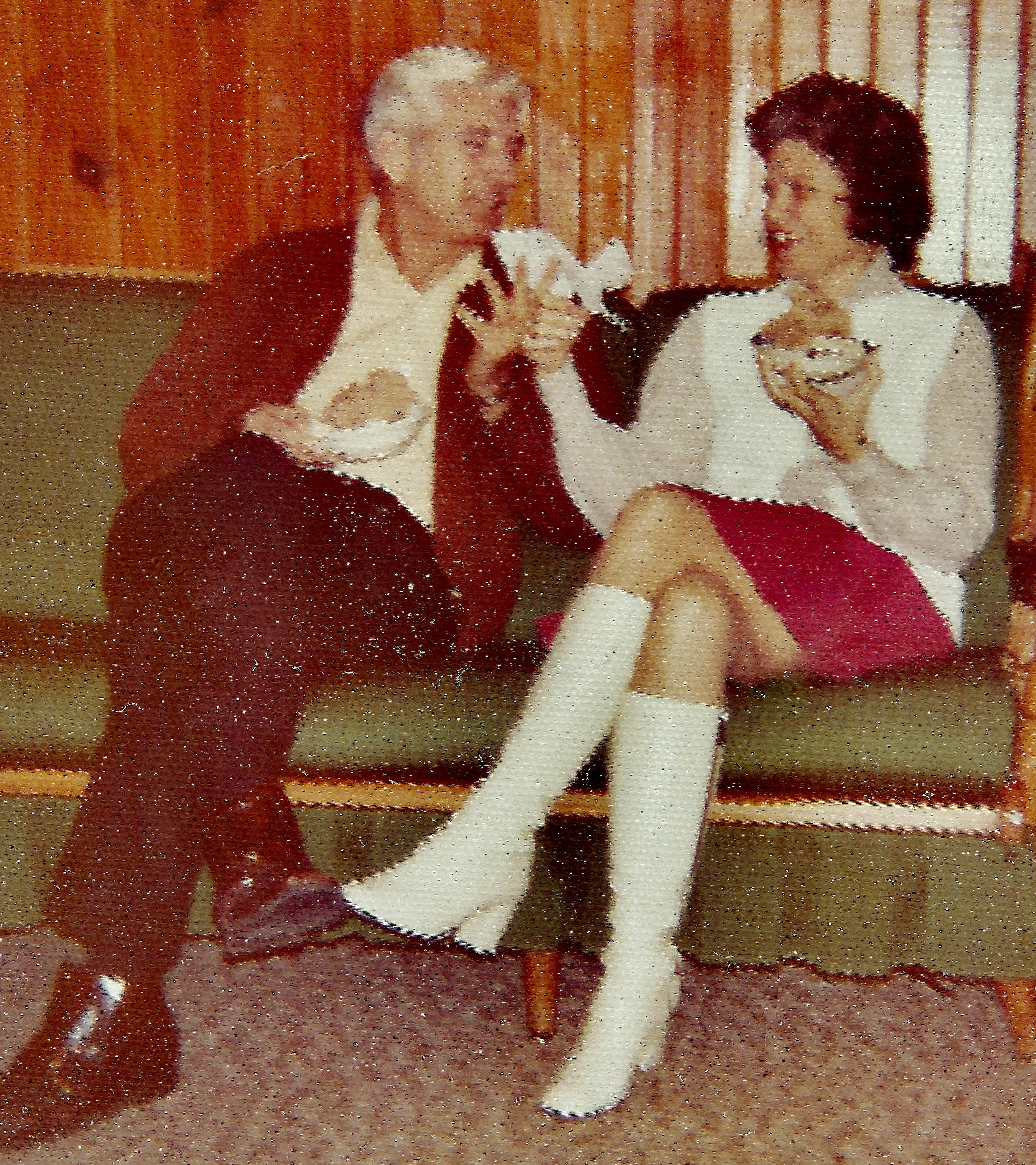
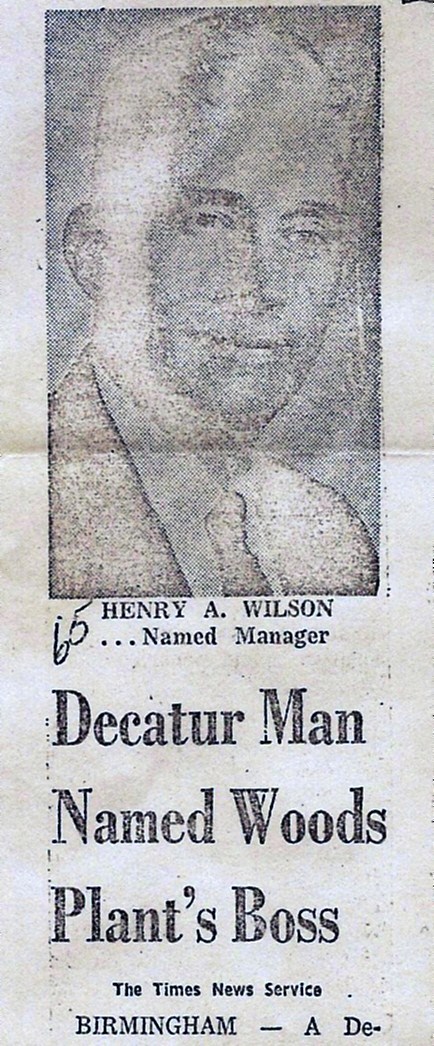
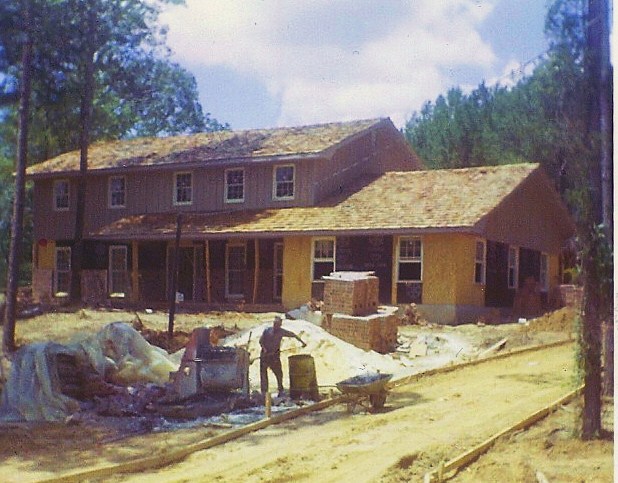
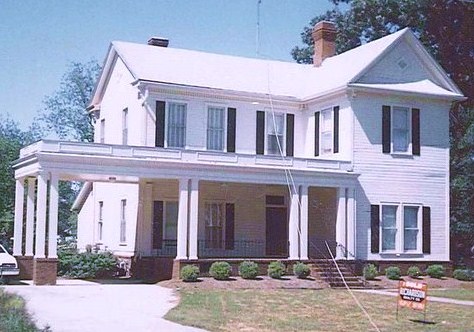









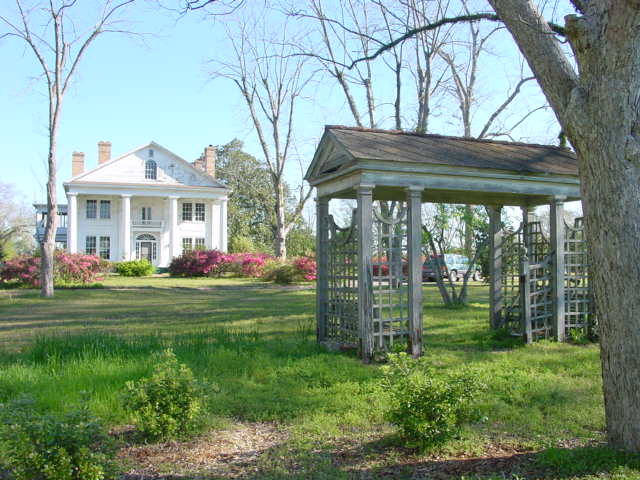




 inpraiseofangels