For Bastille Day: Vichyssoise Redux

Vichyssoise, cold, tasty and ready to serve with fresh chopped chives on top.

Vichyssoise, cold, tasty and ready to serve with fresh chopped chives on top.

Around the year 2000, we invited our wonderful longtime Fire Island neighbors, Guy Musquere and Daniel Meyer – along with eight of their Parisian guests – to join us for a Bastille Day dinner, and since I wanted to honor them with something undeniably French on the table, Vichyssoise seemed like just the ticket for a hot mid-July night. Now, this was a particularly risky endeavor since both Guy and Daniel were true Parisian eminences of long standing, but what the heck, you only live once, right? What was the worst that could happen? (Until it was privatized in the 70s, Guy had run the French national aluminum industry arising out of Bauxite discoveries in French Equatorial Africa, and Daniel was in his third decade of serving as Chief Curator of Versailles – yes, that Versailles – and the author of the two definitive books about its architecture and furnishings, the latter being a truly extraordinary two-volume set, much of which was written right here in The Pines. Sadly, both Daniel and Guy are gone now, but they were truly astonishing people.) (http://www.amazon.com/Furniture-Collection-Versailles-Vol-Set/dp/2878440579).

Cover of Volume I of Daniel's treatise on the Versailles furnishings of the 17th and 18th Centuries

Cover of Volume I of Daniel’s treatise on the Versailles furnishings of the 17th and 18th Centuries

Well, I’m delighted to report that the soup was so well received that almost everyone asked for seconds, and in the years since, you might say it’s become a regular part of my kitchen repertoire, and I try to do it at least once a summer. Over time I have refined it, but it has never failed to satisfy. It’s really not that hard, and I encourage you to give it a go, even if you have picky eaters. Once they taste one spoonful, they’ll devour the rest.

RECIPE: VICHYSSOISE

NOTES: Of course the main goal here is wonderful taste and texture, but a secondary goal is to keep it white. Even the pepper is white, so bear that in mind as you go, and if, as you are sautéing the leeks at the beginning, one or two bits cling to the side of the pot to the point of browning, remove them, so that when the sautéing has been done, there are no browned bits left to spoil the pure whiteness of your soup.

Also, if there is a secret ingredient here – that is, one that diverges from usual recipes but makes a huge difference in the end product – it is the little bit of bacon grease added at the start, which gives the vichyssoise such a silkiness that it is often the most commented-upon element of this dish. Also, in pursuit of that smoothness, try to avoid grainy potatoes, though a grainy white potato is preferable to a smoother yellow one, which would dull the color.

Finally, this soup should be served as icy cold as possible, so be sure to allow at least several hours for it to sit in the refrigerator before serving, or even make it the day before (it will keep for days). I always make way too much (about double this recipe) and end up putting a ½ gallon pitcher, or two, of it in the fridge, but somehow it all seems to disappear fairly quickly.

Ingredients:

4 Tablespoons olive oil
2 Tablespoons bacon grease
4-6 large, healthy leeks; if small, maybe even more. Should have about two cups when done preparing for the pot (use ONLY the white and very lightest green parts that won’t add color the end product. Keep green parts to add to another soup or salad if you despair of discarding them.)
2 chicken bouillon cubes
4-6 medium white-meat potatoes
2 quarts colorless chicken broth (Caution: some packaged chicken broths add caramel to give it a brownish color and that will not do when whiteness is the goal. Check label before purchasing, or better yet, make your own broth :-).)
2 quarts heavy cream
Salt
White pepper
Chopped chives

Directions:

Prepare ingredients: Clean leeks thoroughly (to keep them white, growers pile dirt up around the bottoms of the emerging plants, so sand and grime can be really deep in the stalk) and slice only the white or very light green parts into rings about 1/8” thick; if you don’t keep bacon grease around, fry a few pieces of bacon to provide grease, then strain to get out any dark bits; peel potatoes and cut into pieces as if you were going to boil and mash them and keep under cold water until you need them to avoid oxidizing (will also help rinse away some of the starch).

Place olive oil and bacon grease in stock pot or other large (10 quart) pot over medium heat (note that I always use a gas stove and know what “medium” means to me in that context, but electric eyes can burn things in a heartbeat, so adjust heat to your own levels of comfort on your own stove).

Add leeks and stir constantly until they are completely limp and transparent and are just this side of leek mush, but without a speck of brown.

Add the two quarts of chicken broth and two chicken bouillon cubes and bring to a boil.

Add the prepared potatoes and cook until beyond tender and the sharp edges of potato pieces become rounded.

Remove from heat, and using either 1) a hand-held immersion blender right in the cooking pot (my choice and much easier/neater) or 2) a regular blender or food-processor (in which case you might have to do it in two or three batches and then return to pot), thoroughly blend until there no lumps and your soup base is as smooth as possible.

Return to stove and over low heat stir in the two quarts of heavy cream and salt and white pepper to taste and heat, stirring occasionally, until cream is thoroughly integrated, but do not boil.

Remove from heat and cool, then place in refrigerator for at least four hours, eight is better.

Prior to serving, chop chives and place a teaspoonful on top of each bowl.

Bask in praise.

That’s it. Here’s wishing all of you a terrific Bastille Day, and may all your summertime wishes come true!

© 2016, George Thomas Wilson, all rights reserved.

Posted in Angels, cooking, Holy Spirit, Love, recipes, Uncategorized | Tagged , , , , , , , , | 1 Comment

Recipe: The Elusive Magic Cobbler

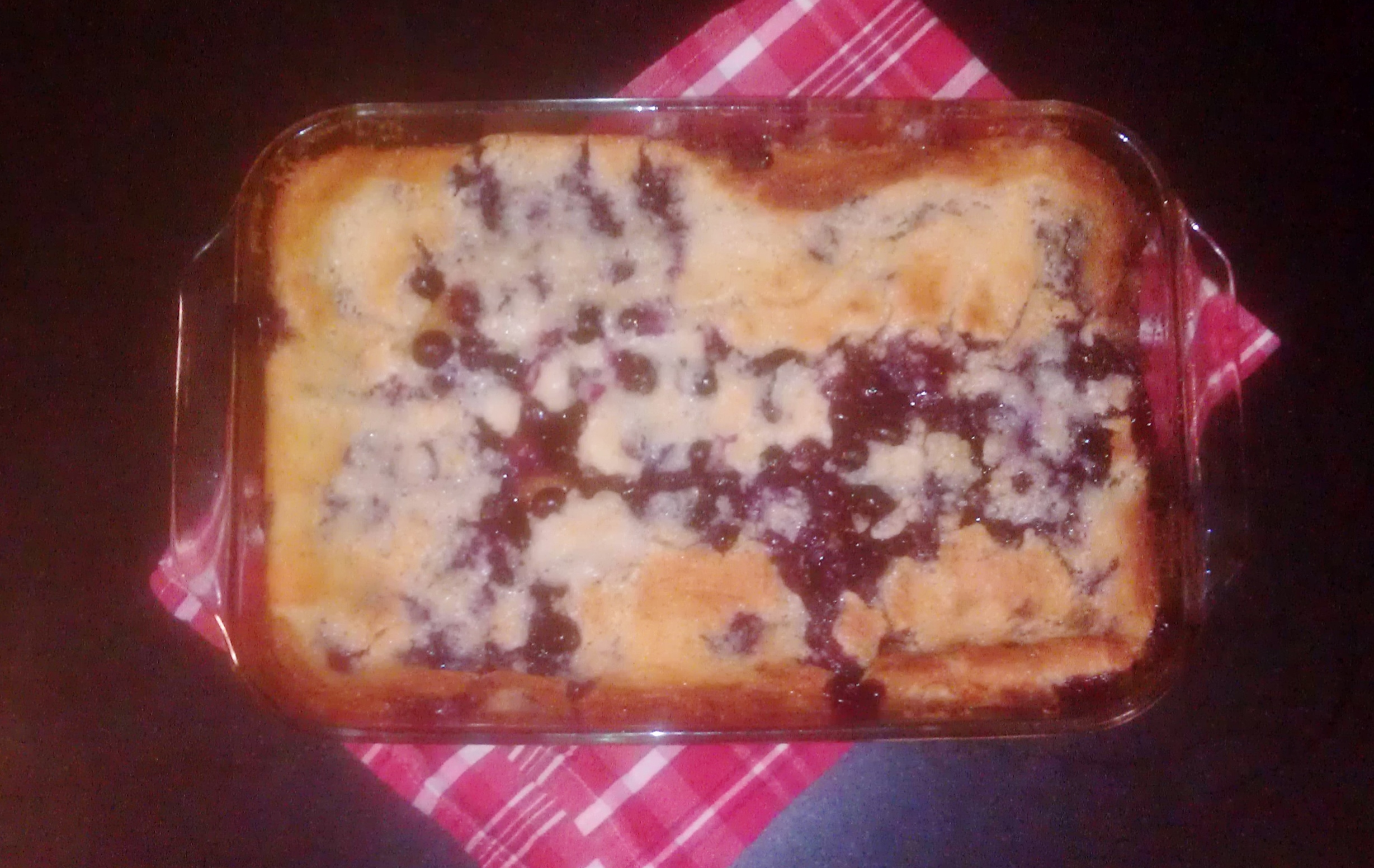
27433837956_b59ab7464e_oI’m not sure when I first heard tell of it. Probably listening in on the womenfolks’ conversation while sitting on a folding chair in the back of the Century Methodist Church at a Wednesday night fellowship dinner (while scarfing down a paper plate’s worth of sliced ham, fried chicken, Waldorf salad, homemade yeast rolls and Elsie Hare’s green congealed salad made with chopped pecans, sour cream and celery bits).

“Ooooh, Sweet, that’s so good!” one of them might have said after tasting her still-warm cobbler. (“Sweet” really was her name.)

“Got it from my Granny back in 30s,” Sweet might have replied. “It’s so easy I’m almost embarrassed. It’s like magic! Almost makes itself.”

But, of course, nobody ever wrote down the recipe. It was so simple you didn’t need one.

Fast forward a half-century or so, and, still haunted by that so-simple cobbler conversation, I’ve Googled “easy cobbler” or some such phrase many times over, but nothing ever popped up that really looked right. Nothing ever seemed like something that fit the bill.

Until a couple of weeks ago, that is, when I finally found it. A recipe so simple and so delicious that I have remembered it from the first reading, and have now made it three times – as originally posted, doubled, and “half-agained” – and it is apparently as foolproof as it is scrumptious. Perfect every time.

And, this time, I’m writing it down for all of us. I hope you enjoy it. I know your family will.

RECIPE: Magic Cobbler

Note: The original recipe is listed as “Easy Blueberry Cobbler” on allrecipes.com, but calls for self-rising flour. It is admittedly even simpler that way, but I prefer to add my own baking powder and salt, so am taking the liberty of claiming this as mine. That said, if you are a self-rising flour person, you can do this with only the five ingredients: flour, sugar, milk, butter and fruit.

Ingredients:

1/2 Cup Butter (one stick)
1/2 Cup Granulated Sugar
1/2 Cup Flour
1/2 Cup Whole Milk
3/4 teaspoon baking powder
1/2 teaspoon salt
1 quart fresh fruit (berries, peaches – any cobbler-friendly fruit. The cobbler pictured above was made with 2/3 blueberries and 1/3 peaches)

Directions:

Preheat oven to 350°. Place stick of butter in baking dish and place baking dish in the oven to melt it. Should take only about 5 minutes, but keep an eye on it because it will burn quickly if you’re not careful. (For this recipe, a 7 x 11 rectangular Pyrex dish is just right, but once you start eating it, you’ll wish you’d doubled it, in which case a 9 x 13 dish works, but be sure to place a cookie sheet under the baking dish just in case of spillage. Pie in the photo was 1 and 1/2 times recipe in the larger baking dish but didn’t quite fill it up.)

While butter is melting, sift together flour, baking powder and salt into a medium-size mixing bowl. Then add the sugar to the flour and stir well, then add milk to the dry ingredients and stir till smooth.

Take dish with melted butter out of oven and pour batter into it.

Sprinkle fruit over top of batter. Return dish to oven and bake for about 45 minutes or until the fruit is set when jiggled. If it still looks wet, it’s not quite ready.

That’s it! That’s the whole thing! This may well be the most deliciousness delivered for the least labor ever known. Particularly good with a dollop of vanilla ice cream while it’s still warm.

You can thank me later. Love to you all.

© 2016, George Thomas Wilson. All rights reserved.


Posted in Angels, cooking, desserts, Love, recipes, Uncategorized | Tagged , , , , | 2 Comments

First Flowering, 2016

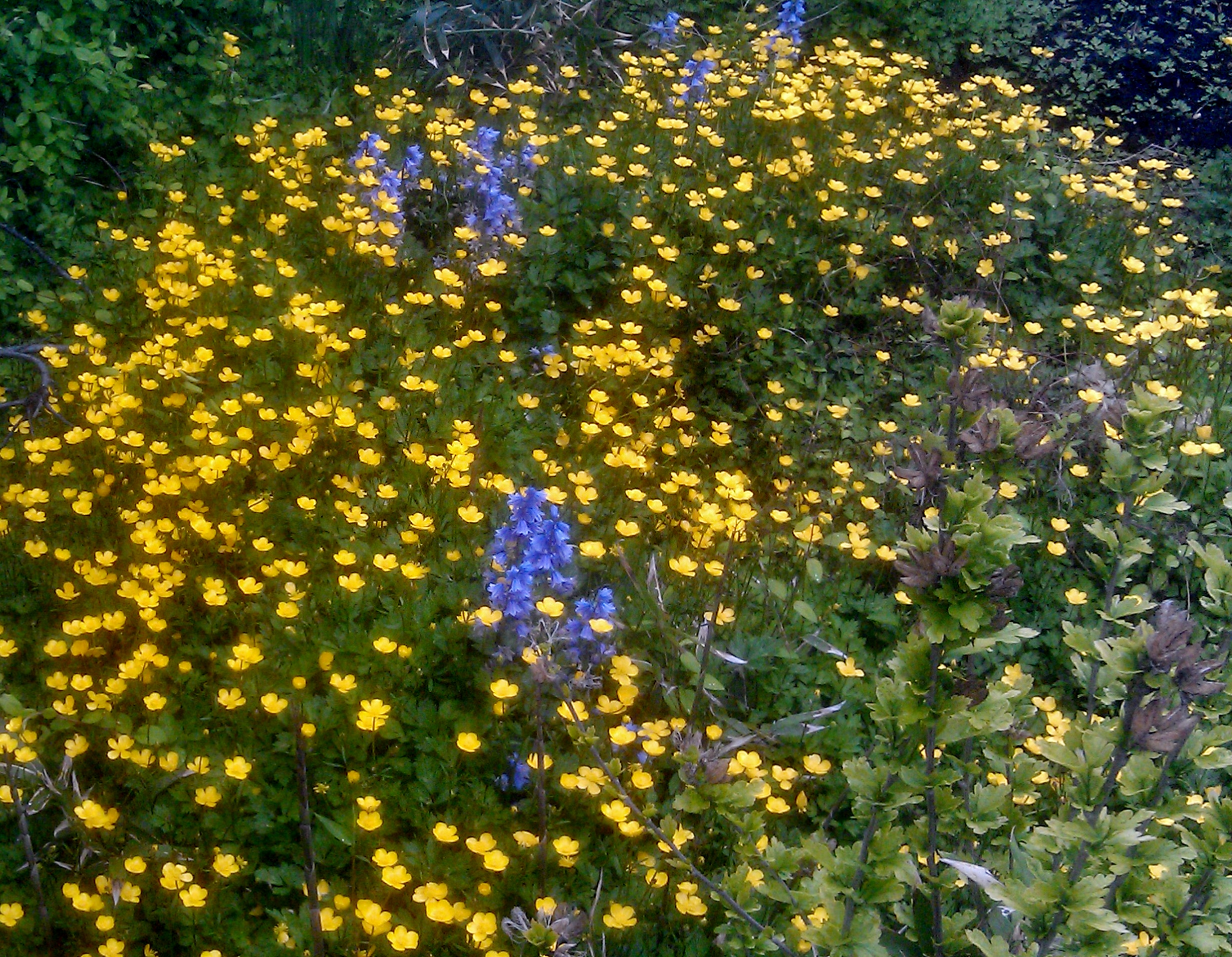
Buttercups, Lilies of the valley and wild Geraniums announce the arrival of spring! (In 1997, when Richard first landscaped the "sunny side" of the yard, he took a regular pot and turned it on it's side, buried about a third of it in the sand and placed a light inside, which created a magical effect. Then, about four years later, we started seeing purpose built pots designed with a flat side for achieving the same look. Just sayin'....)

Buttercups, Lilies of the valley and wild Geraniums announce the arrival of spring! (In 1997, when Richard first landscaped the “sunny side” of the yard, he took a regular pot and turned it on it’s side, buried about a third of it in the sand and placed a light inside, which created a magical effect. Then, about four years later, we started seeing purpose built pots designed with a flat side for achieving the same look. Just sayin’….)

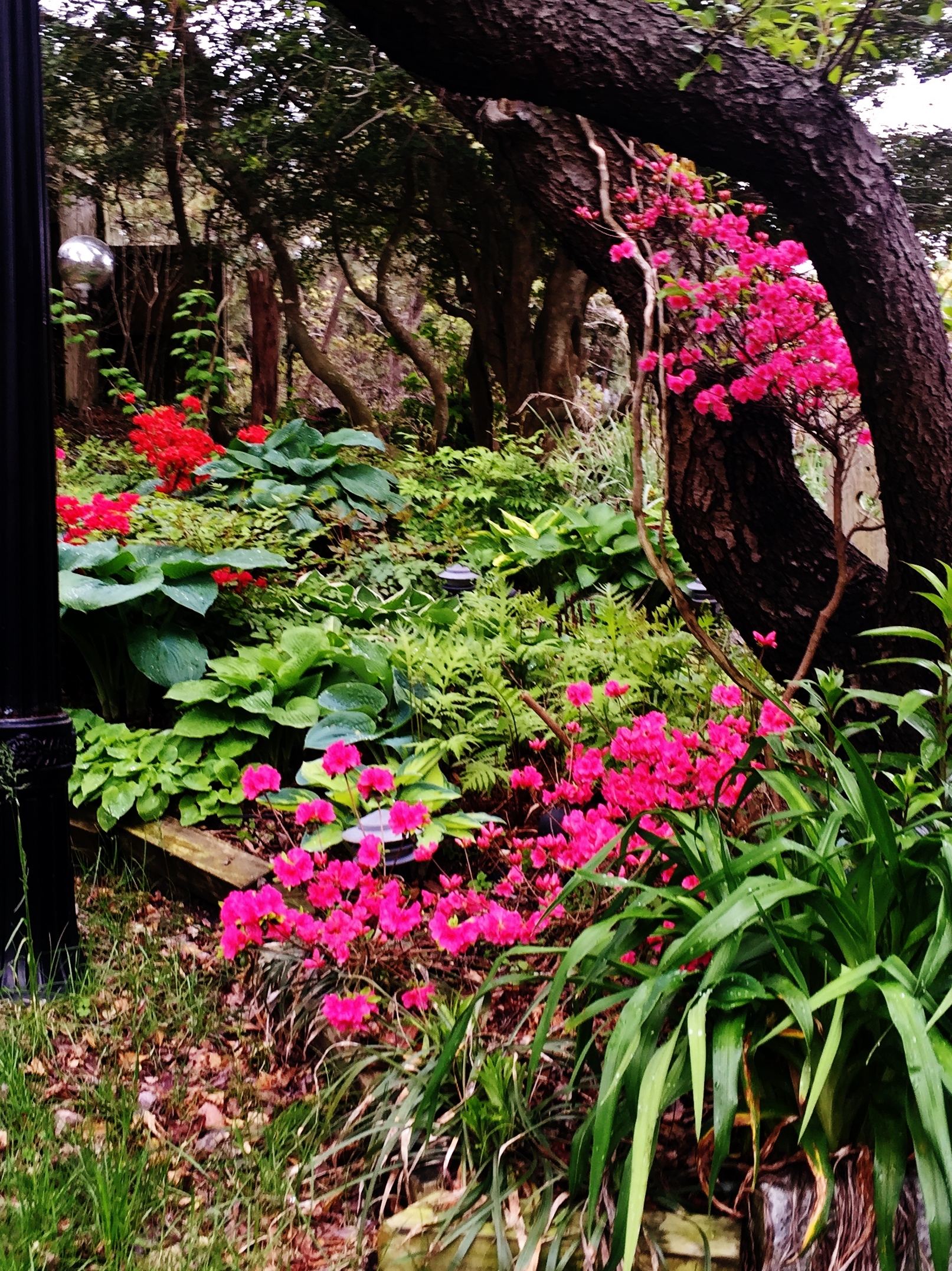
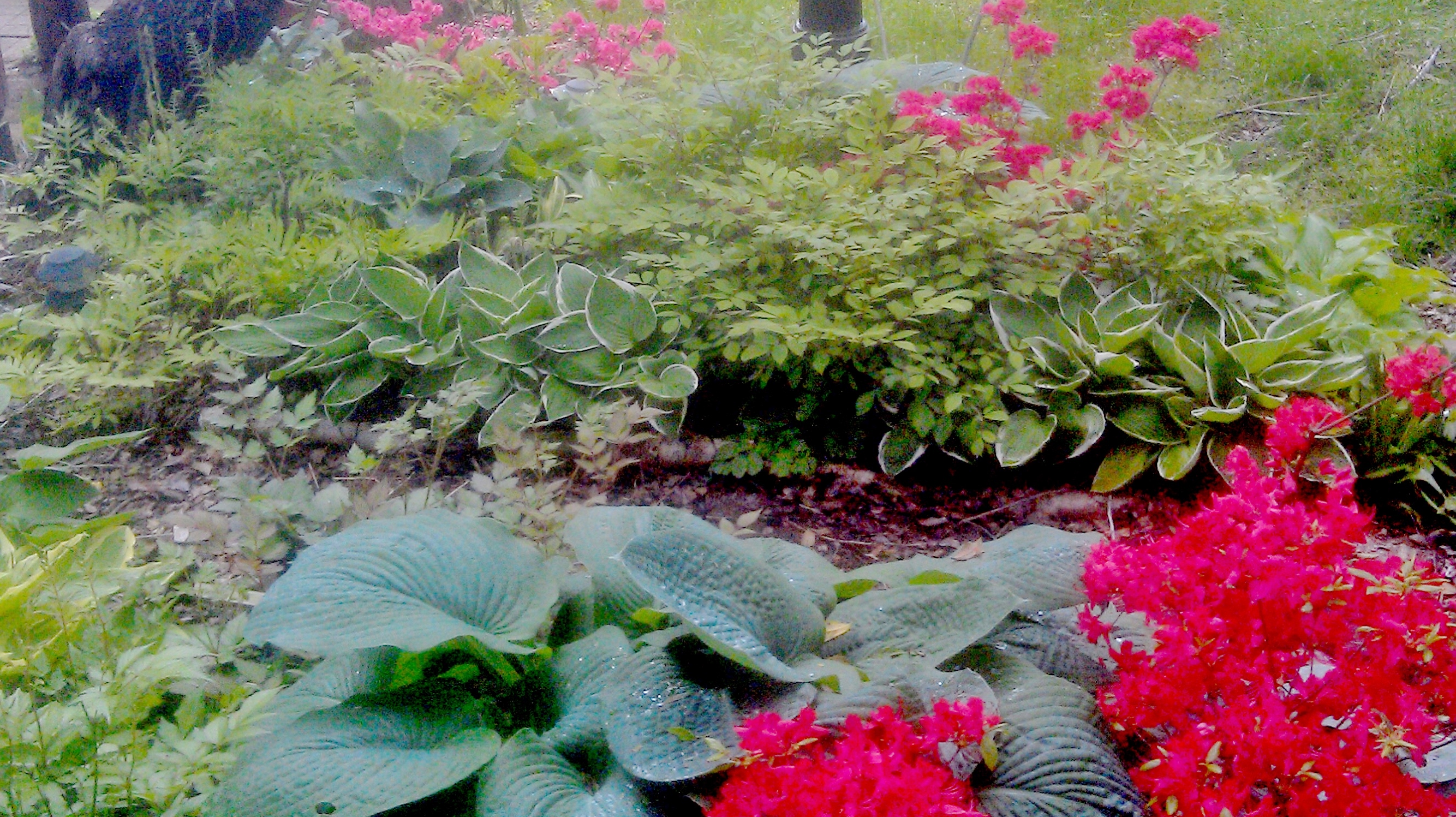
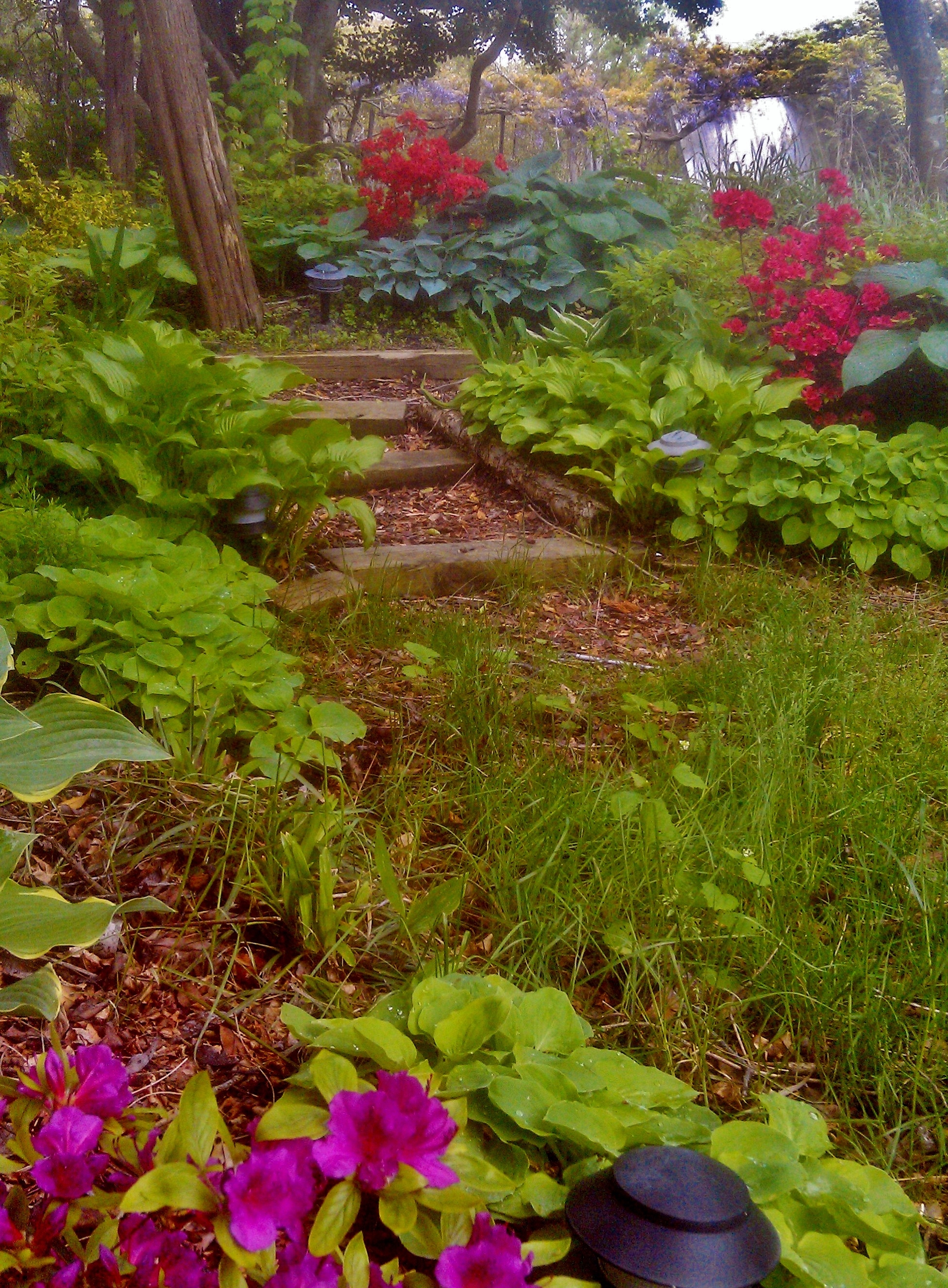
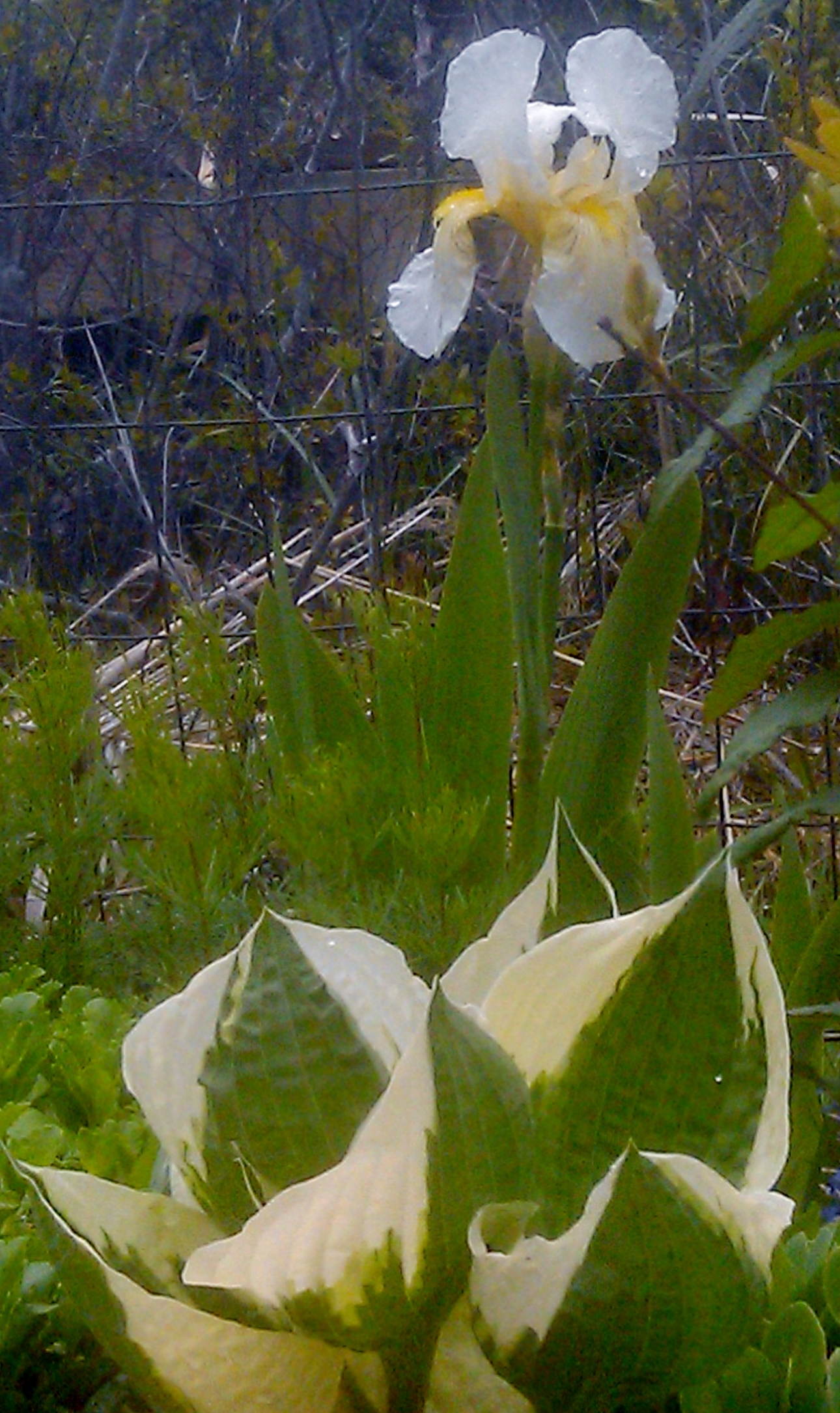
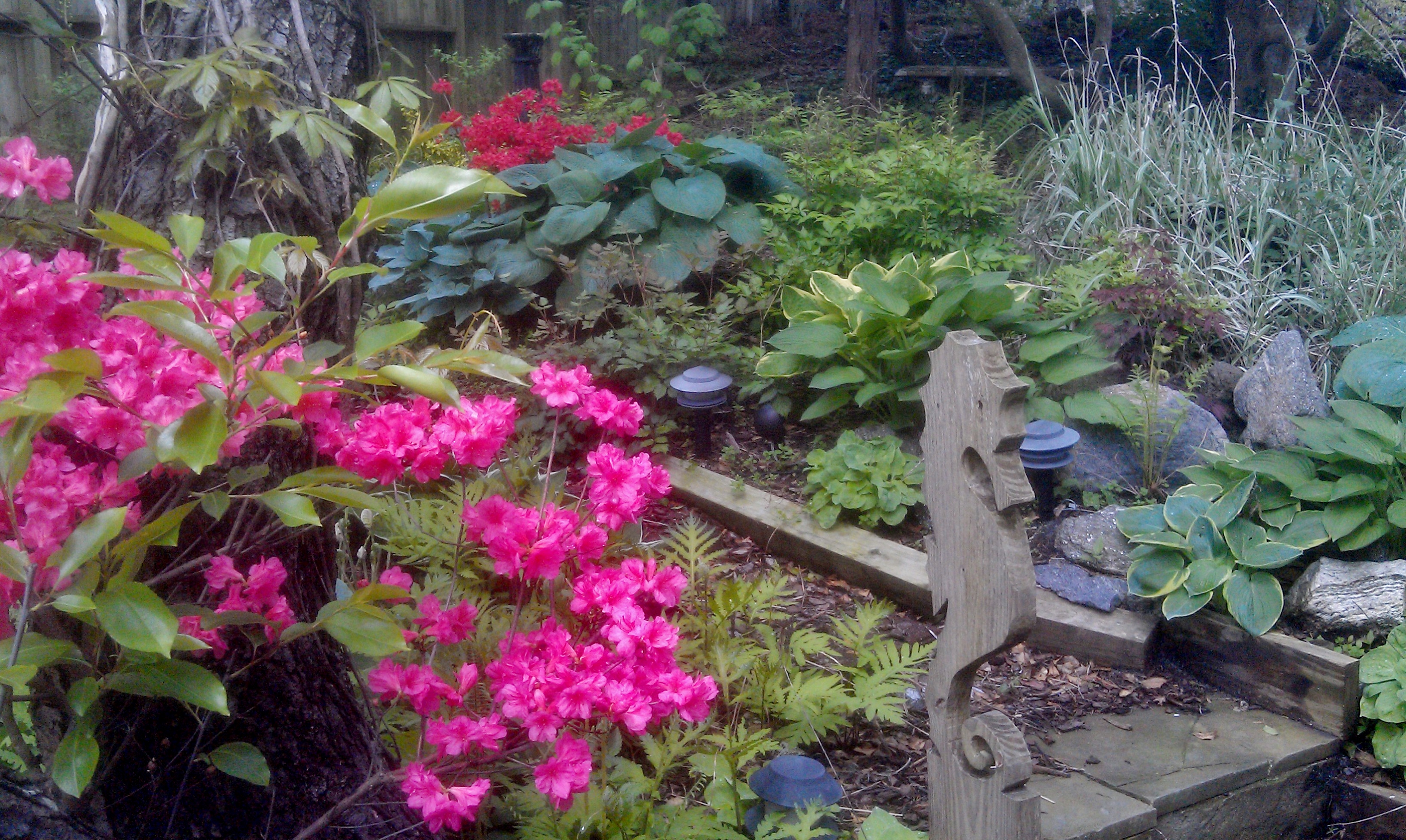
Well, it begins…. After six months away from the beach garden, we returned in late April to begin anew. This will be the fourth year since the great salt water inundation by Superstorm Sandy, and already Richard and I have been surprised by the vigor we are seeing on every side.

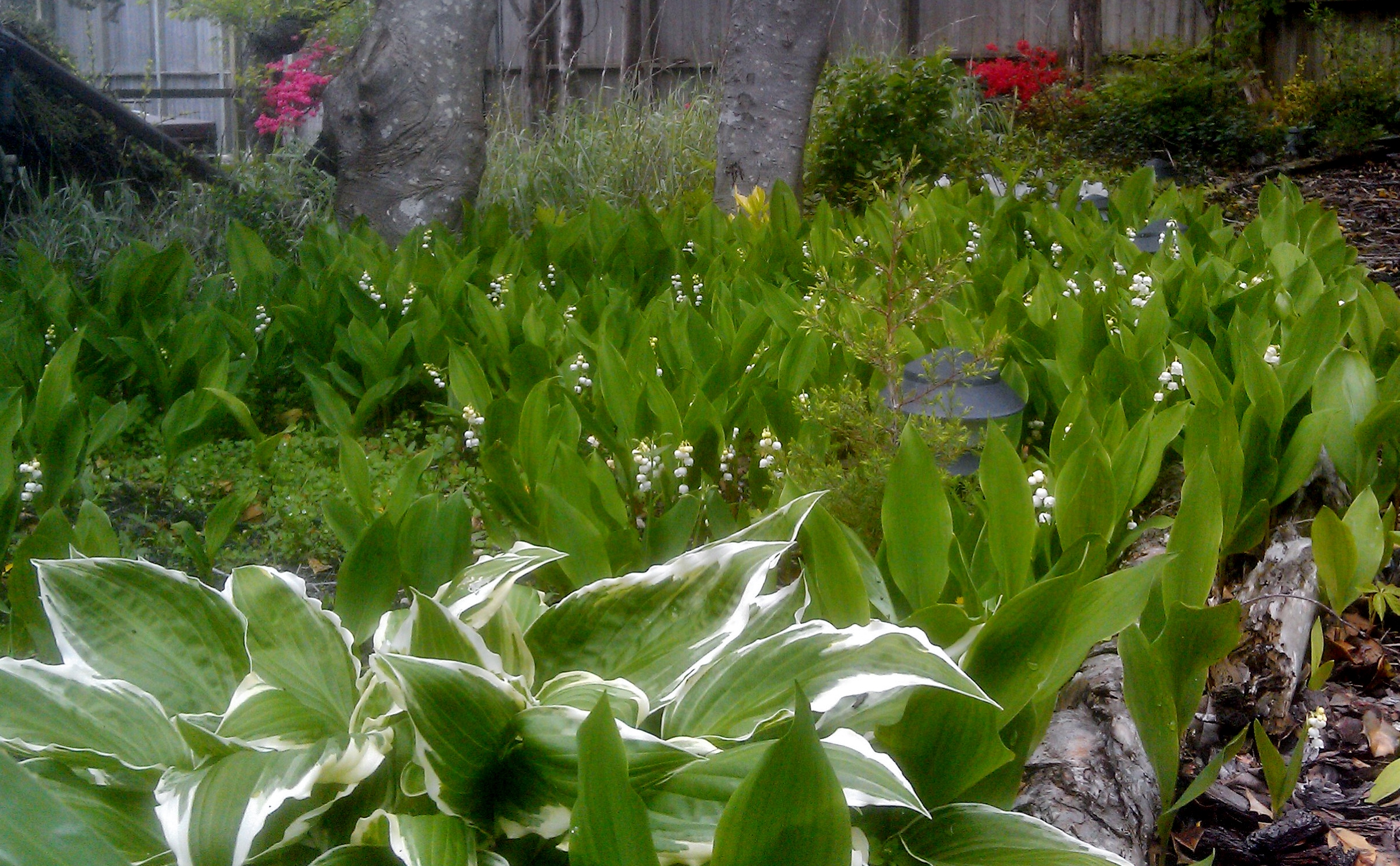
There are some things, of course, that only bloom in spring – Lily of the Valley,  Wisteria, Buttercups – so even though the deck planters are still being planted (impatiens should be put out in this area this week), I’m posting this snapshot as of May 21. Our oceanic micro-climate keeps the air cool well into June, which explains the late bloomers, but the temperatures catch up quickly so that, compared to most places, it’s a “fast forward” display.

Here are the first few frames of 2016. I hope you enjoy!

Photo May 21, 11 46 34 AM27224230255_8cdc215f6c_o27224158595_4a663ec5c2_oHostas!

27190003356_f0036e1db6_o26949027540_ddeec33f4d_o26949000140_a46049dfed_o27224197505_7b27dc40b0_o27224290565_fe0fd54532_o27155282661_6ce6728a1e_oWisteria and Lilacs

Photo May 21, 11 53 54 AMPhoto May 21, 11 54 24 AM (1)Photo May 21, 11 54 26 AMLily of the Valley

26947992870_73c0d6fe41_o27223212275_bb2eef3583_oButtercups!

27126311462_1c5f9e7d7d_o27126271332_f27936d8eb_oParting Shots…

27127452742_97a854ccd1_o26617659943_e5c327fea5_o26617449434_6b04687c83_oThat’s it for now, but there will be more soon. Thanks for visiting, and have a great, growing-up summer!

© 2016 George Thomas Wilson, all rights reserved.

Posted in Angels, faith, Rebirth, Uncategorized | Tagged , , , , , , , , , | 2 Comments

TBT:GTS#1: Randall Robbins, Actor, Teacher, Leader, Friend

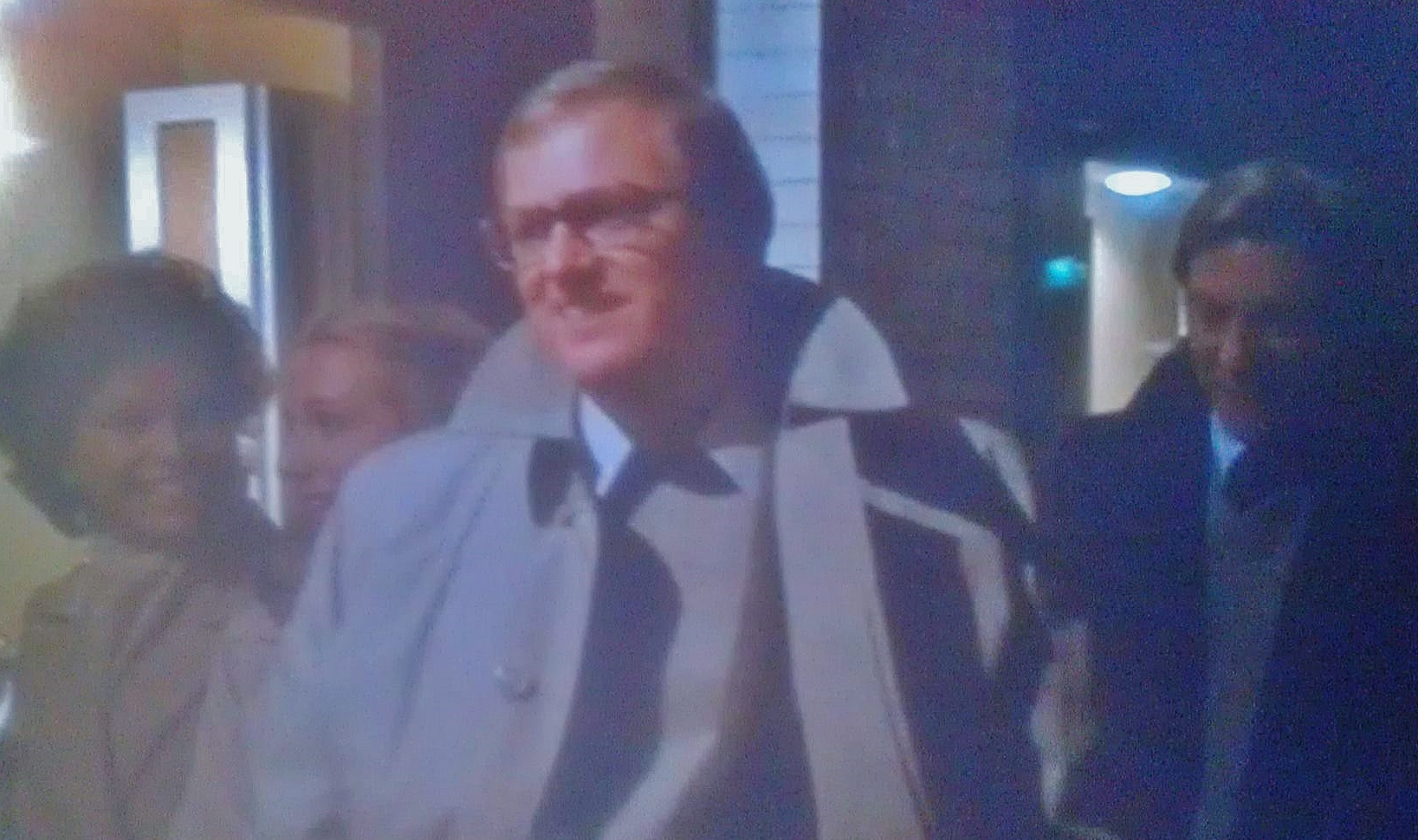
Randall Robbins with Mary Tyler Moore and Donald Sutherland in "Ordinary People," released in 1980, his first crossover from Broadway to Hollywood. It should not have been his last.

Randall Robbins with Mary Tyler Moore and Donald Sutherland in “Ordinary People,” released in 1980, his first crossover from Broadway to Hollywood. It should not have been his last.

INTRODUCTION

My over-arching challenge here is to write this post – the first in an occasional series – in such a way that it will keep you smiling even if it may, at first, give you pause. But, I know in my heart that this is all about love, so, please dear cousin, bear with me while I introduce the inspiration behind these “Throwback Thursday: Gone Too Soon” posts and what I hope to accomplish by writing them.

First of all, I am writing them for me. Back in the days when my friends were dropping like flies, and daily life as a gay man in New York City was largely surreal, people on the outside would ask me how I was dealing with the emotional strain of losing so many close friends in such short order. “It’s not possible to really mourn for them,” I would reply, “There are just too many, and they are falling too fast, so I store their memories in little jars on an imaginary shelf in my mind, and every now and then I take them down one at a time, dust them off, and for a few minutes remember their smiles and our times together before putting them back on the shelf.”

We were all that way back then. We had to be. But all those dusty jars – all those wonderful souls – are still up on that shelf and still awaiting the proper attention they never received, so this series of posts are my way of taking them down and pouring out their contents that they may finally and forever be given the love and honor they so absolutely deserve. This is also, it seems to me, the right time to honor these memories for two solid reasons. First, only now are there enough online resources available to really research their histories (through Ancestry.com where you can find many yearbooks and personal facts, as well as many other Google-able resources that simply didn’t exist even five years ago), but, conversely, the longer I wait, the more distant these recollections become, so the sooner the better.

Secondly, I am writing this series for those of us who died. They were gone too soon and are already fading into obscurity regardless of how extraordinary they may have been or how clear it was to those who knew them that they were headed for great things – until they weren’t. Most of those who fell from HIV in the 80s and 90s, were in their late 20s or 30s, even 40s and 50s, so were well on their way to making some sort of mark in their chosen professions, and for those in New York this was even more true since almost all of us arrived from the provinces having made our way here under our own steam and driven by our own dreams. It is also sadly true that the great majority of the gay men I knew in NYC in those days had been completely disowned by their families, so if and when they got sick and were dying, there were all-too-often no mothers, fathers, brothers or sisters to come to their aid, nor to keep their memories alive once they had gone. Rejected at home, many of us had long ago learned to create surrogate families of friends to fill the need. Until the plague arrived, and one by one, our personal supports – those we thought would be our lifelong friends – fell out from under us, leaving only the few of us remaining to tell their tales once they were gone. And so I shall, as best I can. If not now, when? have no choice but to try.

Thirdly, I am doing this for you, and especially the Xers and Millennials among our friends who have, blessedly, no memory of HIV as a death sentence. It has now been 21 years since the pharmaceutical “cocktail” appeared that turned the infection into something “manageable,” so it is completely impossible for anyone younger than 30 have any idea what it was like in those dark years. Anecdotally, I was born only five years after WWII ended, yet I don’t have a clue what that must have been like, however fertile my imagination may be, so the same must also be true for those of you who matured into your own identities after 1995. Frankly, this is a wonderful thing, and I wouldn’t wish the torture of living through those days on anyone, but what you are also missing are these stories. Some are stories of brilliance, others of courage and yet others of of constant renewal of spirit in the face of such horrors, but all of them are stories that should be told before they are lost in the mists of time.

So, see, we made it through the hard part. Thanks for sticking with me. I’m only going to include this introduction once, so future TBT:GTS installments will only include the personal tribute. It is also my hope to write these memorials in a standardized way so to provide any others who might want to write TBT:GTS tributes of their own with a format to follow.

TBT:GTS#1 RANDALL ROBBINS, Actor, Teacher, Leader, Friend

How I Knew Him

Junior Class Portrait of Randall Robbins, 1939-1981

Junior Class Portrait of Randall Robbins, 1939-1981

In 1973, fully two years before actor Carolyn Kirsch originated the part of Lois in the original cast of A Chorus Line, she journeyed to Birmingham to work with James Hatcher at Town and Gown Theater choreographing the show Company, which was on her performance resume. Unfortunately, shortly before the show was to open, one of the local actors took ill,  so Carolyn suggested that Hatch import from New York a friend of hers to play the part who she knew already had it down, a tall, blonde, all-American looking fellow named Randall Robbins who had just wrapped up performing with her in the Company National Tour.

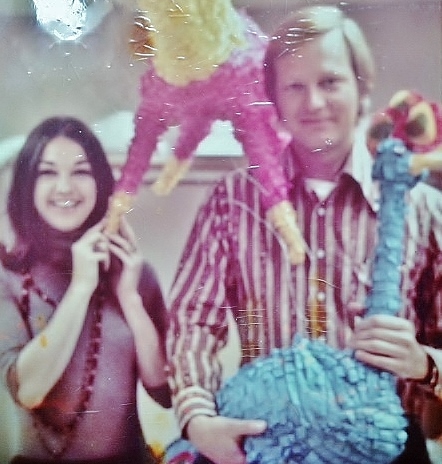
Carolyn Kirsch and Randall Robbins showing off their new pinatas backstage at the Ahmanson Theatre in LA where the First National Tour of "Company" had opened in May of 1971.

Carolyn Kirsch and Randall Robbins showing off their new pinatas backstage at the Ahmanson Theatre in LA where the First National Tour of “Company” had opened in May of 1971.

Of course, there was no budget for this, so Hatch asked me to help out by letting Randy bunk in my Southside apartment for the three weeks he would be in town (two weeks for rehearsals and one of performances). This was more than enough time to become good friends, though after those few weeks, it would be some years before we would recharge our connection when I moved to New York after law school in 1978.

Several times, over the next few years, I joined Randy for dinner in his apartment in an old brownstone on West 55th street where we would remember fun times in Birmingham, or talk about his latest show, or he would coach me on acting. Our last dinner was in early 1981. 1980 had been a great year for him with his movie debut in “Ordinary People,” and appearing as FDR all across the U.S. in a National Touring company of “Annie,” so I had expected him to be full of life and

The earliest photo I could find of Randy who was featured as treasurer of his freshman class of Seminole High in Sanford, FL

The earliest photo I could find of Randy who was featured as treasurer of his freshman class of Seminole High in Sanford, FL

enthusiasm, but found him unusually subdued. Then, as we were having after-dinner coffee, he shared with me that for some years he had been in a clandestine relationship with an NYU professor (hence the closet) who lived in the next apartment, but he was very concerned because his friend, Andrew, was very, very ill – simply wasting away to nothing – but the doctors couldn’t seem to find what was wrong with him. Shortly after that meal, Andrew died, still undiagnosed, but soon to be recognized as one of the first 100 known victims of AIDS. Sadly, Randy was soon to follow. He was the first person I knew to be infected, and the first of dozens of my friends to die.

His Story

Birth and Family: Randall Robbins (no middle name) was born in Sanford, Seminole

County, Florida in late 1939, the youngest of five children. His father, Kenneth, was a boilermaker by trade who had moved from Ohio to South Florida in his youth, where he met Randy’s mother, Signa (nee Vihlen), the daughter of Swedish immigrants, who

Yearbook photo of Randy as Sophomore Class Treasurer (second year running!)

Yearbook photo of Randy as Sophomore Class Treasurer (second year running!)

had also moved to Florida as a child of four after being born in Birmingham AL. No doubt Randy’s Nordic good looks came from his mother’s side of the family, but sadly, she died when Randy was only ten years old.

Schools: Thanks to Ancestry.com I was able to find Randy’s Seminole High School (Sanford) yearbook photos from his freshman, sophomore and junior years. Clearly both popular and ambitious, in a student body of over 3000 students in four grades, he managed to be elected treasurer of both his Freshman and Sophomore classes (’54 and ’55), and secretary of the Honor Society his junior year (’56).

Curiously, however, he is nowhere to be found in the 1957 yearbook – which should have been his senior year. I do know that he was disowned by his family at some point, and it may well have been around this time, given that his siblings were already out of the house, his father was pushing 60, and he had just enjoyed his first theatrical success, playing, perhaps ironically, the role of “Father” in that year’s Junior Class Play, “Father Knows Best.”

Randy (the tall one) gets his first taste of applause as the star of his Junior Class Play, "Father Knows Best"

Randy (the tall one) gets his first taste of applause as the star of his Junior Class Play, “Father Knows Best”

After Leaving Home: Though I have tried for several days to find more information, the years from ’57 until he first appears in the theatre databases in 1971 as a cast member in Company are a complete mystery to me and are likely to remain so. Clearly, at some point in the 60s he arrived in New York to begin acting in earnest, and he wasted no time signing on with the legendary acting coach Uta Hagen, who quickly became both his hero and his inspiration. That said, once he launched his career in earnest, he was able to keep it moving up and onward with significant success. As best I have been able to reconstruct his resume, it includes:

1971: First National Tour of Company

1972: Stock Tour of Company

1973: Westport Playhouse 6 RMS RIV VU during the summer, (this was also the year we met when he journeyed to Birmingham to appear in Company at Town and Gown)

1974: Original cast of Good News revival opening in Boston and touring nationally for a year before opening on Broadway on December 23, 1974

1975: Off Broadway: And So to Bed, a counter-intuitive comedy about the sex life of Samuel Pepys

1977: Summer run of Company at Pittsburgh Civic Light Opera; then, that fall, he took on the Melvyn Douglas role in a revival of Glad Tidings at Equity Library Theatre.

Randall Robbins as FDR and Theda Stemler as Annie in a scene from the 2nd National Tour of "Annie.".

Randall Robbins as FDR and Theda Stemler as Annie in a scene from the 2nd National Tour of “Annie.”.

1978-1980: Played the role of FDR in the Second National Tour of Annie for nearly two years.

1980: Like so many of his fellow Uta Hagen students (Al Pacino, Charles Grodin, Jason Robards, Geraldine Page and dozens of others), Randy finally made the trip to Hollywood to launch his cinematic career in what would turn out to be the most honored film of the year, Ordinary People. Over the moon about getting the part, he could hardly have known that it would be both his first and last movie role, as he became ill the very next year and died soon thereafter.

Trajectory

It is, of course, impossible to say what would have been, had Randy lived and continued to hone his craft and lift his rising star, but, just by looking at his contemporaries, it is not that difficult to say what might have been. There are many steppingstones on the road to succeeding as an actor, and he had already walked so many of them: He had played on Broadway, had starred in two Off-Broadway Shows, had toured the country in leading roles in Company (over and over again) and Annie, and, yes, he had finally broken through to the silver screen in one of the most highly-honored films of all time. And he was barely 40.

Every time I spent an evening with Randy, we would also spend a few minutes honing my craft. He would have me recite some poem or other that I had written and then work with me on my delivery, turning recitation into performance. These were not lessons that I asked for or encouraged, but we always got around to them after some wine. They were really, I think, for him. He truly loved to teach, and he was very good at it.

Which is why, at the end of the day, my best guess is that he would have continued to build his credits in the movies and on Broadway, but would also have become a truly great acting teacher in the footsteps of his beloved Ms. Hagen and so many other great acting teachers who thrived in mid-20th Century New York City. Uta Hagen never stopped performing on the stage and in films, and I’m sure that Randy would have continued performing, as well, but his strongest drive, it seems to me, was to help those around him become better – better as actors, and as human beings.

So I salute you, Randy Robbins, even as I mourn you, finally, as fully as I should. God speed my friend, and may you always hit your spot.

Post Script

This may all seem very far away and long ago to you, dear reader, and perhaps the loss to mankind of this one person, however talented or bright, may not seem so tragic this many years hence, but this is only the first extraordinary story of many I hope to tell, and after the first few are taken in, a picture begins to form in the mind of just what a tremendous loss we have suffered, what a large slice is missing from the Great American Cultural Pie.

There have been, of course, other attempts to honor these memories, through the quilt and other quiet memorials here and there, particularly in New York City churches and such, and in those instances when the AIDS quilt includes squares dedicated to the people I intend to spotlight with these tributes, I will surely include those photos. But however moving the quilt truly is, many of those we lost, including Randy and Andrew, are simply not there to be found. Nevertheless, Randy and Andrew were not completely forgotten by those they left behind. In 1985, they were honored by the community as the 54th Street to 55th Street block – their block – of the lavender stripe painted down Fifth Avenue to demark the route of that year’s Gay Pride Parade was dedicated in their names. (I am still trying to get more information about this, and when I do learn more, I will edit it into this post.)

This has been TBT:GTS#1, the first of a series of occasional posts that are long overdue. Thank you for your time, your attention, and your prayers.

© 2016 George Thomas Wilson, all rights reserved.


Posted in Angels, belief, Death, faith, God the Father, health, Holy Spirit, Love, poetry, prayer, Uncategorized | Tagged , , , , , , , , , , , , , , | 11 Comments

Diamonds in the Rough: Third Annual Posting

Naturally occurring diamond crystal

“We have nothing, if not belief.”
– Sir Reepicheep, Chief Mouse of Narnia, Voyage of the Dawn Treader (C.S. Lewis)

“Do the arithmetic or be doomed to talk nonsense.”
– John McCarthy, A.I. trailblazer [1]

We are the uncut diamonds of God.

Thus I begin this third and final installment of my unintended series of observations arising from my daily prayers, which has been as much a journey of discovery for me as for anyone, since it is surely true that however much you may believe something in your heart, until you actually codify it – until you put it into words – it remains a benign knowing untouched by the light of discernment; a happy faith in something suggested or implied or impossible to avoid as other known truths come together, but otherwise unexcised, unexamined and unexplained even to oneself. And, so, as I have lit out on this new adventure – have set my sail upon the Great Digital Sea – these first three essays have turned out to be real exercises in self-clarification as I have drilled, as best I could, to the bottom of my faith to share it with you. And, while doing it has been much more challenging than expected, the marvelous bonus has been the process, itself. Like an old prospector whose faith will never wane, even in my childhood I was panning and sieving and finding nuggets of truth for my thimble that ultimately led me to golden veins of what I perceive to be understanding; veins that, once discovered, I have done my best to follow wherever they may lead. Truth has to make sense or it isn’t True, and this is the standard to which I have, at least to my own internal satisfaction, held my religious beliefs, as well. But, like I said, for these ideas to be truly real, they must be written down, so these three essays have been those writings – the pillars of my belief codified, my Christ-centered outlook put into actual words – a sincere effort to forge a golden chain of plausibility from link to link and first to last that is solid and true and aglow with the love of the God Whom I love and Who I believe loves me, loves all of us, to infinity.

Of course, there is still much, very much, that remains outside my understanding of what really is, but surely it all has to begin with an acceptance that there is nothing incompatible with the two ideas that 1) we are the beloved, known, embraced children of the personal and infallible Source of the Course of the Universe and are therefore just exactly the family of material children He intended us to become when He conceived and put into motion the processes that made us, and 2) that the earth and everything it holds has eventuated along a scientifically delineable path of growth and evolution that began with the sun’s release some four billion years ago of the very matter from which you and I and everything we touch was made, continued with the arrival of God’s own “breath of life,” to mobilize some of that matter into living beings some one billion years ago, progressed over eons into the astonishingly diverse array of wondrous creatures whose bones populate our museums and that – step by agonizing step – took their place in the great parade of earthly life from the single-celled, self-replicating amoebae of that “Original Life Moment” to the birth of our primordial human ancestors about one million years ago.[2] Indeed, I truly don’t understand how anyone who believes in the first idea – a living, loving Heavenly Father – has any choice, given all the clear, irrefutable archeological evidence that has been unearthed over centuries, but to completely accept the latter proposition.

Yet, astonishingly, this view – that God initiated what science discovers, and science confirms the wonder of His inventions – is roundly criticized from both sides. To the atheistically-leaning scientist, it is anathema. To the literalist Christian, it is blasphemy. I suppose you might say I’m swimming upstream here to embrace a confluence of ideas so easily rejected by everyone, yet I persist, because, to me, these truths are the ultimate proof of our Loving Father, and the necessary foundation of any plausible explanation for our lives on earth.

Of course, To believe in both science and God begs all sorts of questions that, in the end, must be dealt with, not the least of which is the one I just alluded to: is evolution a real, living process? Well, forgive me, but really? Of course it’s real, and I seem silly even writing such an obvious point, but if love is blind, denial is blinder, since it owes its very existence to sightlessness, and it is a tragic loss to both houses as they sail right past each other – and truth in the doing – with science insisting upon material provability of spiritual realities – a non-sequitur if ever there was one – and a great swath of believing Christians refusing to even consider facts uncovered time and again by scientists because they run counter to a poetic telling of our creation story as put to parchment by exiled Hebrew scribes nearly three millennia ago.

Yes, I suppose it is possible that God waved a magic wand and fabricated everything in six days – from the big dipper to duck-billed platypuses to Adam and Eve – and then filled His beautiful work with practical jokes in the form of dinosaur bones and ancient ruins for some whimsy of His own, but I don’t believe that makes any sense at all. As I have said before, the God I know and love is not wasteful,[3] and neither is He a jester who would steer His beloved children down some false maze of paleontological ephemera. And, anyway, how much more elegant, astonishing and worthy of His magnificent creative abilities is the other option: that He graced our planet with the beginnings of Life – the first single-celled organisms capable of dancing to His energies[4] – a billion years ago, or so, with everything required even in those microscopic creations – the full recipe – for realizing a succession of living beings, bit by bit, that we might ultimately, at long, long last, evolve organically, stably, fully, into persons: distinctly individualistic personalities capable of independent thought, creative insight, social engagement, analytical perspective, and, most importantly, active faith – a proclivity to worship; physical beings crafted from nothing but the elements all around us, yet miraculously endowed with the capacity to love and be loved, to know and be known, even by Him who so long ago planted those little seeds expressly, I believe, for the purpose of coaxing into being US: a family of earthly children to love and to be loved by in return, and to do so in such a way that we would inevitably turn out to be as marvelously diverse as possible, but every one of us exactly as He has projected us, in His image. “Red and yellow, black and white, [we] are precious in His sight….”

God’s Miraculous Little Dynamo

Now here’s something to think on: the largest unit of life ever born is much too small to see. Every living thing we do see, from the blade of grass to the blue whale, is but a gathering together of millions, billions, even trillions, of teensy cells like so many microscopic Lego blocks, but unlike those static, plastic pieces, these little dynamos of God are anything but empty, and everything but still. In 1665, when a Fellow named Robert Hooke (of the Royal Society of Fellows), first looked at a leaf through the newly invented microscope – each part surrounded by a stiff cuticle – it reminded him of a monastery laid out with rows of spare, tiny rooms, so he called those little segments “cells.”[5] But surely in all the annals of science nothing has ever been so inaptly named, for, while it may have been beyond the power of his lens to see, within each one of those “walls” was everything required – the complete book of instructions and a full set of potentialities – to assemble the entire tree from which his leaf had sprung.

And, that’s just a tree! What about people? The wonder of our making is almost beyond words. Two little cells do a waltz in the womb and that is all it takes. Only two little cells, yet everything required to make an entire person is included and, in a very short time, their descendants diversify to become bone cells gathering calcium, or liver cells cleaning toxins, or blood cells delivering oxygen harvested only seconds before by lung cells. We are so used to these things that the wonder is taken for granted, but it all happens 24/7: trillions of cells working together in perfect harmony, without hitch or hiccup, generating heartbeat after heartbeat, breath upon breath, and even thoughts that grow into more thoughts that sometimes even grow into actions: the creature’s creative response to being alive.

It was actually when I was struggling to quit smoking after decades of addiction that I came to truly appreciate the importance of our little living building blocks. I’m sure I’m not the only one who has ever prayed for help in quitting, and, over time, that simple prayer expanded as I tried to imagine the damage I was surely doing to my body. I found myself asking God to heal, if He would, those parts of my physical self that were most afflicted by my bad habit, and as my focus sharpened over time and I realized that the real seat of the harm I was doing was on the cellular level, I began praying for forgiveness not only from the Father I was surely offending, but as well from the lung cells I was physically assaulting on an hourly basis. Of course, I doubt they are the least bit sentient, much less self-aware, but I tried, nevertheless, to truly understand their suffering, the harm I was doing to each of them, and this proved to be a useful tactic as the more I inclined my heart to such admirable workers and gained in my appreciation of their dedication and indefatigable efforts to keep me alive, the more absurd my abuse of them became, and I was finally able to stamp out my last cigarette butt nearly two [now four] years ago.

Of course, by that time, I had gained an affinity for my dedicated little cells. In spite of how little credit we may give them for the hard work they do, or how poorly we may provide for them with our deficient diets and sedentary habits, they work like microscopic Oompa-Loompas, never stopping, even for a second, from birth until the moment of their last secretions, and some of them live as long as we do![6] Physically speaking, we are nothing more than the sum total of the absolute commitment of these indomitable self-replicating, self-diverging, self-organizing, self-monitoring and self-regulating beings. Their “constancy to purpose” is staggering and their rate of success is nearly perfect – far more perfect than any of us could ever hope for – as almost all of the one-hundred-trillion of them in each of our bodies are born, live and die without error, just as I believe they were designed to do.

And, so, when I pray these days, after first asking for God’s help in aligning my mind and heart with His,[7] but before moving on to my prayers for you and all of our Earthly cousins,[8] I ask Him to align each and every one of my one-hundred-trillion cells[9] that they might absorb as much as possible of His incoming energies of Light, Life and Love.[10] And, it never fails when I reach this point in my praying – and you may believe this or not, as you like – but that I can actually feel the rush of realignments passing through me. Then, since it is far beyond my ability to communicate on their level, I ask our Father (for whom all things are possible, after all) to please give each individual cell my thanks for the astonishing work it does solely for my benefit, whether that be giving me eyes to see or ears to hear, feet to walk, or hands capable of typing this sentence.

Over a Billion Years in the Making, and So Expensive!

Of course, thanks to science, we now know that what those two little cells do when they grow over nine short months into a fully-developed infant is but a rapid reflection of the process that began over a billion years ago with those initial single-celled living beings that inaugurated the great parade of Earthly life. The simplest known living cell – and presumed first living thing on earth – is called a prokaryote, and many scientists would have us believe that it simply sprang into life all by itself thanks to a fortuitous bolt of lightning, or some such, hitting exactly the right chemical compounds in exactly the right way at exactly the right time.

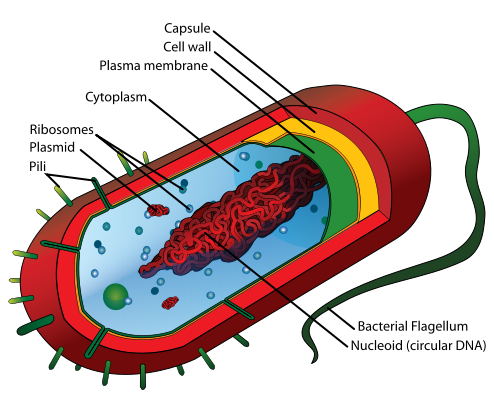
cross section of prokaryote cell

cross section of prokaryote cell

But truth be known, there is nothing even the least bit simple about a prokaryote, and for any such “spark” to truly work, a whole host of very specific and diverse elements would have had to assemble themselves, unaided, into outrageously complex structures – including DNA and three different kinds of RNA.[11] And, even if, by some stroke of outrageous fortune, all those little atoms did somehow line up in all the right sequences of sequences, what naturally occurring electrochemical phenomenon could possibly have happened to transform static chemicals into living, moving, eating, reproducing life capable of evolving into us? Does it not torture logic beyond reason to believe that such a spontaneous chain of events could ever have happened? I submit that, absent the hand of God, it could not have, and of all the arguments for believing in a living, loving Creator, this one, it seems to me, is the most compelling.

Rather, I see no other choice but to believe those little prokaryotes, or something very much like them, were purposely placed by some Heavenly agency into primordial wetlands over a billion years ago, were lovingly nurtured as they grew from single cells to chains of cells to multi-celled creations that, in turn, became larger and larger life forms, each new strain more complex, more startling, more capable than the last, until, in the end, one-hundred trillion cells strong, the first true humans walked upon the earth. In other words, for a billion years and more, I believe, our Father and His angels have nudged and cajoled us forward, ever looking toward the day when we might, ultimately, become that beautiful, worshipful family of man that was His original intention and of which we are all members.

Of course, the minute you actually accept all this as fact – once you grasp that God really did ordain and create the universe, including us – you begin to realize just how dearly we cost him; how enormously expensive in energy, time, space and love we are. Our Father must truly value us greatly to have expended so much creative wherewithal on our making. The old hymn prays, “Thou art the potter, I am the clay,” but what an ambitious and strikingly daunting task our potting would seem to be. How deeply He must care to have taken so much trouble that you and I might live and breathe. Life yearns for Love, Love requires Life, and God, as they say, is Love.

Every gardener knows how precious the life of each tiny emerging bud, every new leaf, becomes as it is watched impatiently, day after day, for even the least little signs of growth. Even though we know full well that, to quote Psalm 90, “In the evening it is cut down and witherith,” we nonetheless  cannot help but love the life we nourish, that comes from the seeds of our planting. It is irresistible. How much more dear then must we be to our Father who has tended this earthly garden over aeons, ever encouraging, ever nudging, ever sponsoring our progress from those single-celled swimmers of that original miry bog into fully-developed human children that we are, a people ultimately capable of transmitting even His very own energies through the love in our hearts and light of our eyes.

In other words, making people from scratch takes time and effort and, I would posit, lots of coordination by many celestial forces to accomplish. And, of course, this is just what is required for one planetary population; for one garden of material beings. As I have said before, it seems clear enough to me that God, not being wasteful, did not make all these billions of galaxies just to beautify the night sky. If you truly want to calculate the almost unimaginable costs of making a peopled universe, our mere billion years of growth on earth is but the last and least of the expenses our loving Father must have undertaken when He decided to populate His great expanse. Consider:

►The first expense would be matter, itself, is extraordinarily expensive. To explain simplistically without getting too much in the weeds, when you split atoms and get an atomic explosion, it’s because you have released all the energy that had been holding those atoms together in the first place. And that’s just the energy contained in a few atoms! Just think how much force is required just to hold together the atoms in a sheet of paper! (Much less to make a person. One approximation I found on PhysicsForum suggested there are 100,000,000,000,000,000 atoms in a single human cheek cell. That, multiplied by the 100 trillion cells estimated to exist in the body would come to 10-to-the-25th-power atoms just to build you, give or take a few.) Now, if even you could, multiply that up to the billions of beings on billions of planets – not to mention the planets, themselves – filling the far reaches of space and all of if made of atoms. The total energy required for such a creation is beyond mind-boggling and surely incalculable, yet you, and I, and this computer and all the rest of creation really does exist because God has expended all the energy necessary to hold it all together. Unfathomable doesn’t even begin to describe it.

►The second expense on the ledger would be all those radiant energies that must be brought to bear in our universe, both those recognized by physics – gravity, electromagnetic, strong and week atomic forces, etc. – as well as, I would add, all those radiant energy gifts of God – Life, Love, Light of Understanding as explained in my previous essay (the Flow of God) – that also require a constant outpouring across all of His great creation.

► Thirdly, if you believe, as I do, that He has also created the hosts of angels who are ever and always watching, recording, urging, and guiding us to find the light and grow into our best possible selves; to help us be both more aware of God’s love and more loving of Him in return, then those costs in spirit, time, space, education and supervision must also be considered. Of course, I can’t prove my angels – or yours – are truly there, but I believe they are, even as I believe they are yet another gift from our loving Father assuring that every last one of us is sponsored and supported in every moment of every day by a cast of remarkable spiritual guardians.

►Finally, as if all that wasn’t enough largess for Him to expend on our creation and care, our Father even sent the ultimate gift – in spite of the enormous risk – when He allowed His Creator Son to be incarnated as a human being to tread the sands of His own creation, learning to know His created children from the inside-out, even while giving to us His example of a Life Perfected, our very own Uncle Jesus.

Yet, in spite of all this Divine generosity, we are such ingrates! Given all the time, effort and cost required of our Father to make us who we are, and beyond that, to give us such a marvelous, beautiful world to populate, it is hard not to conclude that we are vastly under-appreciative and astonishingly cavalier in our utilization of the marvelous gifts He so constantly lays at our feet. You may not believe that everything the Father, Son and Mother Spirit have accomplished since that first Big Bang (we can call it that, however it all truly began) has been done specifically and expressly for the eventual emergence of material children like you and me, but I do. Once you have accepted the idea that God is infallible and thus we are truly God’s intended result, what other possible explanation could there be?

But Why?

Of course, this begs the obvious question: What makes us so special? If there really is a Father God and Mother Spirit, and they really did create worlds for people to populate over billions of years, really did eventuate hosts of unseen angels out of this thing called ‘spirit’ just to care for us, and ultimately went so far as to risk even our Creator Son, Jesus, allowing Him to be born as a defenseless infant, why? Why would He do that? What makes us so incredibly valuable? What could we possibly bring to the table that is so desirable? How could it be that the Heavenly accounting book actually balances?

Well, I believe that it is not only about Love, though it is surely that, it is also about experience. God delights in experience, and nothing pleases Him more, I believe, than to join with each of us – every last one of His material personalities – one at a time, as we lead our one-of-a-kind, individual lives. After all, if God is God, He can do that. Of course, He hopes that we will lead productive lives in preparation for an eternity of loving association with Him, but even when our actions may disappoint, or our choices reject His path, our experience is still His experience, and every life lived still adds another chain of doings to that which God the Supreme has done; to the sum total of His own meaning. God, I believe, wants to do every righteous thing there is to do, to be every beautiful, good and true thing there is to be, to join with each and every one of us as we live out our material, fractured, imperfect, even occasionally iniquitous, lives, but all the while speaking in our ears, hoping for the best, filling our dreams with beauty and goodness and rejoicing with us when we reach it.

And, He does all this, insists upon a partnership with His creatures because, being above and beyond the limitations of time and place Himself, it is not possible for the Totality of Our Father to live linearly, to slice up existence into little bits of experience, so we do it for Him even as He lives through us. Even the angels, who were created whole and nearly perfect – who lovingly descend to assist us even as we ascend with their help, in time, to the Father – cannot help Him experience anything new, anything unexpected, since He created them out of His own cloth. No, it takes a random, happenstance, higgledy-piggledy sort of evolution implanted across billions of worlds within billions of galaxies to truly cover the possibilities, to ever be generating something never before seen or done or even conceived. That is why, I believe, no two personalities are ever alike. We were made to be unique and creative, to deliver a life distinctly ours in every moment of every day, and that is what we unquestionably do. Whether for good or ill, for better or worse, we inevitably deliver upon the promise of our creation, just as He has designed us. And that, dear reader, is why He loves us so much, and why, even at such great expense, I believe that He would say the scales of our mutual gifts to each other ultimately balance out.

Uncut Diamonds

Did it ever strike you as strange-bordering-on-bizarre that the most iconic and beautiful material found in nature, the diamond, is also the hardest? I remember being astonished when I learned that in elementary school. It was hard to believe that something so seemingly delicate as the glassy ring on my mother’s slender finger was basically indestructible. But the secret to both the beauty and the strength of diamonds is found in their origin: the slow, intense burn under which they are born.

That any diamond was ever formed, given the difficult and rare conditions needed, is something of a miracle. Structurally, each one is a latticework that grows from a simple square of four carbon atoms that, first, must be bonded at depths of a hundred miles underground within a narrow range of very intense pressures (45-60 kilobars), and a narrow range of temperatures that are uncharacteristically low for that depth (900°-1300° C.). And, once all those conditions are met, it has to stay put, unmoving, to slow-cook for at least a billion years. Finally, after growing for all that time, if it just happens by some stroke of extraordinary fortune to be in the right place at the right time to be thrust up to the surface by a volcanic eruption at the right speed (at least 30 to 40 mph or it can turn to graphite),[13] it may actually, one day, become anything from the sharp end of a drill bit to the Hope Diamond.

But, of course, you’d most likely not even notice one if it was lying at your feet since, when they emerge, they are just common pebbles of no particularly interest to any but the well-trained eye. They come out uneven, knobby, occluded, dirty, and most of the time without any hint whatever of their astonishing qualities; of the beauty, clarity and light they carry within.

Well, like diamonds, it has taken a billion years or more to make human beings, and like diamonds, no two of us are ever alike, in spite of our common origins. And, I would submit, like diamonds, we are course around the edges and often filled with imperfections, but that is only natural given the rough and tumble way we are born, live and die on planet earth. However, even as the eagle-eyed rock-hound sees the potential within the stone that becomes the fancy diamond, our Father also sees the jewel that we have residing within, the beautiful soul that we have nurtured together knowing that possibly, one day – perhaps while still on the earth but more likely in the ever more spiritual levels of life to come – our rough edges would become polished, our occlusions be cut away, and we might, facet by facet, become perfected into the radiant realization of our Father’s original idea.

How can it be that we suffer both for taking ourselves too seriously, and, yet, not seriously enough? On the one hand, at best, this earth, this material plane, is naught but a seed bed, a place where our original two cells might join and grow into fully-developed beings, where each of our personalities may take root and gather understanding and strength for the eternal life to come. It is a place where we can find our way to walking and talking, smiling, even loving, but even the most wizened and ancient of us is still just a baby in time, a mere infant in the universal scheme of things. No one – especially a loving father – would punish a newborn for wetting his diaper, yet, even though we are no more than infants on the cosmic level, we are terrible at forgiving each other, and even worse at forgiving ourselves. Yes, we take ourselves, and especially our perceived transgressions, entirely too seriously.

On the other hand, we don’t even begin to take ourselves seriously enough. I’m not talking now about our earthly selves, but about our real selves, our child-of-God selves, for we truly are His diamonds in the rough, each a treasure-trove of eternal potentialities long nurtured and greatly beloved. We, you and I and all of our earthly cousins across seven continents, are the result of an extraordinary billion-year effort – a process of eventuating that began in the mud of Pangea – to make us exactly who we are! And, however rough and unformed we may judge ourselves to be, however dirty and flawed we may feel, I truly believe it is ever and only the one-of-a-kind precious gem, the eternal soul growing within each of us, that Our Father sees as He waits and watches, longing for us to answer His knock and respond to His love; waiting for us to finally emerge, in accordance with His divine design, as the beautiful ascending jewels of earth we truly are.

© 2016 by George Thomas Wilson. All rights reserved.

———
[1]“He remained an independent thinker throughout his life. Some years ago, one of his daughters presented him with a license plate bearing one of his favorite aphorisms: ‘Do the arithmetic or be doomed to talk nonsense.’”
— from the Oct. 25, 2011 New York Times obituary of John McCarthy, coiner of the term ‘Artificial Intelligence,’ (or “AI”) and one of the pioneers in its pursuit, who died on October 24, 2011 at the age of 84.
[2]There are widely varying theories on when the first humans appeared. Here’s one article: http://www.sciencemuseum.org.uk/whoami/findoutmore/yourgenes/wheredidwecomefrom/whowerethefirsthumans.aspx
[3] https://inpraiseofangels.wordpress.com/2014/03/09/the-living-water-boson/ (first paragraph)
[4] https://inpraiseofangels.wordpress.com/2014/03/09/the-living-water-boson/ (fourth section, fourth paragraph)
[5] http://en.wikipedia.org/wiki/Robert_Hooke
[6] 2 Sep 2005, uncredited article in Times Higher Education, http://www.timeshighereducation.co.uk/198208.article “Each kind of tissue has its own turnover time, related at least partially to the workload endured by its cells. Epidermic cells, forming the easily damaged skin of the body, are recycled every two weeks or so. Red blood cells, in constant motion on their journey through the circulatory system, last only 4 months. As for the liver, the human body’s detoxifier, its cells’ lives are quite short – an adult human liver cell has a turnover time of 300 to 500 days. Cells lining the surface of the gut, known by other methods to last for only five days, are among the shortest-lived in the whole body. Ignoring them, the average age of intestinal cells is 15.9 years, Dr Frisén found. Skeletal cells are a bit older than a decade and cells from the muscles of the ribs have an average age of 15.1 years. When looking into the brain cells, all of the samples taken from the visual cortex, the region responsible for processing sight, were as old as the subjects themselves, supporting the idea that these cells do not regenerate. ‘The reason these cells live so long is probably that they need to be wired in a very stable way,’ Frisén speculates. Other braincells are more short-lived. Dr Frisén found that the heart, as a whole, does generate new cells, but he has not yet measured the turnover rate of the heart’s muscle cells. And the average age of all the cells in an adult’s body may turn out to be as young as 7 to 10 years, according to him.”
[7]https://inpraiseofangels.wordpress.com/2014/03/09/the-living-water-boson/
[8] https://inpraiseofangels.wordpress.com/2014/02/09/uncle-jesus/
[9] http://en.wikipedia.org/wiki/Cell_%28biology%29
[10] [10]https://inpraiseofangels.wordpress.com/2014/03/09/the-living-water-boson/
[11] http://www.dstoner.net/Math_Science/cell1.html
[12] https://inpraiseofangels.wordpress.com/2014/03/09/the-living-water-boson/ (part four)
[13] http://en.wikipedia.org/wiki/Diamond

© 2015 George Thomas Wilson, all rights reserved

Posted in Angels, belief, biology, cells, Death, diamonds, faith, God the Father, Higgs Boson, Higgs Field, Holy Spirit, Living Water, Love, particle physics, physics, prayer, quitting, quitting smoking, religion, Uncategorized | Tagged , , , , , , , | Leave a comment

The Flow of God: Third Annual Posting

Image of the galaxy M101 from NASA's Spitzer and Hubble Space Telescopes, NASA's Chandra X-ray Observatory, and NASA's Galaxy Evolution Explorer Photo: NASA

Image of the galaxy M101 from NASA’s Spitzer and Hubble Space Telescopes, NASA’s Chandra X-ray Observatory, and NASA’s Galaxy Evolution Explorer Photo: NASA

“Then the angel showed me the river of the water of life, bright as crystal, flowing from the throne of God…”

– Revelation 22:1

This post is surely my most presumptuous, but perhaps the most important. It is perfectly possible that, by conflating pure physics and pure God and presuming to believe that not only do Einstein and his intellectual progeny have it right, but that our loving, personal God was the one and only Original Thinker who designed and built the physical realities these Nobel physicists are uncovering – tiny grain by tiny grain – I have over-thought and under-calculated. After all, who am I, an Alabama-born, New York marketing guy who has spent most of his career promoting magazines, to discuss – or even think about – such high-falutin’ ideas as these?

Nevertheless, taking courage in the fact that Einstein, himself, was a patent clerk when he made most of his discoveries, I persist because I do believe I’m onto something here, however unprovable it may be, and as it is nothing less than a new way to perceive and/or visualize the tangible Love of God and how He delivers it, I can hardly not continue to make my case. Thus, as promised, here is the third annual posting of my second foundational essay, previously called “Living Water Boson” but now renamed and reworked in the hope of making it more appealing and accessible.

If you have, by now, read “Uncle Jesus,” my inaugural essay, then you know that my journey of faith began as a five-year-old when my Sunday School teacher, Nelle Lethcoe, told me that Jesus just wanted to be my Friend, so I invited Him to join me and my two imaginary little-old-British-lady friends for our usual afternoon tea, and into my heart, where He has continued to grow organically, if you will, for the sixty years since. And however nebulous such an experience may seem to you, life itself has reinforced our constant bilateral commitment and association to the point of undeniability as everything I came to know about Jesus and his personality in those early years has been borne out by everything that has happened to me/with me/for me since. Can angels really appear in flowered hats? Does Jesus really live? Ineffable are the realities of faith, as they were meant to be, but J. K. Rowling got it right, I think, in that last pivotal dream conversation between Harry Potter and Dumbledore, when Harry asks his mentor, “Is this real, or is this all just happening inside my head?” and the Professor looks at him with love and replies, “Of course it’s happening inside your head, Harry, but why should that mean it’s not real?”

Are the Science…

First of all, I do not believe that only the earth has intelligent life in all this great universe. Rather, I believe there are millions of inhabited planets strewn across the substance of space, with millions of millions of material creatures, much like us, doing their best to get the most out of such a life and bringing delight to the eyes of our Heavenly Father. How can it be doubted that we live in a vigorously populated universe? I’m not sure how I first subscribed to this notion, but I have always believed that the great, wide night sky is teeming with life. Perhaps it was one of the lessons I learned during those afternoon tea parties.[1] Or, it is equally possible that I simply came to believe that the velvet of the midnight sky teems with life because it is the inescapably logical extension of a larger idea: that our fatherly God, while loving and generous, is never wasteful (after all, He recycles everything) and would not have expended such a wealth of matter and energy for aeons of time across infinite space just to give us meager earthlings, so very recently arrived and rarely deserving, a starry, starry night.

“Logical,” of course, is the operative word, for while I believe God is vastly/ immeasurably/infinitely smarter than all of us combined, even we who walk and talk on the material plane do eventually figure out that to act against reason is to live in a fool’s Paradise, and if the importance of “means, ends and consequences” is apparent to even the least of us, how much more clear it must be to God. He is not irrational, however inexplicable His designs may seem from our limited view, and He never operates on a whim, since to do so might imperil His beloved children, whose evolution, I believe, was His very motivation for creating our universe in the first place. And if God is God, then the physical logic – the science – of the reality He created must, perforce, flow from Him just as surely as the joy to be found in a moving hymn or the inspiration in a sunset. In other words, the operating, actual rules of physics must also, by definition, be the actual rules of God, Himself. And if this is true, then those like me, who profess belief in Him, do our followers – and truth – a profound disservice when we dismiss demonstrated physical reality just because it conflicts with some long-held dogma or doctrine, however venerated that teaching may be. “Though science courses from the Source//Who spawned, as well, the spirit//The Source cannot be proven//So, they socialize over coffee//And miss the point.”[2]

Nevertheless, it is a rare thing, indeed, to find science contemplating the nature of God, so it was particularly refreshing a few years back when the popular media started talking about the “God particle,” also known as the Higgs Boson (though, for the sake of balance, I

Artist's rendering of the Higgs Field.

Artist’s rendering of the Higgs Field.

should here note that many scientists loudly poo-pooed the designation.[3]) Now, please allow me, for just a moment, to get into the weeds of this: the “Higgs Boson” is a “flash in the pan” sort of impossibly small particle that, in and of itself, is not all that important, but the fact that it exists, as was recently proven in the Large Hadron Collider, does matter because it proves that something infinitely greater, the “Higgs Field,” is no longer just a theory, but something real. Described as a vast circular skirt (or “sombrero,” since the scientific models show a big bulge in its center) of energy particles/waves that stretches from the very center-point of the whole mass of God’s created universe out to its very edges, the Higgs Field is a never-ending Mexican Hat Dance of universal ripples gliding inexorably across the entirety of space.

and the Spirit…

Now, having said all that, allow me to shift the light from science to spirit for a moment and consider something that might, at first, seem entirely unrelated: the oft repeated idea of “living water,” or the “water of life,” which is surely one of the most cryptic and mysterious concepts in the Bible. According to the site Openbible.info, there are twenty-nine scripture verses about “living water” and exactly one-hundred about the “water of life.”[4] Isaiah,[5] Jeremiah,[6] and Zechariah[7] all mention “living waters” in some form or another, the book of Revelation is overflowing with citations,[8] and perhaps the most famous Biblical reference of all is found in the story of Jesus and the “woman at the well,” when He, having no dipper of His own, asks her for a drink and then uses the opportunity to invite her to partake of the living water “and never be thirsty again.”[9] But, all that said and for all the mentions in our sacred writings, none of these writers actually define it. What, exactly, are all these people talking about? Just what on earth is this living water, anyway, and how the heck do we get some?

I suppose almost all of us with any introduction to Scripture have asked ourselves this question at one time or another, but probably not for very long since, this side of unwieldy theological dissertations, there is very little to go on. Many writers speak of it in vague generalities, but none explains it in any tangible way. To be honest, I never really gave the idea much thought, myself, until I backed into it when – just like my Uncle Jesus epiphany – it grew out of my ever-evolving daily prayers.

If you happened to read my “Uncle Jesus” post, you are already familiar with the part of my prayer that seeks to embrace all of our neighbors – from the neighborhood to the city to the world – having proved to my own satisfaction that it is a near mathematical certainty that nearly everyone on earth is much more related than we think – indeed, literal cousins – and more than that, that Jesus, himself, is equally certain to be our mutual great-uncle (going back about 62 generations).[10] But, this part of my prayer only comes near the end, after I have spent considerable time doing my best to align my personal, conscious will with His. In concert with my angels and to the best of my ability, I have settled over time on a sequence of thoughts and phrases that help me to attune my mindal wavelengths to His; to open my perceptions and align my motivations right down to the least whim with the will of God, until the love between us flows unimpeded in a joyful circle. Even Jesus began with “Thy kingdom come, Thy will be done….”

So, I begin simply with a thank you to our Heavenly Father – whom I perceive to be both at the center of all things (“In the center of the center of the Universe//At the centerpoint of space and time//Sits the source of the course of the Universe//The Supreme, the All Wise, the Sublime.”), as well as within my heart – for the day ahead and all the opportunities and challenges it contains. Then, I ask Him to please accompany my angels and me as we go from “moment to moment and place to place, task to task and person to person,” that whatever we may choose to be, do, say, or write is in accordance with His desire; that every joule of energy we may expend is spent as He would have it. Then – and this is where, for me, at least, the science and spirit begin to merge – I ask for His help in aligning myself as perfectly as possible with the steady flow of His living water, that I might drink deeply from those energizing gifts of the spirit He sends so very far, even to our little orb of jewel-encrusted iron spinning so silently through space, isolated, idiosyncratic, but never alone.

…Two Sides of the Same Sombrero?

Now, theoretical physicists tell us that without the Higgs Field there would be no material reality at all, and that would be that; that those invisible spokes of radiating energy are the foundational warp through which the weft of coordinate forces are woven into the fabric of time and space. In other words, to go back to our earlier analogy, if those ripples weren’t constantly conducting the energy of creation on its journey outward, all of it – every star, every planet, everything down to the last atom of hydrogen – would simply cease to be. But, that said, and however true that may be, I think the physicists are underselling their idea. They’ve discovered our Father’s transport, but neglected His cargo, for this phenomenon – this flow from the very heart of God to each and every person made in His image (i.e., as He imagined) – carries with it so much more, I believe, than mere being. Rather, it arrives filled to the brim with inestimable gifts pouring ever and always out upon us, even from today unto that day long hence when we, having finally followed His generous flow all the way back to its Origin, to the Center of the Center, may find ourselves standing in awe before the very Source, Himself, to sing His praise and respond in kind to His constant, omnipresent love of us and all creation.

Just to make it perfectly clear, what I’m proposing here is that both the “matterizing” Higgs Field and that mysterious Biblical “living water” are actually the same phenomenon, merely seen through the lenses of different disciplines and different times, requiring different words to have meaning. After all, even if you were a Son of God who completely understood the science behind these concepts while living as an itinerant prophet in First Century Palestine, how would you even being to explain it to your flock without any common vocabulary of physics? Given His situation, the “living water” description is about as accurate as He could be. How else could He have described it, if His goal was to assure His followers that the love of the Father is always engaged, and the more we are able to align with it – the more we can drink in of His largesse – the more we will be able to utilize the gifts He so generously and constantly delivers?

But what, really, does this living water do? How are we affected as it flows through and around us? As I have prayed my prayers over the years, consciously striving to align myself with the Father, His mind, and His flow the better to absorb it, I have also gained an ever-growing appreciation of, at least, how I see these treasures. Consequently, while it is possible that there are more of them that I have yet to unwrap, I am settled in my personal belief that our Father has graced us with at least seven identifiable gifts, invaluable life forces to help us along. Christ asks the impossible: “Be ye perfect, even as your Father in heaven is perfect.”[11] But then He makes it at least nearly possible through these endowments that may, when fully embraced, expand our awareness a hundredfold – even a hundred times a hundredfold – thereby transforming and multiplying our otherwise merely animalistic potential into something much, much greater for our long journey ahead.

Our Doting Granddaddy God

If Jesus is truly our flesh-and-blood Uncle and, according to both of them, God is His Father (if you include that voice heard overhead when Jesus was baptized[12]), then the Source in the Center must also, by definition, be our Heavenly Grandfather, and, like all grandparents everywhere, Granddaddy God is overly generous, especially considering what an unappreciative, even unnoticing, crop of offspring we truly are. Nevertheless, our Father is Mercy, Itself – He who forgives and forgets, apparently – and we are the clear recipients of His never-ending magnanimity; his constant flow laden with gifts for His beloved grandchildren everywhere.

As I have come to clarify my understanding in each of these gifts over time, they have fallen, really, into two groups of three, plus a bonus that arises naturally from the first six. The first three are gifts of energy, and are absolutely necessary for the lives we lead: The energies of Love, Light and Life. The next three are gifts of discernment and must be gifts from the Heart of God since we could live perfectly successfully without them – biologically speaking – but not nearly as well: Our otherwise inexplicable discernments of Beauty, Goodness and Truth. Because, I presume, He wished His children to share the wonder of His vast, utterly magnificent universe – the stunning results of His astonishing artistry – He has given us the means to do so. And, the seventh? That would be a marvelous gift arising naturally from the fruits of the first six: The gift of Hope, a loving grace note adroitly placed to complete our Father’s grand embrace of every single person.

And, all of these gifts have one extraordinary quality in common: each is universally accepted as something real by everyone – even the most cynical of philosophers – but none has any provable origin. These seven gifts of God exist simply because He said so, and I believe He said so that we might have life and have it more abundantly. Let us take them one by one:

The first, of course, is the energy we call Love. Now, you may not think of love as a form of energy, but, if so, you have forgotten your youth. Surely one is never more fulsome than when first flung into the throes of love. And as for the Love of God, well, that must surely predate all except God, Himself even before the “Alpha” since it is the only conceivable reason for building the Universe in the first place. You might even say the big bang was actually God’s own Love in action, and the miracle of the Love that even now continues to ride, astride His open arms, is the ability it gives Him to hold each and every one of us in His heart, one-by-one and One-on-one. “Were there not Love//Would be no fear//For there would be nothing to lose,//Would be no hope//For there would be nothing to gain,//Would be no life//For there would be no reason.”[13]

The second gift of energy riding the Father’s waves is Light, itself: physical, mental, emotional and, most mysteriously of all, the Light of Spirit. And, when I use the word “Light,” I mean it in all of its usual connotations (it is a word of many purposes). Of course, all actual light and “energies” of space (strong and weak atomic forces, gravity, the great spectrum of light energies that includes our visible light but also a great deal more) would require the Higgs Field/living water to exist in any case, but the Light of Divine flow “that passes understanding,” for those of us who believe, is also included in my definition; the alluring, consoling, protecting, adjusting, rewarding, distinctive Light of the Holy Spirit with hosts of angels under Her command.

And, the third of the energy gifts is that riddle called Life. Of course, if there were no bosons, and thus, no matter, then neither would there be any living thing. But even if the atoms and molecules required for life could somehow be assembled, I submit – in spite of recent claims to the contrary by overly optimistic biologists – that without the touch of God, the assemblage would simply sit, inert. The Love of God requires us, the Light of God illumines us, and the breath of God gives us Life.

But, even as beautifully, lovingly created as we are, without the next three gifts – those of discernment – almost all of creation’s blessings would tragically pass us by, utterly unnoticed. Truly the keys to life well lived, the discernment of Beauty, Goodness and Truth are capacities that I presume to have come from God since I can conceive of no other possible source. Consider: it contributes nothing to our evolutionary success to be awed by the Beauty of a dragonfly or transported by the colors of a sunrise, and yet we are. Goodness? Find me any other species in all the great array of nature’s diversity that has ever even approached the ideas of “right” and “wrong” – the “knowledge of good and evil” – and yet we are consumed by such judgments from birth until our very last breath. And, Truth? Well, we could discuss the “truth of Truth” forever, but no one can deny the healthy instinct that resides within each of us for telling truth from falsehood: the Spirit of Truth.

No, our appreciation of Beauty, delight in Goodness and awareness of Truth are discernments that must have come from somewhere, but they didn’t arise organically. Nature cannot account for them, only Heavenly nurture. No other beings throughout the entire history of the planet have even come close to conceiving of such things, much less attaining the levels of perception necessary to inspire the building of great museums to beauty, temples to goodness or tribunals for truth, and yet, by God’s own Grace, we, His grandchildren, have done these things.

Finally, the seventh gift of the flow of the Father is a special one because it is not carried across the universe on waves of living water like the other six, but springs naturally, unbidden, from the human heart in response to God’s constant flow: the gift of Hope. For – at least it seems to me – even the most destitute, downtrodden or abased of us, once attuned to the Father’s Love, Light, Life, Beauty, Goodness and Truth, cannot fail to find Hope there, as well. Who could remain discouraged when showered in a constant stream with such rich and wondrous treasures? Hope is the bridge that carries us safely over life’s deadly chasms, the light at the end of every tunnel, and our never-failing spiritual salve, always at the ready to embrace us with its assuaging power, to lift us up and carry us forward past the inevitable disappointments of a material life. And, I believe, the living waters of the Father are the fount of all hope.

I could, of course, be entirely wrong about all of this; simplistic and presumptuous in my analysis of the science of all these things, and I expect our cousin Dan, who actually studied with Dr. Higgs, will let me know if I’ve somehow slipped past the truth of things, but even if the Nobel Laureate’s ideas – the Higgs Field and Higgs Boson – have nothing whatever to do with the Father’s love, there is still that Biblical “living water” to account for, and however they may be borne from the Father’s heart to ours, I believe the gifts I have described are delivered on the wings of that flow.

Tools of Crystal

To receive such beautiful gifts from God, it goes without saying, is to be inspired to share them – which, after all, is why I am doing all this writing in the first place – so, once my daily prayer for alignment has harmonized my will with His as much as I can manage, I do ask for three additional gifts before moving on to the rest of my prayer: a trio of crystal tools to help me share God’s grace with as many others as possible; to help me, as best I am able, multiply the fruits of His gifts.

First, I ask for metaphorical mirrors – mirrors of all shapes and sizes – to reflect out the Light, Life, Love, Beauty, Goodness, Truth and Hope in as many directions as possible, to as many people as possible, as much of the time as possible.

Secondly, I ask for metaphorical lenses to gather the light and focus it into dark corners where evil lurks, ignorance festers, fears form and shadows linger, as well as to spotlight Beauty, Goodness and Truth wherever I may find it.

And thirdly, I ask for metaphorical prisms to unfold the light, for nothing more perfectly demonstrates our Father’s love of beauty than the rich, velvety jewel colors of His unfolded light; the rainbow of His designing; a million colors in the Divine spectrum provided for all of us. And, I put it to you that, once such beauty has been seen and appreciated by His children – has delivered a foretaste of the infinite possibilities residing in His Heavenly paintbox – the gentle pull of such a Divine Designer, Caring Maker, Generous Host, and Loving Father is well-nigh irresistible.

Prayer, as I said above, is really an attempt, for me at least, to align my mind with God’s, to do my best to see and follow the path He has placed before me that I might become the me He would have me be. And so I begin every day by asking to be optimized in His flow – that very living water of which Jesus spoke to the woman at the well – the better to see and understand His desires. Then, fully aligned and equipped, I turn my supplications to the causes of the Mother Spirit, the needs of others, and the issues of the day. But, dear cousins, that part of the story will have to wait until the next and last of this unintended series exploring my daily prayers, when we will also consider the unavoidable question: What is He thinking?!? How could we humans – frail, foolish and corruptible as we are – possibly be worthy of so much Divine attention?

If you’ve made it this far, thank you for sharing your time with me, and may our Father be with us as we continue to seek and follow His will as best we can.

GTW

March 7, 2014; revised March 12, 2016

© 2016 by George Thomas Wilson, all rights reserved

[1] https://inpraiseofangels.wordpress.com/2014/02/09/uncle-jesus/ , the Second Thread, paragraph 6.

[2] https://inpraiseofangels.wordpress.com/2014/02/25/wet-weathered-sunday/ fourth verse.

[3] The God Particle: If the Universe Is the Answer, What Is the Question? by Leon M. Lederman, Dick Teresi (ISBN 0-385-31211-3)

[4] http://www.openbible.info/topics/water_of_life

[5] Isaiah 58: “10 if you pour yourself out for the hungry and satisfy the desire of the afflicted, then shall your light rise in the darkness and your gloom be as the noonday. 11 And the Lord will guide you continually, and satisfy your desire with good things,and make your bones strong; and you shall be like a watered garden, like a spring of water, whose waters fail not.”

[6] Jeremiah 2: “12 Be appalled, O heavens, at this, be shocked, be utterly desolate, says the Lord, 13 for my people have committed two evils: they have forsaken me, the fountain of living waters, and hewed out cisterns for themselves, broken cisterns, that cn hold no water.”

[7] Zechariah 13: “1 On that day there shall be a fountain opened for the house of David and the inhabitants of Jerusalem to cleanse them from sin and uncleanness.”

[8] Revelation 22:1 (epigraph); 21:6: “It is done! I am the Alpha and the Omega, the beginning and the end. To the thirsty I will give from the spring of the water of life without payment.”; 7: 17: “For the Lamb in the midst of the throne will be their shepherd, and he will guide them to springs of living water, and God will wipe away every tear from their eyes.”

[9] Gospel of John 4: 1-15: “Now when the Lord knew that the Pharisees had heard that Jesus was making and baptizing more disciples than John 2 (although Jesus himself did not baptize, but only his disciples), 3 he left Judea and departed again to Galilee. 4 He had to pass through Samaria. 5 So he came to a city of Samaria, called Sychar, near the field that Jacob gave to his son Joseph. 6 Jacob’s well was there, and so Jesus, wearied as he was with his journey, sat down beside the well. It was about the sixth hour. 7 There came a woman of Samaria to draw water. Jesus said to her, ‘Give me a drink.’ 8 For his disciples had gone away into the city to buy food. 9 The Samaritan woman said to him, ‘How is it that you, a Jew, ask a drink of me, a woman of Samaria?’ For Jews have no dealings with Samaritans. 10 Jesus answered her, ‘If you knew the gift of God, and who it is that is saying to you, “Give me a drink,” you would have asked him, and he would have given you living water.’ 11 The woman said to him, ‘Sir, you have nothing to draw with, and the well is deep; where do you get that living water? 12 Are you greater than our father Jacob, who gave us the well, and drank from it himself, and his sons, and his cattle?’ 13 Jesus said to her, ‘Everyone who drinks of this water will thirst again, 14 but whoever drinks of the water that I shall give him will never thirst; the water that I shall give him will become in him a spring of water welling up to eternal life.’ 15 The woman said to him, ‘Sir, give me this water, that I may not thirst, nor come here to draw.’”

[10] https://inpraiseofangels.wordpress.com/2014/02/09/uncle-jesus/, the First Thread

[11] Matthew 5:48, King James Version

[12] Matthew 3:13: “13 Then Jesus came from Galilee to the Jordan to John, to be baptized by him. 14 John would have prevented him, saying, ‘I need to be baptized by you, and do you come to me?’ 15 But Jesus answered him, ‘Let it be so now; for thus it is fitting for us to fulfil all righteousness.’ Then he consented. 16 And when Jesus was baptized, he went up immediately from the water, and behold, the heavens were opened and he saw the Spirit of God descending like a dove, and alighting on him; 17 and lo, a voice from heaven, saying, ‘This is my beloved Son, with whom I am well pleased.’” Revised Standard Version

[13] https://inpraiseofangels.wordpress.com/2014/02/14/love-notes

Posted in Angels, belief, biology, Death, faith, God the Father, Higgs Boson, Higgs Field, Holy Spirit, Living Water, Love, miracles, particle physics, physics, poetry, prayer, quantum theory, religion, Uncategorized | Tagged , , , , , , | Leave a comment

Uncle Jesus: Doing the Math (3d Annual Posting)

At some point in the last 40 years, the US Forest Service decided to leave the ugly sawmill, but erase the mill town of Grayson, AL that surrounded it, the place where we lived from my birth to age seven. Now, all that is left of the simple but stately white house we lived in (and where this story took place), is this ivy-draped hole in the ground where our basement used to be. I had to clamber deep into the prickly underbrush just to find this.

At some point in the last 40 years, the US Forest Service decided to leave the ugly sawmill, but erase the mill town of Grayson, AL that surrounded it, the place where we lived from my birth to age seven. Now, all that is left of the simple but stately white house we lived in (and where this story took place), is this ivy-draped hole in the ground where our basement used to be. I had to clamber deep into the prickly underbrush just to find this.

This is my third annual posting of this long-form essay that was the inspiration for starting this blog in the first place. It is the first of three posts that, taken together, lay out a pretty good schematic of my beliefs, which I would like to think reside in that place where science and faith come together. Fundamental arithmetic is the basis of this one, physics drives the next, and geology shows up in the third. After all, it seems to me that God is most fully found where grains of truth are constant, whether the lenses through which we see them are grounded in faith or the scientific method. Of course, if you read this last year, or the year before, there is no need for you to do so again. I have added a few new insights here and there, but it is largely the same piece. The second and third essays – “Living Water Boson” and “Uncut Diamonds” – will also reappear in the next two weeks. I can only hope they are useful to you in your own personal journey.

I can’t believe In Praise of Angels is already entering its third year! My sincere thanks to each and every one of you for your time and all the positive energies you send my way. I will do my best to return them sevenfold, even seventy times seven.

————

Uncle Jesus

Several threads of thought spinning in my mind – some for a lifetime – have recently come together in an unexpected way, presenting an idea so remarkable to me it must be shared. Much as the bee buzzing from flower to flower is content to gather nectar with no notion whatever it is also pollinating the field it farms, these ideas all began as small things, snippets of experience, without a clue as to where my thoughts were taking me until we arrived: an insight I find so profoundly joy-filled, that it still takes my breath away.

So, whether out of sheer, naïve enthusiasm, or perhaps an overly-inflated sense of my own perspicacity (as some will surely say), or – and this would be my choice – as the flowering of some unseen but manifest spiritual inspiration, I am letting you in on my epiphany. That said, it is one thing to hope that I can share the full emotional force of what, to me, is a cosmic-level realization, and quite another to weave the word-tapestry to do so. Ultimately, after several false starts, I concluded there is no shortcut and the only way to get to the end is to begin at the beginning – to follow each thread as it was spun – in the hope that, when finally joined, they will align for you as they have for me; that there really is a payoff here worthy of your time.

The First Thread: “Now I Lay Me Down to Sleep”

Christmas Card photo from those early years with my sister, Mimi, and me.

Christmas Card photo from those early years with my sister, Mimi, and me.

My parents were putting me to bed with nightly prayers long before I could remember it. I’m sure they started as soon as I could form the words. It was a tired world we lived in, a world where Norman Rockwell drove the Saturday Evening Post and the number one song on my third birthday was “How Much Is that Doggie in the Window.” After being held down as teens by the Great Depression only to be flung by the frightening excesses of WWII to the most exotic corners of the earth, all my parents Hank and Jane Wilson – and millions of their peers across the country – finally, really yearned for was the simple, the ordinary and the expected. So, it should be no surprise that the prayer they always, always said as they tucked me in – until I was at least eight or nine years old – was equally predictable: “Now I lay me down to sleep//I pray the Lord my soul to keep//If I should die before I wake//I pray the lord my soul to take.” And, then I would add my own personal coda: “God bless Mama and Daddy, in Jesus’ name, Amen.” Of course, the grandparents were soon included in my nightly prayers, and when my sister was born, she also joined the list, which, as the nights turned into years, continued to grow until it embraced a whole “village”: neighbors, friends, aunts, uncles and dozens of cousins. Early on, it reached the point that my parents tired of it and would just leave me to finish when we got to that part, and many were the nights I fell asleep still thinking of people to add, never even making it to “Amen.”

And, as best I’ve been able in the decades since, I’ve tried to continue widening my embrace, adding others to my list until, finally, I grew to realize that, if every human being is equally a child of the same Heavenly Father, then what I really should do is embrace everyone – include all the people of the earth in my prayer – for who would I, could I, omit if we are all loved infinitely by Him who made us; if we are all truly “ben” or “bat Jehovah?”

Of course, logistically, even as a mental exercise, this is not easy. Perhaps it is easier to visualize seven billion people than seven billion dollars, but not much. On the other hand, everything, even praying, improves with practice, and when you start, as I did, with only your parents, then, over a lifetime, expand your prayer to include family, friends and, ultimately, a planetful of people, the step-by-step growth in “inclusion acuity” makes it a little easier.

I still begin, as I have since those earliest days, with loved ones, then move on to our neighbors. Living, as we do, in the midst of residential Manhattan, there are a great many neighbors, so I start with the ones we know who live next door and on the floors above and below, then stretch out my mind to include the unknown neighbors of the buildings beyond, and on out a little more until our ten thousand nearest neighbors – that being about the largest number of individuals I can get my head around – are included. I pray for the shopkeepers and shoppers, the students and teachers, the parishioners and preachers, the elderly who live in the Jewish Home for the Aged just up the block and their caregivers, the sidewalkers and trash-talkers and derelict homeless sitting in the park. Whoever they may be and whatever they may be doing, I pray for our ten thousand nearest neighbors in that moment.

I pray that each may have a day of inspiration and confirmation; a day filled with personal touchstones of faith, synchronicities that astonish, coincidences beyond explaining, all those little things that give us starts and turn our thoughts to God and angels, that say ‘you’re on the right track,’ and ignite the “joy profound” within our hearts. And further, that once ignited across the neighborhood, all that joy might generate positive energies enough to spread the love up and out across the whole of New York City, from our ten thousand nearest neighbors to our ten million nearest. To embrace all – natives and visitors – who may chance to be here on that day, from the southern shores of Staten Island to the top of the Bronx, from the Hudson River to the edge of the outer boroughs. Ten million are, after all, only nine-hundred, ninety-nine additional souls for each of those already included, and I try to envision everyone from the destitute in the darkest shelters to the powerful in their penthouses. I truly believe in angels, as the title of this blog suggests, and I include them in my prayer, as well, along with my request that they please help each of us perceive, as best we can, the presence of the Father in our lives; that they please lift the veil just enough for us to see a glimmer of the Light, for it only takes a glimmer to confirm the Light is there.

Finally, having fully embraced and envisioned, as best I can, my ten million fellow New Yorkers, I ask for God’s grace to expand my prayer one more time, from the whole of the City to the whole of the earth, from ten million to seven billion, which, as it happens, is actually less of a stretch, since it only requires adding six-hundred-and-ninety-nine souls for each of those ten million already embraced. Seven continents, seven seas, seven billion sisters and brothers under one Heavenly Father. All of us in the dark, but looking, as best we can, for the way forward. Two hundred countries, a thousand cities, a million towns filled with seekers after Truth.

In other words, the thread that began on those early nights as a blessing for “Mama and Daddy” has stitched itself into the essence of my life and grown to encircle everyone. And that, I find, is a source of imperturbable solace and strength. Richard asked me one day, after a passing stranger on the sidewalk had been particularly rude to us, why I wasn’t angry. “It’s hard to be angry with someone you just prayed for,” I said, realizing, even as I said it, just how true it was.

The Second Thread: Not All Unseen Friends Are Imaginary

Just last February, Richard and I made a pilgrimage of sorts to see the church my parents built in the Bankhead National Forest. The town may be gone, but the church remains.

Just last February, Richard and I made a pilgrimage of sorts to see the church my parents built in the Bankhead National Forest. The town may be gone, but the church remains.

Who was Jesus, really? There are many answers, yet none can be proved. He called Himself the “Son of Man,” whatever that means, and even among learned theologians, opinions are so scattered as to be of little use. There are those who believe He never lived at all, or at best, was a clever charlatan with big ideas. Many others believe He was merely a man, but a man who could justifiably sit alongside Siddhartha, Lao Tzu, Moses, Zoroaster, Mohammed and, one supposes, many other ancient sages who might be named if they could but be remembered. I’d even go so far as to say that many “Christians” who go to church regularly really only believe Him to have been a man, a great man, perhaps, but, still, only a human who died on a cross and then went to Heaven like the rest of us hope to do, and, after all, aren’t all people who go to Heaven really “still alive?” So, perhaps, to say that Jesus lives is no great stretch….

And, then there are others, like me, who actually believe Jesus was something extraordinary: the Creator Son of the Universe we inhabit; The One who made us and then became one of us the better to know and love us; an All-Powerful Personality who was, by choice, both completely Divine and completely human.

In my case, this thread of understanding began to spin early on, for, if those nightly prayers were started before my memory tapes, our days at the Church of the Forest began even earlier. Mama had named it that, and it was the only church in the hamlet of Grayson, Alabama, a tiny sawmill town in the midst of the Bankhead National Forest. Think “Hansel and Gretel” and you’ll have the setting exactly, and my father was the woodsman! His boss, a kindly lumberman named Clancy, had donated the materials to build the church once my parents rallied the townspeople to raise it. That was two years before I was born and, by the time I came along, it was a thriving little Baptist church. (They held an election – Baptist vs. Methodist – after it was erected. The Baptists won in a landslide.) Truly a poor church serving the poor, to paraphrase Pope Francis, it had nothing like the resources needed to support a full-time preacher, so a succession of itinerants – from “fire and brimstone” to “down and dour” – made their way through, and, when there was no one else, Daddy filled in handsomely.

It was there among friends – and everyone in Grayson was my friend – I began to discover my singing voice, and “Jesus” was the first word of the first song I ever learned, and the second song, too, come to think of it. His name was said before every meal we ever ate, regardless of where or with whom we may have been. His story was always front and center, whether at Wednesday night fellowship, or at Church School and preaching twice on Sunday, not to mention that He was right there in the pew racks, staring back at us even as we prayed to Him, with His flowing brown hair and deep blue eyes printed on cloud-shaped cardboard fans from the Double Springs funeral home.jesus fan In short, Jesus was as much a part of my childhood as the pine trees and sawdust. Of course, that doesn’t mean I really understood who or what He was. After all, life was immersed in Him in those parts, and as is often said, “If you want to know what water is, don’t ask a fish.”[1]

One of my favorite things about Sunday School in those early years was its exclusivity. Because I was the only child in town anywhere near my age, I was often the only pupil in the class, but like the good troopers they were, my teachers never seemed to mind, and would forge ahead using the Southern Baptist study guides, week after week, even if we were alone. And, it was in just such a class, when I was nearly five, that a frustrated Mrs. Lethcoe said to me with some insistence in her flat, North-Alabama twang: “Tommy, Jesus just wants to be your friend!” Well, now, that was something I could understand.[2]

Imaginary friends come naturally when you’re an only child living in the woods with nary a playmate in miles, and one of the reasons I took to Nell Lethcoe’s suggestion so instantly was because I already had relationships going with two friends who were, apparently, invisible to others (as neither Mama nor my babysitters could see them). They were little old British ladies who wore printed cotton tea dresses and flowery hats. Their names were Mrs. Seafey and Mrs. Coctiff, and I honestly have not the vaguest notion how I happened to cast them in those particular roles. Nevertheless, they were my friends and we truly loved each other. Every afternoon, I would set the child-sized card table in my bedroom with my sister’s toy Blue Willow dishes and, at precisely four o’clock, the three of us would settle in for tea. We talked about all manner of things over the months of our association, from the death of an elderly friend to the love of my new baby sister, so it was only natural I would think of adding Him to our circle once the idea of Jesus-as-friend was voiced, and I wasted no time asking the ladies if they agreed.

Well. I suppose they assented, since, within a nanosecond of my posing the question, there He was, sitting right across the table and looking like His picture on those funeral-home fans, only vital, robust. His familiar appearance put me at ease, and His voice was low and gentle like a mountain brook flowing over river rocks. We loved each other instantly, or, at least, I loved Him instantly, as I gathered He had already been loving me for some time. The ladies (my angels?) were tickled to a rosy hue, and we had a wonderful visit together for the rest of the afternoon as He and I locked in a friendship that has only grown stronger with every passing year. It is often said that to truly believe, you must believe as a child. I know exactly what that means.

We continued meeting like that for some weeks until, the final time we sat around my table, He told me it would be our last tea, but that He would always be as near as my desire; that I need but knock and He would never fail to answer any question or rise to any occasion. And, dear reader, after nearly sixty years of enjoying His close association, nay, friendship, I can attest that He has been as good as His word to that little me all those years ago. To illustrate, I could relate many specific and moving examples, but this essay would be a book if I tried to tell them all in the fullness they deserve, so I only mention a few here without details [but with end notes]: at seven, I found myself signing an official Baptist commitment card to be His missionary for life[3]; at nine, I received a special dispensation from the Bishop for early Confirmation[4]; at thirteen, in a profound prayer on the night of JFKs assassination, I was led onto the path that held me fast for seventeen years, all the way through law school, and ultimately to NYC; when I was seventeen, He helped me maintain my sanity through a very difficult relocation[5]; when I was nineteen, He confirmed to my satisfaction in another intense prayer that I was not a mistake and that my having been born gay was as natural and as much a part of His plan as the sun rising in the morning; and, when I was 23, during and after my mother’s losing battle with pancreatic cancer, two profoundly personal, inexplicable mystical appearances occurred to absolutely seal the deal of our relationship[6].

In the crazy days of my youth, I used to ask Him for signs that I was on the right path, but I long ago stopped needing them when I began seeing them all the time, and the long and short of it is that for me to say, “I believe in Jesus,” is to understate the case. I know Jesus. We are good friends. I have seen Him with my own eyes sitting right across the table from me, and heard Him with my own ears in the most unexpected of times and places. I know that He lives because He is my ever-present Friend, my long-time, often disappointed, ever-forgiving, pro-active Friend, and the thread of our association has only grown stronger and more resilient through the mercerizing years I have spent dog-paddling, as best I could, through life.

Oh, there have been times, even years, perhaps, when my attention to our relationship has waned, but even in those times, when I finally came around, it was always as it should be when old friends meet: as if there were no time between. That said, we are far beyond those days, and the thread of our companionship – of our real, true, living friendship – is, for me, unmistakable and unbreakable.

The Third Thread: An Unexpected Obsession

Several years ago I received a letter addressed in an elegant hand on engraved blue note paper from someone I did not know, and, when I opened it, a confetti of small black and white photos fluttered to the floor. These, it turned out, were “School Days” portraits of my mother and her siblings from the late 1920s sent by a distant cousin who had found them in one of her grandmother’s old trunks. I was thrilled to see them, and soon wrote back to thank her and, while I was at it, to ask some questions about her branch of our family.

She did get back to me, but once the questions had surfaced, I decided to look for some answers on my own by logging onto Ancestry.com. The site was new and offering a two-week free trial membership, and, well, oh my word, but did I fall down a rabbit hole! It was some months, as Richard will attest, before I finally emerged.

And, what a Wonderland I found! The more I uncovered about the people from whom I and my parents sprang, the more I wanted to know. It was like the best novel ever, full of surprises and sudden turns to drive me forward, or rather, backward in time, as I met thousands of fascinating forebears and – as a quite unexpected delight – reconnected with history in a fresh and much more personal way through their stories. It was an extraordinary journey, and as I continued, generation before generation, it became ever more clear just how rich the marvelous tapestry of family can be.

But, all that said, and in spite of the delight of it, there was something else going on. It was more than mere interest, or even curiosity, that kept pulling me deeper into the family story, kept driving me to keep at it as if for some more noble prospect than mere family research could deliver. My compulsion was full-bore and – though I was somehow sure it was borne on the wings of the Holy Spirit – I was at a loss to understand it even as I continued, faithfully, to dig.

There are, as you might expect, some family lines for which the information only covers a few generations, but I was surprised by just how many lines continued back for hundreds of years. Indeed, there were so many leads to follow and historical eddies to explore, I ultimately limited myself to researching only as far back as the “original immigrant” in each line, but not, fortunately, before I had one of my most thrilling moments when I clicked on yet another little green leaf of 10th Century information to discover Lady Godiva, of all people, was one of my 31st great-grandmothers! Now, that was a rush.

Even if I did believe in reincarnation, I would still doubt “past life” readings that say their subjects were Cleopatra or Charlemagne, since the chances of having been “one in a billion” are, well, one in a billion. So I really didn’t expect to find such notoriety in my own background, much less the royal line of Lady Godiva.

Screenshot from Ancestry.com showing my 31st great-grandmother

Screenshot from Ancestry.com showing my 31st great-grandmother

But, the more you churn the information, the clearer understanding grows, and I soon realized that when you get back as far as the 10th Century, the only people whose ancestral records were kept so completely were the nobility, so any information from those long-ago days is almost certainly related to the aristocracy, and further – as also became clear in time – almost everyone alive today has at least some royal blood.

Lesson One: Families Don’t Grow on Trees

Which leads me to the first of my great discoveries down the rabbit hole: Families don’t grow on trees. A family is not at all the vertical construct we generally imagine. Indeed, it is shaped nothing like a tree at all. Rather, picture a field of daylilies where expansion comes both from the multiplication of underground tubers within each family group, as well as their seeds – pollinated by butterflies and planted by birds – that soon fill the meadow with color. Family, in other words, is an entirely horizontal affair.

Now, this is counter-intuitive because the shape of the family we know is actually, for the most part, treelike, with a trunk and branches that leaf out into our loved ones. However, even in 20/20 hindsight, we are not very good at taking the long view of our dearly departed. Instead of envisioning the great flowering field of 1,048,576 18th great-grandparents that each of us, by definition, must have had, we think only of the first few. But two parents come from four grandparents who came from a whole host of forebears: 2×2=4 x2=8 x2=16 x2=32 x2=64 x2=128 x2=256 x2=512 x2=1024 x2=2048 x2=4096 x2=8192 x2=16,384 x2=32,678 x2=65,536 x2=131,072 x2=262,144 x2=524,288 x2=1,048,576. And, as hard as it is to believe, if you keep doubling it all the way back to Lady Godiva, she was only the most notorious of my 4.2 billion 31st great-grandparents!

Lesson Two: We Are All Cousins

But that, you might well posit, is impossible. After all, there weren’t even 4.2 billion people on the planet in the 10th Century, and, of course, you would be right. But in the end, it’s not about the size of the population but the number of conceptions, and it only took 2.1 billion of those. Plus, as it turns out, some of our ancestors were extremely good at conceiving. Consider two examples: Genghis Khan and the passengers of the Mayflower.

It has long been known that Genghis Khan was fond of procreation. It was even reported by Chinese observers as early as the year 1272 – only forty-five years after he died – that there were already twenty thousand of his progeny in positions of power across several neighboring regions.[7] And, in 2003, the American Journal of Human Genetics reported that over sixteen million men living today – and, by extrapolation, their sixteen million sisters – are all Genghis Khan’s descendants: thirty-two million literal cousins sired by one man only eight-hundred years ago![8]

The case of the Mayflower is similar. She landed at Plymouth Rock in 1620 with just over a hundred survivors, but forty-five of them died the first winter, leaving a colony of only fifty-seven Pilgrims. Consequently, if you are related to one of them, it is almost a slam-dunk certainty you are related to several, since they and their children had only each other for “acceptable” mates, and even after additional ships arrived, their numbers were exceedingly small for scores of years.

Mindful of this, and being made of hardy stuff (especially the women), they tended to have a great many children – very often in excess of twenty – who, in turn, had a great many more. The result, over time, was similar to that of the Mongol Emperor, only this concentration of genetic inheritance included twenty-four procreating men rather than just the one. An article in the September 20th, 2004 edition of the Kingston Mariner relates: “a staggering thirty-five million people claim an ancestral lineage that runs all the way back – sometimes through fifteen generations – to the original 24 [Mayflower] males. That number represents 12 percent of the American population.” [9] (emphasis added)

In other words, we are all – and I do mean all – far more related than we think. Everyone reading this – however far away in time or space you may be from the here and now of this writing – is almost certainly my blood-kin cousin. And, even without the concentrated hubs arising from isolated populations or overreaching despots, this would still be unavoidable. Let us take another look at the math. Lady Godiva had eleven known children, but, again, for the sake of being ultra-conservative, let’s say she only had two who bore children, giving her four grandchildren who then only gave her eight great-grandchildren, etc., so that you generate the same numbers as with the grandparents, only going in the other direction. In other words, given a perfect progression, over 4.2 billion people living today could claim my 31st great-grandmother as their own. And, the same calculus would also have to be true for every other one of my 4.2 billion 31st great-grandparents! How could we not be related? The fabric of family is tighter than canvas and covers the whole of the earth.

Now, it is no doubt the case – at least common sense would allow – that Europeans are more related to each other than to Africans, who are more related to each other than to Asians, etc., but that said, we humans have been prone to cross-fertilization as far back as the Neanderthals,[10] and, it only took one 12th Century marriage between a Crusader and a Persian, for example, to join millions of previously distinct forebears into one family that, by today, has extended the bloodlines of both to a great proportion of the planetary population.

[Also, lo and behold, just this week, The New York Times published an op-ed by A. J. Jacobs entitled “Are You My Cousin?” which makes exactly my point using new insights arising from the growing list of genealogy-related websites.[11] Did I say “synchronicities that astonish”?]

But Still, My Angels, Why?

All these were fascinating, fun discoveries, but I still could not quite understand my compulsion to keep looking deeper and deeper for family truths. Why the obsession? What was my inner Father trying to tell me; teach me? I often took the question to Him in prayer, but the answer remained elusive. I did, however, after many thousands of hours rummaging around in history’s attic, finish the job of naming my forebears back to the original immigrants as best I could. I also followed a few lines as far back as the time of Christ, which proved to be 65 generations, more or less, and included Romans, Greeks and Semites. I won’t even bother you with the geometric calculation of their potential grandchildren, but it’s in the billions of billions and certainly includes almost everyone alive today but the hidden tribes of the Amazon.

A Joining of Threads

Of course, I should have known, having prayed the question with a sincere heart, that the answer to why I was so obsessed with family information would eventually come as promised, and, though it was quite some time before it finally fell into place, it was as satisfactory an answer as I could ever have desired.

As I did my research, my growing understanding of family ties did have an impact upon my prayers for others – from the neighborhood, to the city, to the planet – since I began thinking of my neighbors as something more, as my actual cousins, and it really does feel different.[12] There is an undeniable intensification of the emotional investment when you truly see that those you are praying for, however unknown, are literal family. Blood, as they say, is thicker than water, and what had become increasingly clear to me as I did my research was the utter impossibility of drawing any dividing lines between our one family of seven billion cousins. Family, we learn from the cradle, is to be accepted with love – in spite of foibles or follies, if necessary – and not to be unkindly judged. How wondrous, then, once all are embraced as kinfolk, to dismiss unkindness altogether!

And then, one marvelous morning as I prayed, all these threads of understanding, some having taken a lifetime to work their way up through my consciousness, came together in an instant, as most revelations do. Though I always begin my prayers with the simple words “Dear Father,” the Divinity I perceive, and to whom I speak, is really an amalgam of the “Father in Heaven” to whom Jesus deferred in His own prayer, the “Holy Spirit” – who I perceive to be “God in Action” – and, of course, the “Son,” or my lifelong Friend, Jesus, Himself. And so it was on the day of my epiphany, as I was prostrate in the dark, I came to that part where neighbors are my focus, and, almost without realizing it, prayed “for our ten-thousand nearest neighbors, our ten-thousand nearest cousins… YOUR ten thousand nearest cousins…” And then I stopped as the full force of what had just happened washed through me. Of course! That was the point! That was the reason, I suddenly realized, I had been so obsessed! My oldest Friend, my dear Friend Jesus, who had been holding my hand since those days around the tea table, had been leading me, step-by-step, so that I would finally, fully see the reality that we – He and I and, yes, you – are not only friends, but family!

And with the next breath, the next realization – flowing from my long-established understanding that Jesus was the eldest of a large family of children – that if He and his brothers and sisters were my cousins, then He was also, inevitably, my uncle! Uncle Jesus! And, instantly, my prayer changed again as my perception altered.

The “brotherhood of man under the Fatherhood of God” is an old trope, but a valid one, that relies upon a wondrous spiritual nexus – Heavenly Father to His material children – to connect us all together. But how much more tangible is this new nexus, to be a member of the actual family of God! It’s one thing to ask a loving spiritual, but Heavenly, Father for forgiveness, and quite another to ask a favorite Earthly uncle for a favor.

The Family of Jesus

With all the emphasis upon His ministry and chosen family of twelve Apostles, Jesus’s actual family gets short shrift. With the exception of Mary, we don’t really think much about them at all, though most experts agree He had several siblings.[13] Matthew, Chapter 13, tells us of four brothers named James, Joseph, Simon and Jude, and “sisters,” so one may conclude that, at the very least, He had six.

There are also records of later generations, including Judas Kyriakos, great-grandson of Jesus’s brother Jude (and the last Jewish-Christian “Bishop of Jerusalem”),[14] but, of course, we have no way of knowing exactly how many nieces and nephews He may have had. Nevertheless, for the sake of discussion, let us continue taking an extremely conservative approach and assume that only two of them had children. If we then assume the same progression and double the number in each generation, by the 31st, around the year 1000 AD, Jesus would already have had 4.2 billion potential great-nieces and great-nephews, and given that it would take another thousand years to bring us up to date, each and every one of those 4.2 billion would likely, by now, have their own 4.2 billion!

And, if that isn’t assurance enough for you that we are all, almost inevitably, the nieces and nephews of Christ, add into the equation the undeniable consequences of the Diaspora – the spreading out of the Hebrews to the furthest ends of the earth – which began with the Babylonian conquest of Jerusalem six centuries before Christ and would seem to be entirely unrelated to His arrival, but for the sake of making the point, if the Universe wanted to ensure that Jesus might ultimately – in the fullness of time – be the literal blood Uncle of His entire human family, it could not have gone about it in a more systematic or effective way. That said, I don’t believe any loving Father (or Uncle, for that matter) would so displace His family as has been done to the Jewish nation throughout history, but it is an inarguable fact that the result is a far more interrelated world than it would ever, otherwise, have become.

Of course, if you believe, as many do, that Jesus was conceived immaculately, then any DNA endowment would theoretically be purely that of His mother. However, (and I’m bound to get into trouble for this) if, as I, you believe that His Divinity is actually enhanced and His sacrifice ennobled by His having been the Creator Son of our Universe who allowed Himself to be conceived in the normal way – as the utterly vulnerable firstborn Son of Mary and Joseph – His endowment would, of course, include the inheritance factors from both families. Either way, the point remains the same. Whether His DNA was only hers, or some combination of hers and God’s, or a combination of hers and Joseph’s, her son was still the blood brother of James, Joseph, Simon, Jude and His sisters, and He was still the uncle of every child born to them and great-uncle of every grandchild.

As it happens, benevolent uncles were a big part of my childhood. My grandfather had several brothers, and my favorite relatives in the early years were my Great-Uncles Edgar and Powell, both of whom were long widowed and doted on me at every opportunity. Beyond that, my mother’s brothers, Ned and Bubba – yes, Bubba – were fundamental to the health of my self-esteem as I grew up a stranger in a strange land. They were always there with a word of encouragement or even to help with more mundane things like buying a used car, or refilling the honey jar from the 55-gallon drum of honey kept on the back porch.

So, the idea that Jesus was not only my lifelong Friend, but my actual Uncle, as well, was a wonderful discovery, and one I took instantly to heart. Of course, it may not mean very much to you, if you don’t believe, as I do, that He is the Master Creator Son of the Universe who made not only our world, but the millions of similar worlds that populate our heavens; or if you don’t believe, as I do, that out of all the worlds He has made, He chose this one to live out a singular life of one of His very own material creatures – from defenseless infant to Divine Teacher – the better to know us and love us as one of us, as well as to show us the way through His perfected example. But, I do believe all of those things right down to the core of my beating heart and seeking soul, so for such a God to be, also, my literal Uncle is more than unimaginable, it is a gift of love and hope far greater and more uplifting than anything I could possibly deserve or even ever desire. God is my Uncle? God is my Uncle and your Uncle, too!

And, that, my dear cousin, is news worth sharing.

February 9, 2014

© 2016 George Thomas Wilson, All rights reserved.


[1] I have been utterly unable to track down the source of this quote, though there are thousands of uses of it cited by Google, most of which attribute it as “an old Chinese proverb.” Nevertheless, the sentiment is sound.

[2] As an aside, in all the years following that day, in spite of spending countless hours in countless churches, I have not heard one other person put it quite so well. Indeed, for years I have told this story and always called Nell Lethcoe’s simple, emphatic statement to me the “most profound theological point I’ve ever heard.” At least, this was true until Pope Francis appeared, but it turns out that “friendship with Jesus” is also one of his favorite themes. As recently as 1/4/14, for example, he actually tweeted (tweeted!) “Dear Young People, Jesus wants to be your friend, and wants you to spread the joy of this friendship everywhere.” You have to love it when the Pope quotes your childhood Sunday School teacher!

[3] It’s a long story, but had my Great-grandmother Baker died either one day before, or one day after, the day she actually passed away, I would not have been shipped off for a week in mid-July of 1957 to Cook Springs Baptist Women’s Missionary Union Camp, and would not – as a seven-year-old! – have found myself, at the end of that week, compelled to sign a 3”x5” commitment card that, of all things, I would continue to be a “missionary for Jesus” for the rest of my life. I may have been too young and too innocent, but in full consultation with my teatime Friend, I made a knowing commitment and I am still striving to live up to it.

[4] Two years later, when I was nine – and still very much in the glow of my innocence – I discovered our preacher was to be transferred (we had become Methodists in a new town by then) and since I found Brother Langford to be the most Christ-like of all the preachers we had ever had, I asked him to confirm and baptize me before he left. It took a special dispensation from the bishop because I was three years too young, but I succeeded in confirming my commitment to my good Friend in the best way I knew how.

[5] When I was only six weeks away from the end of my Junior year, I was suddenly transferred from the tiny (300 students in six grades) rural Florida high school where my mother had been a revered teacher, to an Alabama city school of 2000 people in 3 grades where no one knew me and I had no time at all to learn an entirely new curriculum before spending my final high school summer working in a bread factory as a union trainee. I was miserable and had it not been for the embracing group from the Campus Crusade for Christ led by a wonderful woman named Cook, I’m not sure I would have made it through my senior year intact. But, thanks to my Friend, and His – and my angels’ – particularly strong and consistent overcare, often demonstrated to me in real, perceptible, ways, I managed to suffer through with only minor scrapes and bruises. I literally could not have made it through those torturous months without my faith.

[6] The first of these occasions may sound insignificant in the retelling, but it involved several entirely unlikely, nearly impossible, sightings of an out-of-place dragonfly that appeared in response to my prayers for guidance and strength during those painful months, and the message received was, essentially, “Your prayers are heard. Do not worry. Worrying only depletes your energies and accomplishes nothing.” From that moment on, though I did the best I could for her in the weeks that followed, and mourned her passing when she died, my worry ceased and those energies were put to better use. [since the original version of this post in 2013, I have written about the dragonfly experience in detail. The link, if you’re interested, is here: https://inpraiseofangels.wordpress.com/2014/11/02/the-dragonfly/ ] The second event was an actual, as-God-is-my-witness, cloud-based vision that included a clear-as-a-bell image of my Friend Jesus standing tall with the sun streaming through His flowing hair and beard, His right arm raised in a blessing. Of course, as is the case with all such personal “for your eyes only” touchstones of faith, I cannot prove either of these contacts really happened, but I know, and He knows, that they did.

[7] http://www.nytimes.com/2003/02/11/science/a-prolific-genghis-khan-it-seems-helped-people-the-world.html “As for Genghis himself, Dr. Morgan cited a passage from ‘Ata-Malik Juvaini, a Persian historian who wrote a long treatise on the Mongols in 1260. Juvaini said: ”Of the issue of the race and lineage of Chingiz Khan, there are now living in the comfort of wealth and affluence more than 20,000. More than this I will not say . . . lest the readers of this history should accuse the writer of exaggeration and hyperbole and ask how from the loins of one man there could spring in so short a time so great a progeny.”

[9] Article by John Galluzzo printed in the September 20th 2004 edition of the Kingston Mariner and reposted on the History News Network website of George Mason University on October 23rd of the same year. Link: http://hnn.us/blog/7360#sthash.DzfuEwh8.dpuf

[12] Or, as A. J. Jacobs put it in his article “Are You My Cousin” in The New York Times on 2/2/2014: “…a mega[family]tree might just make the world a kinder place. I notice that I feel more warmly about people I know are distant cousins. I recently figured out that I’m an 11th cousin four times removed of the TV personality Judge Judy Sheindlin. I’d always found her grating. But when I discovered our connection, I softened. She’s probably a sweetheart underneath the bluster.”

[13] It is incumbent upon me at this point to allow that there are many who dispute whether the brothers and sisters of Jesus were His full brother and sisters, half brothers and sisters, or somehow the children of some other couple. For me, I go with the writer of Matthew, who said “His Brothers” and “His sisters,” without qualification of any sort.

Posted in Angels, belief, biology, faith, God the Father, Holy Spirit, Love, Pope Francis, prayer, religion | Tagged , , , , , , , | Leave a comment

Frazzle-Dazzle


This famous version of The Nutcracker starring Gelsey and Baryshnikov was filmed five years before we met and seven years before our ill-fated association. It remains, to my mind, the most beautiful version of the Christmas classic ever recorded.

This famous version of The Nutcracker starring Gelsey and Baryshnikov was filmed five years before we met and seven years before our ill-fated association. It remains, to my mind, the most beautiful version of the Christmas classic ever recorded.

I’m not entirely sure why I have had an inner urging for several weeks, now, to post this poem, but I have, and since it revolves around the self-reflective mindset that results in what we loosely call “resolutions,” it seemed that today would be the day to post it.

First, though, a word about the environment in which it arose:

Perhaps you are one of those people who has never had a nadir – Ronald Reagan comes to mind, who seemed to live a charmed life throughout (until those last, difficult Alzheimer’s years, of course) – but I certainly did. The year was 1984 and both I and my world were a mess. That was the year our worst fears about the AIDS epidemic came true as my best and dearest friends started dying one right after the next, including two of the three Birmingham-Southern school chums who had shared their apartment with me as a launching pad when I first moved to the city (the third had quickly moved back to rural Alabama where he still holds forth); my job running the iconic and world-famous Harkness House for Ballet Arts on 75th Street came to an end as the funding founder had died and the school was closed; and worst of all, at the urging of my friend and first client, Gelsey Kirkland – whose now infamous cocaine addiction, unbeknownst to naive little me at the time, was then at it’s height – I had foolishly joined with her two mid-town accountants to start a ballet-management agency. (Her biographical account of these years is called “Dancing on My Grave,” if you’re interested, but she very graciously left me out of the book since, as she said, I was largely kept in the dark so I could honestly be the innocent front man. Sheesh!)

In other words, I was in over my head in just about every imaginable way when, one day, sitting at my enormous desk in our 5th Avenue offices, this poem poured out on the page. It rests upon two ideas: First, that we are ALL children of a loving Father God and, second, that He resides within each of us fully and resolutely, though we all-too-often fail to respond to His leading, to listen to His still, small voice, or even to accept His gift of infinite love.

Of course, once you hit bottom, there is at least a floor to push off against, and, as often happens, once these words were on the page, things began to turn around.

And so, on that note, may the new year be kind to each of you, and may we all resolve to listen more closely, in the coming year, to that loving Father Fragment each of us harbors within our hearts!


Frazzle-Dazzle

Frazzle-dazzle’s got my brain
Ablaze with causes,
Starts and pauses,
Assignations, obligations,
Integrations, designations,
Combinations of sensations,
Self-indulge-and-self-denials
Turning inches into miles.

Full of grandeur,
Full of face,
A wondrous bird
Without a place to land my being,
Cease my fleeing,
Free my flight of fancy-freeing,
Would that I would end the frazzle,
Be content without the dazzle,
Take my place, assume my space
With casual,
Elegant,
Masculine grace;
Be the king – however small –
Of all that falls within my call;
Place my subjects, my domain,
Ahead of thoughts
For selfish gain.

For Truth is mine –
By God, it is –
As my mind links direct to His.
Whatever goodness I command
Is but the shadow of His hand
At work behind these frightened eyes.

I pray that I, my God’s disguise
Can be with full humility;
That I, through Him,
Might better see
With Love’s clear light
Instead of dazzle,

Wisdom’s veil,
Instead of frazzle –
Designating assignations,
Integrating obligations.

If I would but recuse my self,
Leave ego to a dusty shelf,
Would then a king-in-truth emerge;
My trickle could become a surge;
Upon His platform might I stand
With miracles at my command…

But frazzle-dazzle’s
Got my brain
Ablaze…

© 2016 by George Thomas Wilson. All rights reserved.

Posted in Angels, belief, faith, God the Father, Holy Spirit, Love, poetry, prayer, Rebirth, religion, Uncategorized | Tagged , , | 2 Comments

Common Courtesy, Political Correctness and the Golden Rule

railway-line-1053687Call me crazy, or addled, or pixilated, or whatever you like, but it seems to me that the American express has veered off course; the roaring of our engines is still robust, and the speed of our progress continues apace, but somewhere back there, somebody seems to have thrown the switch, moved the points, and sent our train barreling toward some dark and murky abyss where the Golden Rule has been melted down and Jesus’s only two commandments have been thrown in the trash. It is a place where “self” takes the ascendant and no “others” need apply. It is a place where previous charlatans have gone from time to time, but always, always to their doom. And my fear is that, by the time we finally open our eyes to just where the dangerous complacency into which we’ve been lulled has taken us, the train may already have gone too far. [Matthew 22: 36-40: “Teacher, which is the greatest commandment in the Law?” Jesus replied: “‘Love the Lord your God with all your heart and with all your soul and with all your mind.’  This is the first and greatest commandment. And the second is like it: ‘Love your neighbor as yourself.’ All the Law and the Prophets hang on these two commandments.”]

When I was ten, we lived in a place that abounded in railroad tracks. Some of them actually went places – to Pensacola or Mobile or north to Montgomery – but most of them were connected to the sawmill operation and only ever used by the little yellow diesel engine with “Alger-Sullivan” painted on the side. On any given work day, that little engine could be seen moving lumber cars into place for hitching to the L&N line, but on weekends and holidays it was a great place to play. You could explore empty box cars and find trash the hobos had left behind, and one of our favorite things to do was play with the switches. The railyard was littered with switches: places where one track would merge with another and, by moving a weighted handle from one side of its toggle to the other, you could direct the train to go whichever way you wanted.

It wasn’t really hard to do, move those handles. We could do it as children, and we often did, but were quick to move them back the way we found them since we knew what the consequences would be if we left them going the wrong direction. In the lumberyard it would have only been an inconvenience, since the engineer would have had to get out of the switch engine to move it back the way he wanted it, but even as a kid, I used to ponder how easy it would be to move such a switch on the main line and send a 100-car freight train barreling down some siding or connecting track in the wrong direction. That’s a lot of power and potential disaster to just be lying around on the railroad bed. Anybody could have done it, but nobody did because we actually cared about what might happen, who might be hurt if such a prank might result in catastrophe. “Do unto others as you would have them do unto you.” “Love your neighbor as yourself.”

When the apostles went further, and asked Jesus “Who is my neighbor,” he answered with the story of the Good Samaritan. Now, in those days, if you were a Judean, you crossed the street to avoid Samaritans, your “unclean” fellow Palestinians from the adjoining province who were unworthy of your greeting, much less your love, because their rituals were different. But Jesus said “no” to such behavior. Jesus said it’s not enough to love yourself, your friends, your “kind.” Jesus said we are all children of the same Father – “red and yellow, black and white, they are precious in His sight” – and that our Father loves each and every one of us just as much as the next – loves each of us to the fullest possible extent of love – and weeps every time that we, His beloved children, disappoint Him by loving our fellows any less than He does, by doing anything that is disrespectful of another, of our neighbor, of our cousin, even of our enemy.

The first major blog post I ever wrote and posted – and the most important, to my mind – was entitled “Uncle Jesus” and set out my contention that – given the geometric progression required when accounting for both forebears and offspring – it is a near mathematical certainty that you, and I, and pretty much  every person alive today from Timbuktu to Tiananmen Square, is an actual blood relative – a niece or nephew – of Jesus of Nazareth, Himself, and furthermore, that we are all – except for maybe some still-secluded Amazonian tribes – blood cousins. All of us. [Here’s the link, if you want more details: Uncle Jesus]. And, whether you buy that assertion, or not, it really makes no difference if you are intent upon following Jesus’s teachings.

I was born five years after the conclusion of WWII, and thus have no real appreciation of what it must have been like to live through those demanding times, but looking back over a lifetime of discernment, I have realized something about the people who did live through the war years. They came out of it with a solidarity and devotion to each other that could only have arisen in the wake of some truly trying time – and they had not only the Second World War to teach them, but the Great Depression, as well. My mother loved coffee, and had a very good sense of taste, but only ever used instant coffee powder without even sugar or cream to dull the bitterness, something that seemed absurd to me in my youth, but I finally realized in adulthood that she was expressing solidarity learned during rationing days of the war; keeping faith with the fiancé who died in an Okinawa foxhole by suffering the bitterness of her brew.

Similarly, it was far too important to my father that I always have a crewcut. When the Beatles first broke through and flaunted that rule on Ed Sullivan in 1964, our neighbors came over to watch the show with us, and with obvious disgust and anger, Mr. Briggs – an ex-West Point English professor – growled, “they look like monkeys!” Again, it wasn’t until I was grown that I realized that the crewcut was, to my father, a badge of honor, a mark of patriotism in the best sense of the word, a way that he could keep that camaraderie alive through another generation if he could just keep me from growing my hair.

In other words, while they may not, in fact, have been the greatest generation in all of human history, they were most assuredly the most solidly aligned in experience, trial and trauma, and so by the time we “boomers” arrived on the scene, they were well and truly hardened, for good or ill, into behavioral norms that almost always put the other person first. There were exceptions, of course, but they understood in a visceral way that through common courtesy and deference to others, they could continue to serve the lessons they had learned together at such a great, great price over many hard years.

And, this attitude lasted for a very long time, until, really, we boomers began to express our own individualities and find fault with some of the more egregious of the cemented behaviors of our parents. Jim Crow was alive and well in the South; the military-industrial complex that Eisenhower had so presciently warned us about was gaining more steam every year; and on top of all that, the Viet Nam war came long which never made sense to me – though I hasten here to honor the service and sacrifices of quite a few with whom I share high school memories who went on to serve during that war.

And, even as these real concerns began to be addressed by the better angels of our nature: as Jim Crow was whittled down, bit by bit, over the years and many of the vestigial trailings of slavery were overturned; as the Viet Nam War came to an end; and as Watergate exposed the underbelly of corrupt politics to the light of day, there was still a sense of outreach in the air. The prevailing attitude of Americans still put the other person first; the common sacrifices lived in earlier times still held sway in the hearts and minds of most of us. In those days, not so very long ago, it was never, ever appropriate to be selfish. It was never, ever right to put yourself first. That, after all, was exactly what Hitler had done to cause so much suffering. That was what Wall Street had done to throw the whole country into despair for a decade of misery. No. Selfishness was the root of all that suffering. Selfishness was never okay.

Until, somehow, it was. I personally have for years said it all began with Seinfeld. That probably sounds very harsh, but think about it. Up until that show premiered, no TV show that I know of (or radio show, for that matter), had ever found humor in selfishness. Up until then, Lucy Ricardo always got her comeuppance; Pa Cartwright always made everything work out for good; for Superman, truth and justice for the powerless was the “American way,” and Edith Bunker always had the last word over Archie’s xenophobic, fear-driven put-downs of “the other.”

But for good or ill, the worm turned completely when Seinfeld appeared, since it was getting your own and putting it over on the other that was the very premise of Seinfeld humor. I’m not really sure if the show arose out of, or gave rise to, the “Me Generation,” but it was certainly in sync with that idea. The Golden Rule, which for so long had been the “key” in which our entertainments were played, no longer seemed relevant. And the world that had, for decades, either put the other person first or at least gave the appearance of doing so – ideally making for a society in which everyone wins – became a world of winners and losers where he who takes the most is the winner, and he who sacrifices his own share for his fellows is the clear loser. When the train first crosses the switch points, the veer in direction is subtle, but the destination is utterly changed.

And so, here we are, in a place where common courtesy – behaving as the Golden Rule and Christ, for that matter, both dictate – has been turned on its head! With help from the brassy-haired He Who Must Not Be Named currently monopolizing our headlines, the idea of “political correctness” is the enemy. It is political correctness that is ruining our country. But, my beloved friends, that phrase really means “common courtesy” or, perhaps, not being rude to another person, or disrespecting her or him. Political correctness IS the Golden Rule. Political correctness IS loving your neighbor as yourself. Political correctness IS the mandate of Christ.

There is a part of my daily prayer during which I pray for my neighbors. In this sense, “neighbor” has a larger than usual meaning since I start by praying for Richard’s family, then my family, then all our friends and loved ones around the globe wherever they may be, and then I begin praying for our actual neighbors, beginning with Sal and Liz and the boys next door, then the buildings on either side, and reaching out until our nearest ten thousand neighbors are included (since that’s about as many as I can visualize at one time).

I think of the shoppers and shopkeepers, students and teachers, preachers and parishioners, shut-ins and their caregivers, sidewalkers, talkers, eaters, workers in their offices, mothers with babies in their cribs, and I ask Jesus, specifically, to help the neighborhood angels use every asset at their command to ignite the “joy profound” – that is, the realization of the love of our Heavenly Father – within the hearts of His nearest ten thousand nieces and nephews, our mutual cousins, before moving from the neighborhood to the city – from ten thousand to ten million neighbor/cousins – and finally from the city of ten million to seven billion, “the entire human family of the Creator Son of the Universe” which just happens to be right here on this tiny rock spinning on the edge of space.

In other words, to me, there is no “other,” so there is no need for political correctness, which assumes a separation between the speaker and subject.

I have said for some years that the Golden Rule is really not enough in a world full of masochists; in a world where some people find blowing themselves up to be an attractive option. Rather than “Do unto others as you would have them do unto you,” it seems to me it would be better to say “Do unto others as you would have them do unto your children.” Perhaps, then, people would think twice before spitting in the faces of those they don’t know, those they fear. Perhaps, then, the cult of selfishness we have now nurtured to the point of saturation can begin to wither and die. Perhaps, then, the American express might reclaim its track along the highroad that has so sadly fallen into disrepair in these latter days. And perhaps, then, we might return to the Golden Rule and, at least, try to love our neighbor as much as we love ourselves.

That is my hope on this day, and also my prayer. It includes you, too, of course. It even includes the Donald.

© 2015 George Thomas Wilson. All rights reserved.


Posted in Angels, belief, faith, God the Father, Holy Spirit, Love, miracles, prayer, religion, Uncategorized | Tagged , , , , , , , | Leave a comment

OUR COMMON HOME: What the Pope Said

earth rise twoI’m astonished by the Pope on so many levels.

There is his proactive humility, his profound simplicity, his confident spirituality, and all served up to our little lost world in his mind-bogglingly perfect pitch. As both a lifelong friend of Jesus and a marketing professional of no little experience, I am truly astonished.

Perhaps, of course, it is all him. Perhaps he has always been this clever but simply went unnoticed down yonder at the “end of the earth,” as he put it. But contrasting his current radiance with his famously dour past (I’m reminded of Gandalf the Gray who became Gandalf the White), I rather suspect that he’s had a lot of help from the Holy Spirit (this is, after all, a blog in praise of angels). And, there is no doubt that, as far as he’s concerned, it is the Holy Spirit who gets the credit.

Day after day, his canny touch seems evident. First, he publishes Laudato Sii, his landmark letter on the environment. Then, within weeks, he arrives in the US and speaks to both a joint session of the US Congress and the United Nations General Assembly to underscore his message that “our common home” is in peril, and, lest they might have forgotten, on the very eve of the huge Paris “Climate Change Conference,” he flew into the heart of Africa – a place where the despoiling of natural resources for angry ends and the poaching of endangered wildlife for profit both run rampant – and triples down on his message with the entire planetary media swarm in tow.

But, just what is that message, exactly?

The initial coverage of the Pope’s encyclical was cursory, at best. As far as one could tell from watching the popular media, everyone seemed satisfied with the 140-character Twitter version: “Pope Francis thinks People caused climate change and says we have to stop burning fossil fuels. #ecopope

Of course, this just riled up all the climate-change deniers, who were quick to pounce, and still are. As this quote from Talking Points Memo pointed out shortly before Francis arrived in the States: “They say that Francis has been hoodwinked by ‘climate alarmists’ that he has engaged in ‘fact-free flamboyance’ and that he is choosing to ‘to act and talk like a leftist politician.’”

But that was in the beginning, and I was sure that someone would take it on and really report on what the Pope had said. I was looking forward to reading a good synopsis – a Cliff’s Notes version, if you will – that would tell me what it is, exactly, that Pope Francis said. What was so important that he had decided to spend a huge portion of his personal political capital upon it, and why he had taken that decision? But, alas, hardly anything more informative was forthcoming.

Nevertheless, my desire to understand his thoughts did not abate; indeed, it only grew stronger as he continued to gain the world’s attention, so I finally decided that if nobody else was going to take it on, I might as well just do it myself.

Not, mind you, that I’m any more qualified than the next person to do this – and perhaps there are readers out there who are completely scandalized that I would even presume to paraphrase the pope – but I have already found much that reminds me of Jesus in Francis’s words and actions, so it matters to me. This is likely as close as we shall ever get, I suspect, to hearing what Jesus, Himself, would be saying to us if he were here in the flesh.

—–

To begin with, what the press has said about Laudato Sii, and what it really is are vastly different things. It is easier to say what it isn’t that what it is. It is not a document about global warming, though that issue is among those addressed in detail; nor is it a treatise on the evils of fossil fuels, though self-evident truths demonstrated by known facts are mentioned. No, what it really is, more than anything else, is a good, old-fashioned fussing.

When I first moved to New York City and thought I knew everything, I worked for a marvelous woman named Martha Moore Sykes who would pull me aside from time to time and say, “Now, Tommy, I’m going to talk to you like your mother,” then launch into some concern or other she had about my shortcomings as the ideal employee.

Well, what the Pope has done is exactly the same thing, writ large. This encyclical, however high-falutin it may seem to be, is really nothing more than a good and proper scolding of grown children who should know better. It’s only a little bit about the warming, but a lot about pollution, and deforestation, and water resources, and mass extinction, and the destruction of habitats both on land and in the oceans. If ever there was a time and place where people needed a few sharp words, it is surely this time and this planet and we are those people!

That said, there was, from my point of view, one thing lacking with Laudato Sii, and that is a table of contents. You would think it would be an obvious point – a good table of contents is a very useful tool – but since encyclicals apparently do not have such a thing, I made one for myself simply by listing the chapter and section headings as they appear throughout, and have placed it at the beginning of my synopsis below.

All that said, I do wish I could have made this shorter. I found the original document to be so tightly written that I ended up using many direct quotes and was only able to reduce the size to about 25% of the 92 page original. Nevertheless, it is my hope that this post will make the Pontiff’s thoughts at least somewhat more accessible. Even so, it will take an hour or two of your time, so you might want to bookmark this page and come back to it.

Also, please note that both Pope Francis and I have added italics here and there for emphasis, but since most of these italics are mine, I have indicated those originating with him with the notation “emphasis F.”

_______________________________________________________________

ENCYCLICAL LETTER

LAUDATO SI’

OF THE HOLY FATHER

FRANCIS

ON CARE FOR OUR COMMON HOME

TABLE OF CONTENTS

Foreword

– Nothing in this World Is Indifferent to Us

– United by the Same Concern

– Saint Francis of Assisi

– My Appeal

CHAPTER I: WHAT IS HAPPENING TO OUR COMMON HOME

  1. Pollution and Climate Change
  • Pollution, Waste and the Throwaway Culture
  • Climate as a Common Good
  1. The Issue of Water
  2. Loss of Biodiversity
  3. Decline in the Quality of Human Life and the Breakdown of Society
  4. Global Inequality
  5. Weak Responses
  6. A Variety of Opinions

CHAPTER II: THE GOSPEL OF CREATION

  1. The Light Offered by Faith
  2. The Wisdom of the Biblical Accounts
  3. The Mystery of the Universe
  4. The Message of Each Creature in the Harmony of Creation
  5. A Universal Communion
  6. The Common Destination of Goods
  7. The Gaze of Jesus

CHAPTER III: THE HUMAN ROOTS OF THE ECOLOGICAL CRISIS

  1. Technology: Creativity and Power
  2. The Globalization of the Technocratic Paradigm
  3. The Crisis and Effects of Modern Anthropocentrism
  • Practical Relativism
  • The Need to Protect Employment
  • New Biological Technologies

CHAPTER IV: INTEGRAL ECOLOGY

  1. Environmental, Economic and Social Ecology
  2. Cultural Ecology
  3. Ecology of Daily Life
  4. The Principle of the Common Good
  5. Justice Between the Generations

CHAPTER V: LINES OF APPROACH AND ACTION

  1. Dialogue on the Environment in the International Community
  2. Dialogue for New National and Local Policies
  3. Dialogue and Transparency in Decision-Making
  4. Politics and Economy in Dialogue for Human Fulfillment
  5. Religions in Dialogue with Science

CHAPTER VI: ECOLOGICAL EDUCATION AND SPIRITUALITY

  1. Towards a New Lifestyle
  2. Educating for the Covenant Between Humanity and the Environment
  3. Ecological Conversion
  4. Joy and Peace
  5. Civic and Political Love
  6. Sacramental Signs and the Celebration of Rest
  7. The Trinity and the Relationship between Creatures
  8. Queen of All Creation
  9. Beyond the Sun

TWO PRAYERS

“A Prayer for Our Earth,” to be shared with all who believe in an all-powerful Creator God

“A Christian Prayer in Unison with Creation,” to be shared with all believers in Christ


SYNOPSIS

Foreword

The Pope begins by quoting the song of Saint Francis of Assisi, Laudato Sii, which calls the earth our “sister” then Pope Francis goes on to say, “This sister now cries out to us because of the harm we have inflicted on her by our irresponsible use and abuse of the goods with which God has endowed her. We have come to see ourselves as her lords and masters, entitled to plunder her at will. The violence present in our hearts, wounded by sin, is also reflected in the symptoms of sickness evident in the soil, in the water, in the air and in all forms of life. This is why the earth herself, burdened and laid waste, is among the most abandoned and maltreated of our poor; she ‘groans in travail’ (Rom 8:22).”

– Nothing in this World Is Indifferent to Us

Here the Pope begins by including everyone, noting that his previous writing, Evangelii Gaudium, had been addressed the Catholics only, but that, faced with “global environmental deterioration” he wishes in this letter to address “every person living on this planet.” He then spends a few paragraphs quoting the views of both Saint John Paul II and Benedict XVI on environmental issues, noting that this letter is but a continuation of a long line of Papal thought.

– United by the Same Concern

And, here he adds to his growing choir the strong voice of Patriarch Bartholomew of the Eastern Orthodox churches who has, for some time, been actively drawing attention to “the ethical and spiritual roots of environmental problems, which require that we look for solutions not only in technology but in a change of humanity; otherwise we would be merely dealing with symptoms.”

– Saint Francis of Assisi

Here the pope introduces the phrase “integral ecology” which becomes a touchstone of the entire letter, and praises St. Francis of Assisi as the “example par excellance of and for the vulnerable and of an integral ecology lived out joyfully and authentically.” Saying further that St. Francis helps us see how an integral ecology calls for openness to things which transcend math and biology. “If we approach nature and the environment without this openness to awe and wonder,” the pope says, “if we no longer speak the language of fraternity and beauty in our relationship with the world, our attitude will be that of masters, consumers, ruthless exploiters unable to set limits on their immediate needs. By contrast, if we feel intimately united with all that exists, then sobriety and care will well up spontaneously. The poverty and austerity of St. Francis were no mere veneer of asceticism, but something much more radical: a refusal to turn reality into an object simply to be used and controlled.” Finally, the pope notes that St. Francis “invites us to see nature as a magnificent book in which God speaks to us and grants us a glimpse of his infinite beauty and goodness.” Noting that St. Francis always left a patch of garden untended “so that wildflowers and herbs could grow there, and those who saw them could raise their minds to God, the Creator of such beauty.” “Rather than a problem to be solved,” the pope concludes, “the world is a joyful mystery to be contemplated with gladness and praise.”

– My Appeal

It is not too late. “Humanity still has the ability to work together in building our common home,” says the pope, so he urgently appeals for a new dialogue that includes everyone, since the environmental challenges we face affect everyone. He notes that many organized efforts have been started to deal with these issues, but due to both powerful opposition and ennui have proved ineffective. “We require a new and universal solidarity.” All are needed to “cooperate as instruments of God for the care of creation, each according to his or her own culture, experience, involvements and talents.”

CHAPTER I: WHAT IS HAPPENING TO OUR COMMON HOME

Since our current situation is unprecedented in human history, the pope briefly turns “to what is happening to our common home.” Because the rapid pace of technological change is out of sync with the naturally slow pace of biological change, and because rapid change is “not necessarily geared to the common good or to integral and sustainable human development,” it can become a source of debilitating anxiety. But, thankfully, some sectors of society are waking up and following a more critical approach along with a growing concern, both genuine and distressing, for what is happening to our planet. The pope wants to review “those questions…which we can no longer sweep under the carpet. Our goal is not to amass information or to satisfy curiosity, but rather to become painfully aware , to dare to turn what is happening to the world into our own personal suffering and thus to discover what each of us can do about it.

  1. POLLUTION AND CLIMATE CHANGE

Pollution, Waste and the Throwaway Culture

Three points: 1) Pollution is a part of everyday experience, both in the air and in the soil, but technological solutions have proven incapable of seeing the “mysterious network of relations between things” and thus create new problems while solving old ones. 2) Hundreds of millions of tons of refuse are generated every year, much of it non-biodegradable, toxic or radioactive. “The earth is beginning to look more and more like an immense pile of filth.” 3) Our “throwaway culture” affects the excluded just as it quickly reduces things to rubbish. Unlike nature’s cyclical utilization of materials, our industrial system has not developed the capacity “to reuse waste and by-products” and in spite of the obvious need, “only limited progress has been made in this regard.”

Climate as a Common Good

“The climate is a common good, belonging to all and meant for all…a complex system linked to many of the essential conditions for human life. A very solid scientific consensus indicates that we are presently witnessing a disturbing warming of the climate system. In recent decades this warming has been accompanied by a constant rise in the sea level and, it would appear, by an increase of extreme weather events, even if a scientifically determinable cause cannot be assigned to each particular phenomenon.” Changes of lifestyle are called for if we are to combat this warming, “or at least the human causes” that produce or aggravate it. The pope notes that there are also other possible contributing factors – volcanic activity, for instance – but that “a number of scientific studies indicate that global warming in recent decades is due to the great concentration of greenhouse gasses released mainly as a result of human activity” intensified by heavy use of fossil fuels and exacerbated by “an increase in changed uses of the soil,” i.e., deforestation for agriculture.

“Climate change is a global problem with grave implications: environmental, social, economic, political and for the distribution of goods. It represents one of the principal challenges facing humanity in our day.” And, sadly, the most negatively affected are those who can least afford it. “For example, changes in climate to which animals and plants cannot adapt lead them to migrate. This, in turn, affects the livelihood of the poor, who are then forced to leave their homes, with great uncertainty for their future and that of their children.” There has, even now, been a tragic rise in the number of such migrants, all the more tragic since those forced into such situations are unrecognized by the international community as refugees, so “they must bear the loss of the lives they have left behind without enjoying any legal protection whatsoever.” Sadly, this “is even now taking place throughout the world. Our lack of response…points to the loss of that sense of responsibility for our fellow men and women upon which” civilization rests.

Alas, many of those with the resources or power to do something are more interested in masking the effects or concealing the symptoms than actually fixing the problems. “There is an urgent need to develop policies so that, in the next few years, the emission of… polluting gases can be drastically reduced.”

  1. THE ISSUE OF WATER

Another barometer of the current situation is the rampant disappearance of natural resources! Among the more fortunate, the habit of wasting and discarding has reached unprecedented and clearly unsustainable levels. Planetary exploitation has already exceeded all rational limits yet we have still not even solved the problem of poverty. Water supplies used to be relatively constant, “but now usage far exceeds sustainability even in prosperous lands, and the water poverty affecting Africa, for example, where large sectors of the population have no access whatever to safe drinking water and desertification has stripped vast lands of agricultural production, has reached crisis proportions.” “One particularly serious problem is the quality of water available to the poor” which every day results in many deaths from water-related diseases. Dysentery and cholera are a significant cause of infant mortality, and even underground water sources in many places are threatened both by industrial operations and even household detergents.

“Access to safe drinkable water is a basic and universal human right since it is essential to human survival and as such, is a condition for the exercise of other human rights. Our world has a grave social debt towards the poor who lack access to drinking water, because they are denied the right to a life consistent with their inalienable dignity.” [emphasis F] “Some studies warn that an acute water shortage may occur within a few decades unless urgent action is taken. The environmental repercussions could affect billions of people; it is also conceivable that the control of water by large multinational businesses may become a major source of conflict in this century.”

  1. LOSS OF BIODIVERSITY

We are very shortsighted. “The loss of forests and woodlands entails the loss of species that may constitute extremely important resources in the future, not only for food, but also for curing disease and other uses. Different species contain genes that could be key resources in the years ahead.” But, “it is not enough to think of different species merely as potential ‘resources’ to be exploited while overlooking the fact that they have value in themselves. Each year sees the disappearance of thousands of plant and animal species that we will never know, that our children will never see… and the great majority become extinct for reasons related to human activity. Because of us,thousands of species will no longer give glory to God by their very existence, nor convey their message to us. We have no such right.”

The extinction of mammals or birds is disturbing, since they are more visible, but “good functioning of ecosystems also requires fungi, algae, worms, insects, reptiles, and an innumerable variety of microorganisms.” Some completely unseen species play critical roles in maintaining the equilibrium of particular places. And, when conditions reach a critical state, humans must intervene, though the cure is often worse than the disease. Consider bees that disappear due to agrotoxins, then requiring ever more exotic remedies to assure viable production economies. And, though we must be grateful to the efforts of scientists and engineers dedicated to cleaning up our man-made messes, a “sober look at our world shows that the degree of human intervention, often in the service of business interests and consumerism, is actually making our earth less rich and beautiful, ever more limited and grey, even as technological advances and consumer goods continue to abound limitlessly. We seem to think that we can substitute an irreplaceable and irretrievable beauty with something that we have created ourselves.”

No one looking for a quick and easy profit is truly interested in the preservation of ecosystems, “but the cost of the damage caused by such selfish lack of concern is much greater than any economic benefit to be obtained.” Certain places need greater protection because of their immense importance for the global ecosystem. “For example, those richly biodiverse lungs of our planet which are the Amazon and the Congo basins, or the great aquifers and glaciers. We know how important these are for the entire earth and for the future of humanity. The ecosystems of tropical forests possess an enormously complex biodiversity that is almost impossible to appreciate fully, yet when these forests are burned down or leveled for purposes of cultivation, within the space of a few years, countless species are lost and the areas frequently become wastelands.”

In addition, 1) the replacement of virgin forests with monoculture plantations can seriously compromise a biodiversity which the new species being introduced does not accommodate; 2) wetlands converted into cultivated land lose the enormous biodiversity they formerly hosted and in some coastal areas the disappearance of ecosystems sustained by mangrove swamps is a source of serious concern; 3) Oceans not only contain the bulk of our planet’s water supply, but also most of the immense variety of living creatures, many of them still unknown to us and threatened for various reasons; 4) marine life in rivers, lakes, seas and oceans, which feed a great part of the world’s population, is affected by uncontrolled fishing, leading to a drastic depletion of certain species as well as selective forms of fishing that discard much of what is caught; 5) particularly overlooked are threats to marine organisms like plankton, upon which species used for our food depend; and, finally, 6) “many of the world’s coral reefs are already barren or in a state of constant decline…” and this phenomenon is due largely to pollution that reaches the sea as the result of deforestation, agricultural monocultures, industrial waste and fishing methods using cyanide and dynamite, and is aggravated by the rise in ocean temperature. “All of this helps us to see that every intervention in nature can have consequences that are not immediately evident” and can prove immensely costly.

Because all creatures are connected, each must be cherished with love and respect, for all of us as living creatures are dependent on one another.”

  1. DECLINE IN THE QUALITY OF HUMAN LIFE AND THE BREAKDOWN IN SOCIETY

Also, “we cannot fail to consider the effects on people’s lives of environmental deterioration, current models of development and the throwaway culture.” Unruly growth has many cities unhealthy to live in due to pollution, chaos, poor transportation, visual pollution and noise. Many cities are huge, inefficient and wasteful of energy and water and even recently built areas are congested and lacking in sufficient green space. “We were not meant to be inundated by cement, asphalt, glass and metal, and deprived of physical contact with nature.” In some places, privatization has restricted access to places of beauty and in others, “ecological” neighborhoods have been created – closed to outsiders – but that only make for artificial tranquility. Though green spaces in safer places abound, they are rarely found in the “more hidden areas where the disposable of society live.”

The social dimensions of global change must also include the great effects of technological innovation on employment, social exclusion, the inequitable distribution of resources, social breakdown, increased violence and a rise in new forms of social aggression, and the loss of identity, which confirm that two centuries of “progress” has not always resulted in an improved quality of living. “Furthermore, when media and the digital world become omnipresent their influence can stop people from learning how to live wisely, to think deeply and to love generously.” The great sages of the past risk going unheard amid such information overload. “Real relationships with others, with all the challenges they entail, now tend to be replaced by a type of internet communication that enables us to choose or eliminate [them] at whim,” resulting in a sort of contrived emotion that has more to do with devices and displays than with people and nature. Though we are enabled to communicate and to share our knowledge and affections, we are, at the same time, “shielded from the pain, the fears and the joys of others and the complexity of their personal experience.”

  1. GLOBAL INEQUALITY

“The human environment and the natural environment deteriorate together;” we cannot address the one without also addressing the other. In fact, both everyday experience and research show the gravest effects of all environmental issues are suffered by the poorest. For example, depleted fishing reserves especially hurt small fishing ports without other means of support; water pollution particularly affects those who cannot afford bottled water; and sea level rises mostly affect impoverished island populations with no place else to go. Generally speaking, there is little awareness of these problems of the poor, yet they are the majority of the planets population, billions of people. “One often has the impression that their problems are brought up as an afterthought, a question added only out of duty or in a tangential way, if not treated merely as collateral damage.” Much of this can be ascribed to the fact that nearly all people who are in positions to analyze or address such problems almost always live apart, in affluent urban areas, far removed from the poor in every way, which can lead to a “numbing of conscience and to tendentious analyses that neglect parts of reality. At times, this attitude exists side-by-side with a ‘green’ rhetoric. Today however, we have to realize that a true ecological approach always becomes a social approach; it must integrate questions of justice in debates on the environment, so as to hear both the cry of the earth and the cry of the poor.” [emphasis F]

There are some who would say that the solution to these issues is simply to limit population growth, but “to blame population growth instead of extreme and selective consumerism” is one way of refusing to face the issues.” We already know that approximately one-third of all food produced ends up in the garbage, and “‘whenever food is thrown out it is as if it were stolen from the table of the poor.’”

“Inequity also affects entire countries and compels us to consider an ethics of international relations. A true ‘ecological debt’ exists, particularly between the global north and south, connected to commercial imbalances with effects on the environment, and the disproportionate use of natural resources by certain countries over long periods of time.” The export of raw materials to the industrialized north has caused local harms, as in mercury pollution where gold is mined, or Sulfur dioxide in copper mining. After citing many other examples, the pope concludes that unrestrained multinational companies get away with things in the third world that they could never do in their home countries. “Generally, after ceasing their activity and withdrawing, they leave behind great human and environmental liabilities such as unemployment, abandoned towns, the depletion of natural reserves, deforestation, the impoverishment of agriculture and local stock breeding, open pits, riven hills, polluted rivers and a handful of social works that are no longer sustainable.”

“In different ways, developing countries, where the most important reserves of the biosphere are found, continue to fuel the development of richer countries at the cost of their own present and future. The land of the southern poor is rich and mostly unpolluted, yet access to ownership of goods and resources for meeting vital needs is inhibited by a system of commercial relations and ownership that is structurally perverse.” The poorer countries cannot be expected to bear the costs of their rapacious northern neighbors; indeed “they lack the wherewithal to develop the necessary” responses. “We need to strengthen the conviction that we are one single human family. There are no frontiers or barriers, political or social, behind which we can hide.

  1. WEAK RESPONSES

“These situations have caused sister earth, along with all the abandoned of our world, to cry out, pleading that we take another course. Never have we so hurt and mistreated our common home as we have in the last two hundred years. Yet, we are called to be instruments of God our Father, so that our planet might be what he desired when he created it and correspond with his plan for peace, beauty and fullness. The problem is that we still lack the culture needed to confront this crisis. We lack leadership capable of striking out on new paths and meeting the needs of the present with concern for all and without prejudice towards coming generations. The establishment of a legal framework that can set clear boundaries and ensure the protection of ecosystems has become indispensable; otherwise, the new power structures based on the techno-economic paradigm may overwhelm not only our politics but also freedom and justice.

It is remarkable how weak international political responses have been. The failure of global summits on the environment make it plain that our politics are subject to technology and finance. There are too many special interests, and economic interests easily end up trumping the common good and manipulating information so that their own plans will not be affected…. The alliance between the economy and technology ends up sidelining anything unrelated to its immediate interests. Consequently, the most one can expect is superficial rhetoric, sporadic acts of philanthropy and perfunctory expressions of concern for the environment, whereas any genuine attempt by groups within society to introduce change is viewed as a nuisance based on romantic illusions or an obstacle to be circumvented.

There are some places, some countries, where incremental improvements in environmental policies can be seen. “These achievements do not solve global problems, but they do show that men and women are still capable of intervening positively.” However, at the same time, “we can note the rise of a false or superficial ecology that bolsters complacency and a cheerful recklessness. As often occurs in periods of deep crisis requiring bold decisions, we are tempted to think that what is happening is not entirely clear. Superficially, apart from a few obvious signs of pollution and deterioration, things do no look that serious and the planet could continue as it is for some time. Such evasiveness serves as a license to carrying on with our present lifestyles and models of production and consumption. This is the way human beings contrive to feed their self-destructive vices: trying not to see them, trying not to acknowledge them, delaying the important decisions and pretending nothing will happen.”

  1. A VARIETY OF OPINIONS

Here the pope recognizes that there are different opinions on how to deal with the problems he’s outlined. “At one extreme,” he says, “we find those who doggedly uphold the myth of progress and tell us that ecological problems will solve themselves simply with the application of new technology and without any need for ethical considerations or deep change. At the other extreme are those who view men and women and all their interventions as no more than a threat, jeopardizing the global ecosystem, and consequently the presence of human beings should be reduced and all forms of intervention prohibited. Viable future scenarios will have to be generated between these extremes” which should give rise to a healthy dialog.

And, frankly, he concludes, on many of these questions the church has no reason to offer a definitive opinion and serves best by encouraging debate among experts while respecting divergent views. “But we need only take a frank look at the facts to see that our common home is falling into serious disrepair.” We have hope, says the pope, “but still, we can see that things are now reaching a breaking point due to the rapid pace of change and degradation.” The pope concludes by quoting his predecessor, St. John Paul II, who said, “If we scan the regions of our planet, we immediately see that humanity has disappointed God’s expectations.”

CHAPTER II: THE GOSPEL OF CREATION

“Why should this document, addresses to all people of good will, include a chapter dealing with the convictions of believers? I am well aware that in the areas of politics and philosophy there are those who firmly reject the idea of a Creator, or consider it irrelevant, and consequently dismiss as irrational the rich contribution that religions can make toward an integral ecology and the full development of humanity. Others view religions simply as a subculture to be tolerated. Nonetheless, science and religion, with their distinctive approaches to understanding reality, can enter into an intense dialog fruitful for both.”

  1. THE LIGHT OFFERED BY FAITH

The complexity of the crisis we face requires ‘all hands on deck’ and respect must also be shown for the cultural riches of different peoples, their art and poetry, their interior life and spirituality. If we truly desire to develop an ecology that can remedy the damage we have done, no branch of sciences nor form of wisdom can be excluded, “including religion and the language particular to it. The church is open to dialog with philosophy, which has enabled various syntheses between faith and reason, including social issues; an approach now called upon again to take up these new challenges.” Furthermore, says the pope, “I would like from the outset to show how faith convictions can offer Christians – and some other believers, as well – ample motivation to care for nature and for the most vulnerable of us. If the simple fact of being human moves people to care for the environment of which they are a part, Christians in their turn ‘realize that their responsibility within creation and their duty toward nature and the Creator, are an essential part of their faith.’ It is good for humanity and the world at large when we believers better recognize the ecological commitments that stem from our convictions.

  1. THE WISDOM OF THE BIBLICAL ACCOUNTS

For the next several pages, step by irrefutable step for believing Christians, the pope lays out just how the Bible – citing many chapters and verses – makes our responsibility for the health and care of the planet clear and indisputable; why it is inarguable that taking on our current environmental challenges is our clear and indisputable duty.

His first point, citing Genesis, is that we are all made purposefully by our Father, and “in his image.” “How wonderful is the certainty that each human life is not adrift in the midst of hopeless chaos, in a world ruled by pure chance or endlessly recurring cycles!… We were conceived in the heart of God, and for this reason, ‘each of us is the result of a thought of God, each of us is willed, each of us is loved, each of us is necessary.’” Secondly, our mandate, also in Genesis, to “have dominion over the earth” has been distorted by the sin of our “presuming to take God’s place and refusing to acknowledge our creaturely limitations.” But, thirdly, this is a misunderstanding; the quote must be taken in context, which tells us to “till and keep.” “’Tilling’ refers to cultivating, plowing or working, while ‘keeping’ means caring, protecting, overseeing and preserving. This implies a relationship of mutual responsibility between us and nature.” This means that we must “respect the laws of nature and delicate equilibria existing between the creatures of this world, for ‘he commanded and they were created….’” “In our time, the church does not simply state that other creatures are completely subordinated to the good of human beings as if they have no worth in themselves and can be treated as we wish.”

“The gift of the earth and its fruits belongs to everyone. Those who tilled and kept the land were obliged to share its fruits, especially with the poor, with widows, orphans and foreigners in their midst [emphasis F]: ‘When you reap the harvest of your land, you shall not reap your field to the very border, neither shall you gather the gleanings after the harvest. And you shall not strip your vineyard bare, neither shall you gather the fallen grapes of your vineyard; you shall leave them for the poor and for the sojourner.’ (Leviticus 19:9-10)”

A spirituality that forgets God as all-powerful and Creator is not acceptable. That is how we end up worshiping earthly powers, or ourselves usurping the place of God, even to the point of claiming an unlimited right to trample his creation underfoot. The best way to restore men and women to their rightful place, putting an end to our claim to absolute dominion over the earth, is to speak once more of the figure of a Father who creates and who alone owns the world. Otherwise, human beings will always try to impose their own laws and interests on reality.”

  1. THE MYSTERY OF THE UNIVERSE

The Judeo-Christian tradition gives “creation” a broader meaning than “nature.” Nature is seen as a system that can be studied, understood and controlled, whereas creation is a gift from a Father that is illuminated by the love that calls us together in universal communion. “By the word of the Lord the heavens were made” (Psalms 33:6). In other words, God made us on purpose. The universe is not “the result of arbitrary omnipotence, a show of force or a desire for self-assertion. Creation is of the order of love.” Even the momentary life of the “least of beings” is enfolded by their Creator.

At the same time, “nature” was demythologized by Judeo-Christian thought that continued to admire it but no longer saw it as divine, emphasizing all the more our responsibility for it, which also confers upon us a responsibility to cultivate our own abilities to protect it and help it reach its potential. And, so, if we “acknowledge the value and fragility of nature” as well as our own limited abilities, we can finally leave behind the modern myth of unlimited progress. “A fragile world entrusted by God to human care challenges us to devise intelligent ways of directing, developing and limiting our power.” We are free to direct progress in positive ways, or “toward adding new ills, new causes of suffering and real setbacks. This is what makes for the excitement and drama of human history, in which freedom, growth, salvation and love can blossom, or decadence and mutual destruction. Yet, even when we slip, God “can also bring good out of the evil we have done. ‘The Holy Spirit can be said to possess an endless creativity, proper to the divine mind, that knows how to loosen the knots of human affairs.’” Many of the things we think of as evils, dangers or sources of suffering are in reality God’s way of helping us learn to cooperate with him. “The Spirit of God has filled the universe with possibilities and therefore, from the very heart of things, something new can always emerge.”

Humans, even assuming evolution has taken place, also possess a uniqueness unexplainable by mere systematic progress. “To be inventive, to interpret reality and to create art, along with other not yet discovered capacities, are signs of a uniqueness that transcends the spheres of physics and biology. Yet, it would be wrong to see other living beings as mere objects subject to “arbitrary human domination. When nature is viewed solely as a source of profit and gain, this has serious consequences for society. This vision of ‘might is right’ has engendered immense inequality, injustice and acts of violence against the majority of humanity, since resources end up in the hands of the first comer or the most powerful: the winner takes all.” Which is just the opposite of “the ideals of harmony, justice, fraternity and peace as proposed by Jesus.” Finally, for Christians, the ultimate destiny of the universe is in the fullness of God. All creatures “are moving forward with us and through us toward a common point of arrival which is God, in that transcendent fullness where the risen Christ embraces and illumines all things.”

  1. THE MESSAGE OF EACH CREATURE IN THE HARMONY OF CREATION

No creature is superfluous. “The entire material universe speaks of God’s love, his boundless affection for us. Soil, water, mountains: everything is, as it were, a caress of God, who has written, as it were, a precious book whose letters are the multitude of created things.” “To sense each creature singing the hymn of its existence is to live joyfully in God’s love and hope. Alongside the sacred Scripture, there is a divine manifestation in the blaze of the sun and the fall of night.” “Saint Thomas Aquinas wisely noted that multiplicity and variety ‘come from the intention of the first agent’ who willed that ‘what was wanting in one in the representation of the divine goodness might be supplied by another’ inasmuch as God’s goodness ‘could not be represented fittingly by any one creature.’” As the Catechism teaches: “Creatures exist only in dependence on each other, to complete each other, in the service of each other.”

“When we can see God reflected in all that exists, our hearts are moved to praise the Lord for all his creatures and to worship him in union with them. This sentiment found magnificent expression in the hymn of St. Francis of Assisi:

Praised be you, my Lord, with all your creatures,

Especially Sir Bother Sun,

Who is the day and through whom you give us light.

And he is beautiful and radiant with great splendor;

And bears a likeness of you, Most High.

Praised be you, my Lord, through Sister Moon and the stars,

In heaven you formed them clear and precious and beautiful.

Praised be you, my Lord, through Brother Wind,

And through the air, cloudy and serene, and every kind of weather

Through whom you give sustenance to your creatures.

Praised be you, my Lord, through Sister Water,

Who is very useful and humble and precious and chaste.

Praised be you, my Lord, through Brother Fire,

Through whom you light the night,

And he is beautiful and playful and robust and strong.


  1. A UNIVERSAL COMMUNION

The created things of this world belong to God, which gives rise to the conviction that – as part of the universe created by one Father – we are all linked and form a universal family, a sublime communion that fills us with “a sacred, affectionate and humble respect.” But, this is not to imply that all living beings are on the same level nor to deprive human beings of their unique worth and thus their tremendous responsibility. Neither does it imply that the earth is so holy that we should not work on it to protect it in its fragility. Such notions would only create new problems.

That said, there are some who seem only concerned with the fate of other creatures without any concern at all for other human beings. “We fail to see that some are mired in desperate and degrading poverty, with no way out, while others have not the faintest idea of what to do with their possessions, vainly showing off their supposed superiority and leaving behind them so much waste which, if it were the case everywhere, would destroy the planet…” “It is clearly inconsistent to combat trafficking in endangered species while remaining completely indifferent to human trafficking, unconcerned about the poor, or undertaking to destroy another human being deemed unwanted. Everything is connected, including the environment, the needs of individual human beings, and the problems of society. “Moreover, when our hearts are authentically open” it excludes nothing and no one… We can hardly consider ourselves to be fully loving if we disregard any aspect of reality: “‘Peace, justice and the preservation of creation are three absolutely interconnected themes.’” “Everything is related and we human beings are united as brothers and sisters on a wonderful pilgrimage, woven together by the love God has for each of his creatures….”

  1. THE COMMON DESTINATION OF GOODS

Christian, or not, we surly all agree that the earth is essentially a shared inheritance whose fruits are meant for everyone. For believers, this is also a question of fidelity to God, himself, since he created the world for every one of his children. Thus, every ecological approach must also take into account the fundamental rights of the poor. “The subordination of private property to the universal destination of goods, and thus the right of everyone to their use, is a golden rule of social conduct and ‘the first principle of the whole ethical and social order.’” Saint John Paul II said “God gave the earth to the whole human race for the sustenance of all its members, without excluding or favoring anyone [emphasis F].” and that “a type of development that did not respect and promote human rights – personal and social, economic and political, including the rights of nations and of peoples – would not be really worthy of man…the Church does indeed defend the legitimate right to private property, but she also teaches no less clearly that there is always a social mortgage on all private property in order that goods may serve the general purpose that God gave them…It is not in accord with God’s plan that this gift be used such…that its benefits favor only the few.” “This calls into serious question the unjust habits of a part of humanity.”

The natural environment is a collective good, both the patrimony and the responsibility of all of us. If we make something our own, we must administer it for the good of all, otherwise we “burden our consciences with the weight of having denied the existence of others. That is why the New Zealand bishops asked what the commandment ‘Thou shalt not kill’ means when ‘twenty percent of the world’s population consumes resources at a rate that robs the poor nations and future generations of what they need to survive?’”

  1. THE GAZE OF JESUS

Jesus, himself, was very conscious of the natural world around him, and the Gospels tell us that, more than that, this humble carpenter was nothing less than he who created the world in the first place. He was not an ascetic, and even said of himself, “the Son of Man came eating and drinking and they say, ‘Look, a glutton and a drunkard!’” And, the New Testament not only tells us of the earthly Jesus with his tangible and loving relationship with the world around him, but also of Christ risen and glorious, present throughout creation through his Universal Lordship. Thus the creatures of this world are now to us more than simply natural. “The very flowers of the field and the birds that his human eyes contemplated and admired are now imbued with his radiant presence.”

CHAPTER III: THE HUMAN ROOTS OF THE ECOLOGICAL CRISIS

“It would hardly be helpful to describe symptoms without acknowledging the human origins of the ecological crisis. A certain way of understanding human life and activity has gone awry, to the serious detriment of the world around us. Should we not pause and consider” the dominant “technocratic paradigm and the place of human beings and of human action in the world?”

  1. TECHNOLOGY: CREATIVITY AND POWER

Our technical prowess has brought us to a crossroads. For two centuries – from steam engines right on through the latest bio- and nanotechnologies – technology has delivered great waves of change and much to be thankful for, for “science and technology are wonderful products of a God-given human creativity.” Technology has remedied countless evils that used to harm and limit humans and we must be grateful for progress, especially in medicine, engineering and communications and acknowledge scientists and engineers whose inventions make development sustainable. Technoscience can improves our lives from useful domestic appliances to great transportation systems, buildings and public spaces. It also enables artists to ‘leap’ into the world of beauty. “Who can deny the beauty of an aircraft or a skyscraper?” And, when art and music make use of new technologies, in the beauty intended by the artist and in the contemplation of such beauty, “a quantum leap occurs, resulting in a fulfillment that is uniquely human.”

That said, nuclear energy, biotechnology, information technology, knowledge of DNA and many other new abilities have also given us tremendous new powers, or rather, have allowed those with the knowledge and economic resources to use it “impressive dominance over humanity and the entire world.” Never have we had such power over ourselves, but nothing ensures wise use of it, especially when we consider atom bombs dropped or the technologies used to kill millions of our fellows by Nazism, Communism, not to mention increasingly deadly weapons available for warfare. Who has all this power? Where will it end up? It is extremely risky for only a few to have it. And, though we tend to think “an increase in power means an increase in progress itself, “an advance in ‘security, usefulness, welfare and vigor; …an assimilation of new values into the stream of culture,’ as if reality, goodness and truth automatically flow from technological and economic power as such.” But the fact is that contemporary man has not been trained how to use this power because our technological advances “have not been accompanied by a development in human responsibility, values and conscience. It is possible that we do not grasp the gravity of the challenges now before us… Power is never considered in terms of the responsibility of choice that is inherent in freedom and only takes its cues to limit itself in response to either utility or security.” But human beings are not God and our freedom disintegrates when that power is given to blind forces of “the unconscious, of immediate needs, of self-interest, and of violence. In this sense we stand naked and exposed in the face of our ever-increasing power, lacking the wherewithal to control it. We have certain superficial mechanisms but we cannot claim to have a sound ethics, a culture and spirituality genuinely capable of setting limits and teaching clear-minded self-restraint.

  1. THE GLOBALIZATION OF THE TECHNOCRATIC PARADIGM

But the real problem goes even deeper: the uncritical way humanity has swallowed up technology and development according to a mindset that is one-dimensional and undifferentiated and promotes a behavioral norm of “a subject (person or group) who, using logical and rational procedures, progressively approaches and gains control over any external object.” To make this acceptable, the “subject” uses scientific experimental methods that really are in themselves “techniques of possession, mastery and transformation” as if the object of its maneuvers was formless and utterly free to be manipulated. Now, people have always intervened – had a back and forth, if you will – with nature, but until very recently this was a case of receiving from nature only as nature was inclined to allow, “as from its own hand.” But now, by contrast, we have taken the upper hand, frequently ignoring the reality of common sense limits in front of us so that the relationship between people and nature is no longer friendly and reciprocal, but confrontational, which makes it “easy to accept the idea of infinite or unlimited growth,” which economists, financiers and technology experts find so attractive. “It is based on the lie that there is an infinite supply of earth’s goods, and this leads to the planet being squeezed dry beyond every limit.” The result is, of course, seen in the deterioration of our environment, “but this is just one sign” of this problem that affects “every aspect” of our lives.

And, for good or ill, the idea of promoting a different cultural paradigm in which technology is no longer the driver, but the driven, in which it becomes merely an instrument to be used, is nowadays inconceivable. These advances have become so dominant in our lives that it would be difficult for us to even try to do without them, and even more difficult to use them without being dominated by their internal logic. It has become antisocial to even try to create any separation, any independence of our lives from the technology that engulfs us with its power to globalize and make us all the same. And it is surely true that our capacity to make decisions for ourselves, to live our lives in genuine freedom and to command the space needed to express individual, alternative creativity are diminished.

“The technocratic paradigm also tends to dominate economic and political life. Every technological advance is seen by the economy as potential profit without concern for any potentially negative impact on humans. Finance overwhelms the real economy with the result that the lessons of the recent global financial crisis have not been assimilated, and the lessons of environmental deterioration at every hand are being learned much too slowly. Some of those in power maintain that current economics and technology are sufficient for solving all environmental problems, that “global hunger and poverty will be resolved simply by market growth.” They no longer defend “trickle-down” economics, but support it by their deeds with no regard whatever for more balanced levels of production, better distribution of wealth, the environment or the rights of future generations. Their behavior proves that, for them, maximizing profits is enough, even though the market, by itself, can hardly guarantee integral human development and social inclusion. Plus, in recent times, a sort of ‘super-consumerism’ of a greatly wasteful kind has developed that forms an unacceptable contrast with situations of where the poor are deprived of even the most basic resources of food, water and shelter, much less the dignity of useful employment. These are the deepest roots of our present failures which arise from the direction, goals, meaning and social implications of technological advances and economic growth.

Specialization that is inevitable in technological application also works against the whole since it makes it difficult to see the larger picture, and the relationships between things, and for the broader horizon, are irrelevant to whatever may be the specific job at hand. This fact makes it all the more difficult to solve the more complex problems facing us, “particularly those regarding the environment and the poor; these problems cannot be dealt with from a single perspective or from a single set of interests.” A science hoping to address such great issues would have to include data generated by other fields of knowledge, including philosophy and social ethics, but such inclusive analyses are ever more difficult to achieve today. Nor are there genuine ethical horizons to which one can appeal, as technology, itself, is increasingly viewed as the main key to the meaning of life! In the current situation, several symptoms make plain our plight: environmental degradation, rampant anxiety, a loss of purpose to our lives and of true community living. In spite of our great advances, once more we see that the realities on the ground are more important than abstract ideas. The temptation is to react to immediate problems of pollution, environmental decay and the depletion of natural resources with immediate, urgent responses, but to seek only a technical remedy to each environmental problem that comes up is to separate what is in reality interconnected and to mask the true and deepest problems of the global system. “There must be a new way of looking at things, a way of thinking, policies, an educational program, a lifestyle and a spirituality which together generate resistance to the assault of the technocratic paradigm.”

It is possible. We are capable of limiting and directing technology; we can put it at the service of another type of progress that is healthier, more human, more social, more integral. Liberation from the technological paradigm does happen sometimes, for example when cooperatives of small producers adopt less polluting means of production or opt for a non-consumerist model of life, recreation and community. Or, when technology is directly applied to resolving peoples concrete problems, truly helping them live with more dignity and less suffering. Or, indeed, when the desire to create and contemplate beauty manages to overcome reductionism. “An authentic humanity, calling for a new synthesis, seems to dwell in the midst of our technological culture, almost unnoticed, like a mist seeping gently beneath a closed door.” But will the promise last, in spite of everything? Will it be enough?

There is also the fact that people have lost confidence in a happy future, no longer trust in or assume a better tomorrow based upon our technical abilities. There is a growing awareness that science and technology cannot be equated with the progress of humanity and history; a growing sense that the way to a better future lies elsewhere. This is not to reject the gifts of technology, but the arrival of constant novelties give rise to a superficiality and it becomes difficult to pause and recover depth in life. “If architecture reflects the spirit of an age, our megastructures and drab apartment blocks express the spirit of globalized technology,” where not even a constant flood of new products can salve a tedious monotony. “Let us refuse to resign ourselves to this; let us continue to wonder about the purpose and meaning of everything. Otherwise we would simply legitimate the present situation and need new forms of escapism to help us endure the emptiness.”

All of this shows the urgent need for a bold cultural revolution. “Science and technology are not neutral; from the beginning to the end of a process, various intentions and possibilities are in play and can take on distinct shapes. Nobody is suggesting a return to the Stone Age, but we do need to slow down and look at reality in a different way, to appropriate the positive and sustainable progress which has been made but also to recover the values and the great goals swept away by our unrestrained delusions of grandeur.

  1. THE CRISIS AND EFFECTS OF MODERN ANTHROPOCENTRISM

[Anthropocentrism: noun an·thro·po·ˈsen-tri-zem: considering human beings as the most significant entity of the universe – Merriam-Webster]

“Modern anthropocentrism has paradoxically ended up prizing technical thought over reality since the technical mind sees nature as an insensate order, as a cold body of facts, as a mere ‘given,’ as an object of utility, as raw material to be hammered into useful shape; it views the cosmos similarly as a mere ‘space’ into which objects can be thrown with complete indifference. The intrinsic dignity of the world is thus compromised.” The time has come to pay renewed attention to reality and its limits if we are to be able to generate a more sound and fruitful development of individuals and society.

Inadequate Christian teaching gave rise to a wrong understanding of the relationship between human beings and the world. Often, what was handed on was a Promethean vision of mastery over the world, which gave the impression that only the faint-hearted cared about the protection of nature. Instead, our “dominion” over the universe should be more properly as a duty to promulgate responsible stewardship. Our neglecting to monitor the harm done to nature or the impact to the environment of our decisions is only the most striking sign of a disregard for the message contained in the structure of nature, itself. When we fail to acknowledge as part of reality the worth of a poor person, a human embryo, a person with disabilities – to offer just a few examples – it becomes difficult to hear the cry of nature, itself. Everything is connected and once the human being declares independence from reality and behaves with absolute dominion, the very foundations of our life begin to crumble, for “‘instead of carrying out his role as a cooperator with God in the work of creation, man sets himself up in place of God and thus ends up provoking a rebellion on the part of nature.’”

This situation has led to a constant schizophrenia wherein a technocracy that sees no intrinsic value in lesser beings coexists with the other extreme, that sees no special value in human beings. “There can be no renewal of our relationship with nature without a renewal of humanity, itself. There can be no ecology without an adequate anthropology… Human beings cannot be expected to feel responsibility unless, at the same time, their unique capacities of knowledge, will, freedom and responsibility are recognized and valued”

“Nor must the critique of a misguided anthropocentrism underestimate the importance of interpersonal relations… Our relationship with the environment can never be isolated from our relationship with others and with God. Otherwise, it would be nothing more than romantic individualism dressed up in ecological garb, locking us into a stifling immanence.” Here the pope dips his toe into the abortion issue, “since everything is interrelated… How can we genuinely teach concern for other vulnerable beings, however troublesome or inconvenient they may be, if we fail to protect a human embryo?”

In other words, a new synthesis is needed that can overcome the false arguments of recent centuries. By reflecting on these issues in fruitful dialog with changing historical situations, Christianity, in fidelity to its own identity and the rich deposit of truth which it has received from Jesus Christ, reveals its eternal newness.

– Practical Relativism

“…When humans place themselves at the center, they give absolute priority to immediate convenience and all else becomes relative. Hence, we should not be surprised to find, in connection with the omnipresent technocratic mindset and the cult of unlimited human power, the rise of a relativism that sees everything as irrelevant unless it serves one’s own immediate interests. There is a logic in all this whereby different attitudes can feed on one another, leading to environment degradation and social decay.”

“The culture of relativism is the same disorder that drives one person to take advantage of another, to treat others as mere objects, imposing forced labor on them or enslaving them to pay their debts. The same kind of thinking leads to sexual exploitation of children and abandonment of the elderly who no longer serve our interests. It is also the mindset of those who say: Let us allow the invisible forces of the market to regulate the economy” and consider the negative impact of these forces on society and nature simply collateral damage. “In the absence of objective truths or sound principles other than the satisfaction of our own desires and immediate needs, what limits can be placed on human trafficking, organized crime, the drug trade, commerce in blood diamonds and the fur of endangered species? Is it not the same relativistic logic that justifies buying the organs of the poor for resale or use in experimentation, or eliminating children because they are not what their parents wanted? We should not think that political efforts or the force of law will be sufficient to prevent actions that affect the environment because when the culture itself is corrupt and objective truth and universally valid principles are no longer upheld, then laws can only be seen as arbitrary impositions or obstacles to be avoided.

– The Need to Protect Employment

Any approach to an integral ecology that includes human beings, as it must, has to account for the value of labor. Workers and craftspeople “maintain the fabric of the world” and using our hands to care for and nurture our world, we become instruments of God in bringing out its fullest, God-intended potential. “The Lord created medicines out of the earth, and a sensible man will not despise them.” The example of the monks is instructive. In the early centuries, they always went to be alone in the desert, assuming it was the best place to encounter God, but it proved revolutionary when it was proposed that they live in communities where they could combine prayer and manual labor, because once work was seen as spiritually meaningful, it also gave rise to more a protective and respectful attitude toward our environment, our common home. And, when our capacity for revering it is impaired, it becomes easy to misunderstand the point and actuality of work, which should be the setting for this rich personal growth where many aspects of life inter into play: creativity, planning for the future, developing our talents, living out our values, relation to others, giving glory to God. And, it follows that it is essential to continue prioritizing the goal of steady work for everyone, regardless of dubious economic reasoning crafted to suit the interests of business.

We were created to work, and the broader objective when helping those in need, “should always be to allow them a dignified life through work.” Yet, technology favors replacing working people with machines to save costs, but this really is shooting ourselves in the foot because job losses also harm the fabric of society “through the progressive erosion of social capital: the network of relationships of trust, dependability, and respect for rules, all of which are indispensable for any form of civil coexistence.” “Human costs always include economic costs, and economic disfunctions always” affect human beings. To stop investing in people to realize greater short term gain is bad business. We need “productive diversity and business creativity” to ensure an ongoing, perpetual generating of fruitful employment. To use agriculture as an example, “economics of scale” have allowed huge companies to gobble up the small producers, creating ever more hardships on farmers with very few, if any, options for turning to new ways of making a living. “To ensure economic freedom from which all can effectively benefit, restraints occasionally have to be imposed on those possessing greater resources and financial power. To claim economic freedom while real conditions bar many people from actual access to it, and while possibilities for employment continue to shrink, is to practice a doublespeak that brings politics into disrepute.”

The pope says that business is a noble vocation directed to producing wealth and improving our world, but it needs to see “the creation of jobs as an essential part of its service to the common good.”

– New Biological Technologies

“When it pertains to the necessities of human life,” the Church teaches that experimentation using animals is only acceptable when it contributes to the welfare or saving the lives of humans. “Human power has limits” and “it is contrary to human dignity to cause animals to suffer or die needlessly.” Saint John Paul II pointed out that that scientific/technological progress is evidence of “the nobility of the human vocation to participate responsibly in God’s creative action” but that one cannot interfere in one part of creation without it having consequences in other parts to which we must attend. The church values benefits arising from biological and genetic advances, but that this should not lead to indiscriminate manipulation “which ignores the negative effect of such interventions. Human creativity cannot be suppressed, and those talented in the sciences must be allowed to use their God-given talents, but we must be vigilant as these powers involve considerable risks. “Any legitimate intervention will act on nature only in order ‘to favor its development in its own line, that of creation as intended by God.’”

As for genetic modification, whether vegetable or animal, medical or agricultural, these cases vary so greatly as to need individual judgement. We also must recognize that while genetically modified cereals have already helped to resolve problems in some areas, they have given rise to new problems, as those corporations who “own” the newly improved strains, by producing infertile seeds, have found ways and means to force farmers to purchase their seeds from the larger producers, effectively creating a de facto monopoly in some parts of the developing world. “A technology severed from ethics will not easily be able to limit its own power.

CHAPTER IV: INTEGRAL ECOLOGY

“Since everything is closely interrelated, and today’s problems call for a vision capable of taking into account every aspect of the global crisis, I suggest that we now consider some elements of an integral ecology [emphasis F], one that clearly respects its human and social dimensions.”

  1. ENVIRONMENTAL, ECONOMIC AND SOCIAL ECOLOGY

Ecology is the study of relationships between living things and the environments in which they develop, and it cannot be over-emphasized how interconnected everything is. Just as the sciences – biology, physics, chemistry – are interrelated, so too are all living species in a network that we will never fully understand. Even our genetic code is largely shared with other beings. Nature can never be seen as something apart, merely the setting for our lives. “We are part of nature, included in it and thus in constant interaction with it.” Understanding the sources of pollution requires a multi-disciplinary approach that takes into account “society, its economy, its behavior” and its perceptions of reality. Given the scale of change, we are well past the time when it was possible to isolate each problem to find a discrete answer. “We are faced not with two separate crises, one environmental and the other social, but rather with one complex crisis that is both social and environmental. Strategies for a solution demand an integrated approach to combating poverty, restoring dignity to the excluded, and at the same time protecting nature.”

Research should also help us better understand how different life forms interact to make up “ecosystems” and we should be mindful of them not only to discover how best to use them, “but because they have intrinsic value independent of their usefulness. Each organism, as a creature of God, is good and admirable in itself; the same is true of the harmonious ensemble of organisms existing in a defined space and functioning as a system. Although we are often not aware of it, we depend on these larger systems for our own existence.” Among other things, they disperse carbon dioxide, purify water and help us in many ways we overlook. “…Consideration must always be given to each ecosystem’s regenerative ability.”

Left to its own devices, economic growth tends to seek reduced cost through simplified procedures, which is a blinkered approach that ignores the broader vision required in our times. The protection of our environment must be factored into the equations. “We urgently need a humanism capable of bringing together the different fields of knowledge, including economics, in the service of a more integral and integrating vision.”

And, if everything is related, “then the health of society’s institutions has consequences for the environment and the quality of human life. ‘Every violation of solidarity and civic friendship harms the environment.’” Thus, “social ecology” is necessarily institutional, extending from the family, to wider local, national and international communities, until it includes the whole of society. “A number of countries have a relatively low level of institutional effectiveness, which results in greater problems for their people while benefiting those who profit from this situation.” “Lack of respect for the law is becoming more common.” And even where laws are on the books, they are often ignored with resulting deforestation where it is outlawed, or the scourge of drug cartels that destroy lives to satisfy the demands of more affluent, distant societies. It is all related.

  1. CULTURAL ECOLOGY

In addition to nature, we also have a historic, artistic and cultural patrimony that is a part of each place, an original identity that provides a foundation to build upon. “Ecology, then, also involves protecting the cultural treasures of humanity in the broadest sense… Culture is more than what we have inherited from the past; it is also, and above all, a living, dynamic and participatory present reality that cannot be excluded as we rethink the relationship between human beings and the environment… There is a need to respect the rights of peoples and cultures and to appreciate that the development of a social group presupposes an historical process that takes place within a cultural context and demands the constant and active involvement of local people from within their proper culture” [emphasis F]. The disappearance of a culture can be just as serious as losing a species of plant or animal and imposing a “lifestyle linked to a single form of production” can be just as harmful. “In this sense, it is essential to show special care for indigenous communities and their cultural traditions…When they remain on their land, they themselves care for it best. Nevertheless, in various parts of the world, pressure is being put on them to abandon their homelands to make room for agricultural or mining projects…without regard for the degradation of nature and culture.

  1. ECOLOGY OF DAILY LIFE

Even the settings in which we live – room, home, workplace, neighborhood – influence us, and regardless of how well we adapt, chaotic, noisy or ugly surroundings make it difficult for us to “find ourselves integrated and happy.” The creativity of those who find themselves in such circumstances yet manage to orient their lives, and the ability of the disadvantaged to make the most of hardships through kind and friendly human associations, is admirable. “The feeling of asphyxiation brought on by densely populated residential areas is countered if close and warm relationships develop, if communities are created, if the limitations of the environment are compensated for in the interior of each person who feels held within a network of solidarity and belonging. In this way, anyplace can turn from being a hell on earth into the setting for a dignified life.”

Given the effect of living space on human behavior, “it is not enough to seek the beauty of design. More precious still is the service we offer to another kind of beauty: people’s quality of life, their adaptation to the environment, encounter and mutual assistance.” Visual landmarks, common areas and urban landscapes that increase our sense of belonging also must be protected. It is important for all parts of a city to be integrated so that all who live there feel a sense of being a part of the whole, and “others are no longer seen as strangers but as part of a ‘we’ that all of us are working to create.”

“Lack of housing is a grave problem in many parts of the world” and both the poor and not so poor can find it difficult to own a home, which is much to do with a sense of dignity and the rearing of families. Where shanty towns have sprung up, the best option is to develop rather than raze them, but where “unsanitary slums or dangerous tenements” make it necessary, it may be best to relocate them, but always in full consultation with the inhabitants themselves. “‘How beautiful those cities that overcome paralyzing mistrust, integrate those who are different, and make this very integration a new factor of development! How attractive are those cities that, even in their architectural design, are full of spaces that connect, relate and favor the recognition of others!’”

Systems of transport are also the source of much difficulty in urban areas, and with private cars usurping space for roads and parking and spewing pollution as they gobble up fossil fuels, public transportation systems, it is agreed by most experts, need to be given priority, but these systems must also be improved since current systems “in many cities force people to put up with undignified conditions due to crowding, inconvenience, infrequent service and lack of safety.” And, even as we recognize the assault on human dignity in urban settings, we must not overlook “the abandonment and neglect” experienced by so many in the countyside, where some are reduced “to conditions of servitude, without rights or even the hope of a more dignified life.”

Our bodies, themselves, as physical entities, are also in direct relationship with the environment and other living beings, and “the acceptance of our bodies as God’s gift is vital for welcoming and accepting the entire world as a gift from the Father, and our common home,” but we must not let our absolute power over our own bodies turn into thinking we have absolute power over creation.

  1. THE PRINCIPLE OF THE COMMON GOOD

An integral ecology is inseparable from the notion of the common good, as central and unifying principle of social ethics.” It is the common good that allows us “relatively thorough and ready access” to our own fulfillment. The common good begins with respect for the individual, expands to include groups, most importantly the family, “the basic cell of society. Finally, the common good calls for social peace, the stability and security provided by a certain order that cannot be achieved without particular concern for distributive justice; whenever this is violated, violence always ensues. Society as a whole, and the state in particular, is obliged to defend and promote the common good.” In our time, when “injustices abound and growing numbers of people are deprived of basic human rights and considered expendable, the principle of the common good immediately becomes, logically and inevitably, a summons to solidarity and a preferential option for the poorest of our brothers and sisters.

  1. JUSTICE BETWEEN THE GENERATIONS

“The notion of the common good also extends to future generations…Once we start to think about the kind of world we are leaving to future generations we look at things differently; we realize that the world is a gift which we have freely received and must share with others…Intergenerational solidarity is not optional, but rather a basic question of justice, since the world we have received also belongs to those who will follow us. An integral ecology must take this into account.

“Doomsday predictions can no longer be met with irony or disdain. We may well be leaving to coming generations debris, desolation and filth. The pace of consumption, waste and environmental change has so stretched the planet’s capacity that our contemporary lifestyle, unsustainable as it is, can only precipitate catastrophes, such as those that even now periodically occur in different areas of the world. The effects of the present imbalance can only be reduced by our decisive action, here and now.” We need to reflect on our accountability before our children!

Our seeming inability to take this challenge seriously “has much to do with an ethical and cultural decline that has accompanied the deterioration of the environment…and many problems of society are connected with today’s self-centered culture of instant gratification. We see this in the crisis of family and social ties and the difficulties of recognizing the other… Furthermore, our inability to think seriously about future generations is linked to our inability to broaden the scope of our present interests…Let us not only keep the poor of the future in mind, but also today’s poor, whose life on this earth is brief and who cannot keep on waiting.

CHAPTER V: LINES OF APPROACH AND ACTION

Having taken stock of the current situation which, in itself, is enough to make clear the urgent need for change of direction, the pope in this section suggests several lines of dialog that “can help us escape the spiral of self-destruction that currently engulfs us.

  1. DIALOG ON THE ENVIRONMENT IN THE INTERNATIONAL COMMUNITY

For a hundred years we have been increasingly aware of being one people living in a common home, and “interdependence obliges us to think of one world with a common plan” [emphasis F]. “A global consensus is essential for confronting the deeper problems, which cannot be resolved by unilateral actions on the part of individual countries. Such a consensus could lead, for example, to planning a sustainable and diversified agriculture, developing renewable and less polluting forms of energy, encouraging a more efficient use of energy, promoting a better management of marine and forest resources, and ensuring universal access to drinking water.”

Even though we now almost universally recognize the need to move away from highly-polluting fossil fuels, there is very little agreement on how to pay for this transition. There has been a lot of talk about the problem in recent years, but “politics and business have been slow to react in a way commensurate with the urgency of the challenges facing our world.” But, even so, the pope sounds a positive note by saying that while ours may well be looked upon in the future as the most irresponsible period in history, “nonetheless, there is reason to hope that humanity at the dawn of the twenty-first century will be remembered for having generously shouldered its grave responsibilities.”

Here the pope gives a survey of a long list of meetings that have reached terrific agreements on fixing environmental imbalances, but then not implemented their agreements with enforceable mandates. He notes the positive outcomes of accords on the ozone layer and trafficking in endangered species, but despairs when it comes to protection of biodiversity, desertification and climate change. “Reducing greenhouse gases requires honesty, courage and responsibility above all on the part of those countries that are more powerful and pollute the most.” “International negotiations cannot make significant progress due to positions taken by countries that place their national interests above the global common good. Those who will have to suffer the consequences of what we are trying to hide will not forget this failure of conscience and responsibility. Even as this Encyclical was being prepared, the debate was intensifying. We believers cannot fail to ask God for a positive outcome to the present discussions, so that future generations will not have to suffer the effects of our ill-advised delays.

Having made his point, the pope then turns to potential approaches to these problems currently being discussed. First he points out that some strategies suggested that would internationalize the environmental costs across the board would unduly burden those countries “most in need of development” and cause further hardship “under the guise of protecting the environment.” Nor is he a fan of the buying and selling of “carbon credits” as proposed in a number of venues, including the U.S., which he believes would simply lead to clever manipulation of this new market to ensure ongoing “excessive consumption” in those areas with the resources to pay the tax.

Turning to poor countries, the pope notes that they need to clean their own houses and confront the scandalous level of consumption in some privileged sectors of their population and to combat corruption more effectively, and that they are also bound to seek out less polluting forms of energy production, but that to do so they need the help of those developed countries who have already cost the planet dearly in pursuing their own growth. “Enforceable international agreements are urgently needed, since local governments either don’t have the will or the power to effectively intervene. Relations between states must respect each other’s sovereignty, but like it or not, there must be agreed means to control behaviors and avert disasters that may start local, but will “eventually affect everyone.” The oceans are a particular area of concern with hardly any enforceable regulation especially for the “open seas.” “What is needed, in effect, is an agreement on systems of governance for the whole range of so-called ‘global commons.’”

These two overarching concerns – global warming and entrenched debilitating poverty – are both born of the same mindset; powers that be who resist taking radical decisions to reverse these ever worsening problems. Our new century is still subject to the same governmental systems of the past, but as it happens, even nation states are losing their ability to foment change since “the economic and financial sectors, being transnational, tend to prevail over the political. Given this situation, it is essential to devise stronger and more effectively organized international institutions, with functionaries who are approved fairly by agreement among national governments, and empowered to impose sanctions.” The pope concludes this section by quoting Pope Benedict XVI: “To manage the global economy;… to bring about integral and timely disarmament, food security and peace; to guarantee the protection of the environment; and to regulate migration: for all this there is urgent need of a true world political authority as my predecessor, [Saint] John XXIII indicated some years ago.”

  1. DIALOG FOR NEW NATIONAL AND LOCAL POLICIES

There are also “winners and losers” within countries – not just among them – and this requires “greater attention to policies on the national and local levels. The limits that a healthy, mature and sovereign society must impose are those related to foresight and security, regulatory norms, timely enforcement, the elimination of corruption, effective responses to undesired side-effects of production processes, and appropriate intervention where potential or uncertain risks are involved.” Unfortunately, politics today is concerned by a consumerist mindset looking for instant gratification so governments are reluctant to assign current assets to long-term benefits. “We forget that ‘time is greater than space,’ and processes are more effective than “holding onto positions of power.” “True statecraft” means allegiance to high principles and thinking of the long-term common good.

There is hope, however, when we look at local initiatives. “In some places cooperatives are being developed to exploit renewable resources of energy that ensure local self-sufficiency and even the sale of surplus energy. This simple example shows that, while the existing world order proves powerless to assume its responsibilities, local individuals and groups can make a real difference.” These local groups, plus non-governmental organizations need to rise to the occasion and drive public policy from the bottom-up. “Unless citizens control political power – national, regional and municipal – it will not be possible to control damage to the environment.”

There is much that can be done today: promoting energy conservation; finding forms of production that consume less raw materials in more efficient ways; removing inefficient or polluting products from the marketplace; updating transport systems and retrofitting buildings. Local governmental policies geared to reducing consumption while encouraging recycling can also help, as well as agricultural policies that protect species and utilize improved farming methods and rural infrastructure (better access to markets, improved irrigation).

Like it or not, it will take time to see results in the environment, so that far-seeing politicians “will inevitably clash with the mindset of short-term gain and results that dominate present-day economics and politics. But if they are courageous, they will attest to their God-given dignity and leave behind a testimony of selfless responsibility. A healthy politics is sorely needed, capable of reforming and coordinating institutions, promoting best practices and overcoming undue pressures and bureaucratic inertia. It should be added, though, that even the best mechanism can break down when there are no worthy goals and values, or a genuine and profound humanism to serve as the basis of a noble and generous society.”

  1. DIALOG AND TRANSPARENCY IN DECISION MAKING

We need to stop fooling ourselves and doing everything possible to disguise and avoid seeing the true environmental costs of progress, which means that we have to stop putting the assessment of environmental impacts of any given project at the end of a process, and start including them from the beginning in a way that is “interdisciplinary, transparent and free of all economic or political pressure.” All the stakeholders should be involved in arriving at a consensus, and “the local population should have a special place at the table; they are concerned about their own future and that of their children, and can consider goals transcending immediate economic interest.” “We need to stop thinking in terms of ‘interventions’ to save the environment in favor of policies developed and debated by all interested parties” which means that all the parties need to be fully informed, including different risks and possibilities. “Honesty and truth are needed in scientific and political discussions” which need to go deeper than simply the issue of whether or not the law allows it to proceed.

Risk/benefit analyses of new projects must take into consideration the common good now and in the future, and especially if the project involves use of natural resources, high levels of emissions or waste products, changes in the landscape and/or effect on habitats of protected species. Some projects can have unintended consequences that could have been foreseen like noise pollution, blocking of horizons, the effects of nuclear energy use, and the like. Unfortunately, our consumerist culture encourages rubber-stamping authorizations and concealing information.

There are certain questions that need always to be asked about a new venture to see if it will really be worthwhile: “What will it accomplish? Why? Where? When? How? For whom? What are the risks? What are the costs? Who will pay those costs and how?” And some questions have a higher priority, i.e., how will it affect local water resources, given that access to water precedes all other human rights.

“The Rio Declaration of 1992 states that ‘where there are threats of serious or irreversible damage, lack of full scientific certainty shall not be used as a pretext for postponing cost-effective measures’ that prevent environmental degradation.” In other words, the burden of proof is reversed in such analyses so that the party proposing a project must affirm that serious or irreversible damage will not result. “this does not mean being opposed to any technological innovations that can bring about an improvement in the quality of life, but it does mean that profit cannot be the sole criterion to be taken into account.”

“There are certain environmental issues where it is not easy to achieve a broad consensus. Here I would state once more that the Church does not presume to settle scientific questions or to replace politics. But I am concerned to encourage an honest and open debate so that particular interests or ideologies will not prejudice the common good.”

  1. POLITICS AND ECONOMY IN DIALOG FOR HUMAN FULFILLMENT

– Economy

Here, the pope turns to the economic crisis of 2007-08, which, he says, “provided an opportunity to develop a new economy, more attentive to ethical principles and new ways of regulating speculative financial practices and virtual wealth. But the response to the crisis did not include rethinking the outdated criteria which continue to rule the world.” Rationality doesn’t drive production, economics do, and they don’t always assign to products a value that equals their real worth in order to sell more and make more profits, but this is not a true, real, on-the-ground economy. “Yet, it is the real economy that makes diversification and improvement in production possible, helps companies to function well and enables small and medium business to develop and create employment.”

It should always be kept in mind that ‘environmental protection cannot be assured solely on the basis of financial calculations…the environment is one of those goods that cannot be adequately safeguarded or promoted by market forces.” We must reject the notion of a magic market that solves all problems simply by increasing profits because “where profit alone counts, there can be no thinking about the rhythms of nature, its phases of decay and regeneration, or the complexity of ecosystems that may be gravely upset by human intervention.” Plus, “biodiversity is considered at most a deposit of economic resources available for exploitation, with no serious thought for the real value of things, their significance for persons and cultures, or the concerns and needs of the poor.”

These questions frequently elicit accusations of a desire to hinder progress, but we need to be wiser in our pacing of life, slow it down so that all the ramifications of our “progress” can be considered. “If we look at the larger pictures, we can see that more diversified and innovative forms of production that impact less on the environment can prove very profitable.” “Such creativity would be a worthy expression of our most noble human qualities, for we would be striving intelligently, boldly and responsibly to promote a sustainable and equitable development within the context of a broader concept of quality of life. On the other hand, to find ever new ways of despoiling nature purely for the sake of new consumer items and quick profit, would be, in human terms, less worthy and creative, and more superficial.”

Unfortunately, “it is not enough to balance, in the medium term, the protection of nature with financial gain, or the preservation of the environment with progress. Halfway measures simply delay the inevitable disaster. “Put simply, it is a matter of redefining our notion of progress. A technological and economic development that does not leave in its wake a better world and an integrally higher quality of life cannot be considered progress. Frequently, in fact, people’s quality of life actually diminishes – by the deterioration of the environment, the low quality of food or the depletion of resources – in the midst of economic growth.

The principle of maximization of profits, frequently isolated from other considerations, reflects a misunderstanding of the very concept of the economy. As long as production is increased, little concern is given to whether it is at the cost of future resources or the health of the environment; as long as the clearing of a forest increases production , no one calculates the losses entailed in the desertification of the land, the harm done to biodiversity or the increased pollution. In a word, businesses profit by calculating and paying only a fraction of the costs involved. Yet, only when ‘the economic and social costs of using up shared environmental resources are recognized…’” can those actions be considered ethical.

– Politics

“What happens with politics?” There needs to be more attention paid to the idea that ‘of him to whom much is given, much will be required’ – those who wield the most power have the most responsibility for the common good. But, in these times there are economic sectors that are even more powerful than states, themselves, that threaten to remove politics from the process altogether, but economics without politics would leave those powers free to continue unhindered without any care for the environment at all. And, “the mindset that leaves no room for sincere concern for the environment is the same mindset that lacks concern for the inclusion of the most vulnerable members of society” and “does not appear to favor an investment in efforts to help the slow, the weak or the less talented to find opportunities in life.’”

We need a new politics that is far-sighted and capable of taking an integral, interdisciplinary approach to handling the current crisis. “A strategy for real change calls for rethinking processes in their entirety, for it is not enough to include a few superficial ecological considerations while failing to question the logic which underlies present-day culture.”

“Politics and the economy tend to blame each other when it comes to poverty and environmental degradation.” It is to be hoped that each will acknowledge past mistakes and rise to the occasion by finding, through dialog, actions directed to the common good, for when “some are concerned only with financial gain, and others with holding on to or increasing their power, what we are left with are conflicts or spurious agreements where the last thing either party is concerned about is caring for the environment and protecting those who are most vulnerable.”

  1. RELIGIONS IN DIALOG WITH SCIENCE

Empirical science cannot explain everything, including “aesthetic sensibility, poetry, or even reason’s ability to grasp the ultimate meaning and purpose of things… Religious classics can prove meaningful in every age; they have an enduring power to open new horizons… is it reasonable and enlightened to dismiss certain writings simply because they arose in the context of religious belief?’” That ethical principles may be couched in religious language makes them no less worthy. Reasonable ethical principles can be stated in many languages, including religious ones… “If a mistaken understanding of our own principles has at times led [believers] to justify mistreating nature, to exercise tyranny over creation, to engage in war, injustice and acts of violence, we should acknowledge that by doing so we were not faithful to the treasures of wisdom that we have been called to protect and serve.”

Most people say they are believers, which 1) “should spur religions to dialog among themselves for the sake of protecting nature, defending the poor, and building networks of respect and fraternity;” 2) encourage dialog among the various sciences, since each tends to become wrapped up in its own vernacular; and 3) help advance a dialog between the various ecological movements, that need to work together rather than, as so often happens, at cross purposes. “The gravity of the ecological crisis demands that we all look to the common good, embarking on a path of dialog that demands patience, self-discipline and generosity, always keeping in mind that ‘realities are greater than ideas.’”

CHAPTER VI: ECOLOGICAL EDUCATION AND SPIRITUALITY

Lots of thing need to change, but human beings most of all. We need to be more aware of our common origin, our mutual belonging and a future that must be shared. “A great cultural, spiritual and educational challenge stands before us and it will demand that we set out on the long path of renewal.”

  1. TOWARD A NEW LIFESTYLE

“Since the market tends to promote extreme consumerism in an effort to sell its products, people can easily get caught up in a network of buying and spending. Compulsive consumerism is one example of how the techno-economic paradigm affects individuals…this paradigm leads people to believe that they are free as long as they have the supposed freedom to consume. But those really free are the minority who wield economic and financial power. Amid this confusion, postmodern humanity has not yet achieved a new self-awareness capable of offering guidance and direction, and this lack of identity is a source of anxiety. We have too many means and only a few insubstantial ends.”

We are currently living in “a seed-bed for collective selfishness” in which “the emptier a person’s heart is, the more he or she needs things to buy, own and consume,… and a genuine sense of the common good also disappears. Social norms are respected only to the extent that they do not clash with personal needs” and since this is unsustainable over time, it is not only extreme weather that we must fear, but as well the “catastrophic consequences of social unrest. Obsession with a consumerist lifestyle, above all when few people are capable of maintaining it, can only lead to violence and mutual destruction.”

“Yet all is not lost… We are able to take an honest look at ourselves, to acknowledge our deep dissatisfaction, and to embark on new paths to authentic freedom. No system can completely suppress our openness to what is good, true and beautiful, or our God-given ability to respond to his grace at work deep in our hearts. I appeal to everyone throughout the world not to forget this dignity which is ours. No one has the right to take it from us.”

There are ways to apply pressure on those who wield political, economic and social power. Boycotts have proven successful in changing the way business operates, and when social pressure affects the bottom line, businesses change, which makes it all the more important for consumers to develop a sense of social responsibility. “Today, the issue of environmental degradation challenges us to examine our lifestyle.”

“The Earth Charter” suggests that we leave our current habits of self-destruction behind and make a new start, but we have not, as yet, developed a universal awareness needed to achieve this. “Here,” the pope says, “I would echo that courageous challenge: ‘As never before in history, common destiny beckons us to seek a new beginning… Let ours be a time remembered for the awakening of a new reverence for life, the firm resolve to achieve sustainability, the quickening of the struggle for justice and peace, and the joyful celebration of life.’” It is time for us to go “out of ourselves toward the other… to set limits on ourselves in order to avoid the suffering of others or the deterioration of our surroundings… If we can overcome individualism, we will truly be able to develop a different lifestyle” and bring about change.

  1. EDUCATING FOR THE COVENANT BETWEEN HUMANITY AND THE ENVIRONMENT

We are faced with an educational challenge since even those young people in the developed countries who have shown new attitudes toward environmental issues and a willingness to make significant strides to protect the environment are, nevertheless, living “in a milieu of extreme consumerism and affluence that makes it difficult to develop other habits.” Our environmental consciousness has expanded as education has moved from simply reciting scientific facts to an effort to instill a sort of “ecological citizenship,” but even this often fails to instill good habits. Even when effective enforcement is available, laws and regulations are insufficient to curb bad conduct so long tolerated. For laws and regulations to really work, people have to be motivated to accept them and personally transformed to respond.

“A person who could afford to spend and consume more but regularly uses less heating and wears warmer clothes, shows the kind of convictions and attitudes” we need. There are many little ways we can change our behavior that can significantly affect the world around us, from recycling to car-pooling to planting trees, and all of these help to bring out the best in us. Reusing something instead of discarding it, “when done for the right reasons, can be an act of love that expresses our own dignity.” And, “we must not think that these efforts are not going to change the world… for they call forth a goodness that, albeit unseen, inevitably tends to spread.”

A variety of settings can be useful for promoting ecological education, including schools, the media, in church, and especially in the home. “In the family we first learn how to show love and respect for life… respect for the local ecosystem and care for all creatures… In the family we learn to ask without demanding, to say ‘thank you’ as an expression of genuine gratitude for what we have been given, to control our aggressiveness and greed, and to ask forgiveness when we have caused harm. These simple gestures of heartfelt courtesy help to create a culture of shared life and respect for our surroundings.”

Political institutions and other groups are also entrusted with furthering our environmental education, as well as the Church, which has an important role to play. “It is my hope,” says the pope, “ that our seminaries and houses of formation will provide an education in responsible simplicity of life, in grateful contemplation of God’s world, and in concern for the needs of the poor and the protection of the environment.” Also, the important connection between aesthetic appreciation of beauty and maintenance of a healthy environment should not be overlooked. “If someone has not learned to stop and admire something beautiful, we should not be surprised if he or she treats everything as an object to be used and abused without scruple. .. Our efforts at education will be inadequate and ineffectual unless we strive to promote a new way of thinking about human beings, life, society and our relationship with nature. Otherwise, the paradigm of consumerism will continue to advance, with the help of the media and the highly effective workings of the market.”

  1. ECOLOGICAL CONVERSION

Here the pope turns to address Christians specifically, “since the teachings of the Gospel have direct consequences for our way of thinking, feeling and living.” He would like to see a renewed spirituality that can motivate to a more passionate concern for the protection of the world. “Admittedly, Christians have not always appropriated and developed the spiritual treasures bestowed by God upon the church, where the life of the spirit is not disassociated from the body or from nature or from worldly realities, but lived in and with them, in communion with all that surrounds us.”

“It must be said that some committed and prayerful Christians, with the excuse of realism and pragmatism, tend to ridicule expressions of concern for the environment. Others are passive; they choose not to change their habits and thus become inconsistent. So what they all need is an ‘ecological conversion,’ whereby the effects of their encounter with Jesus Christ become evident in their relationship with the world around them. Living our vocation to be protectors of God’s handiwork is essential to a life of virtue; it is not an optional or a secondary aspect of our Christian experience.”

Yet, it will take more than individual conversions to the cause to generate the change needed. “Social problems must be addressed by community networks and not simply by the sum of individual good deeds…the ecological conversion needed to bring about lasting change is also a community conversion.”

This conversion should include new attitudes that, taken together, foster generous, tender care for our world, including, first, an attitude of gratitude; recognition that the world is our gift from a loving God. And, secondly, an attitude that recognizes reverence for all life in all its forms; a splendid universal communion. Our ‘superiority’ is not a reason for personal glory or irresponsible dominion, but rather the source of a serious responsibility that grows out of our faith. “I ask all Christians to recognize and to live fully this dimension of their conversion. May the power and the light of the grace we have received also be evident in our relationship to other creatures and to the world around us.”

  1. JOY AND PEACE

“Christian spirituality proposes an alternative understanding of the quality of life, and encourages a prophetic and contemplative lifestyle” that allows for deep enjoyment of living without obsessive consumption. “Less is more” is an ancient lesson, but one to be taken to heart since it is nearly impossible to cherish life in all its subtleties when we are constantly bombarded with new consumer goods. “Christian spirituality proposes a growth marked by moderation and the capacity to be happy with little.” And, to live in this way is truly liberating. Rather than diminishing life, it allows for each moment to be lived to the full without the need to always be on the lookout for what we don’t have. “Happiness means knowing how to limit some needs that only diminish us, and being open to the many different possibilities that life can offer.”

The Twentieth Century was not a time when sobriety and humility were valued traits, which ended up causing not only environmental imbalances, but also created the condition in which it is no longer possible to speak of the environment in isolation. “We have to dare to speak of the integrity of human life, of the need to promote and unify all the great values. Once we lose our humility and become enthralled with the possibility of limitless mastery over everything, we inevitably end up harming society and the environment. It is not easy to promote this kind of healthy humility or happy sobriety when we consider ourselves autonomous, when we exclude God from our lives or replace him with our own ego, and think that our subjective feelings can define what is right and what is wrong.”

“On the other hand, no one can cultivate a sober and satisfying life without being at peace with him or herself. Peace is much more than just the absence of war. Inner peace is closely related to care for ecology and for the common good because, lived out authentically, it is reflected in a balanced lifestyle together with a capacity for wonder that takes us to a deeper understanding of life. Nature is filled with words of love, but how can we listen to them amid constant noise, interminable distractions?… An integral ecology includes taking time to recover a serene harmony with creation, reflecting on our lifestyle and our ideals, and contemplating the Creator.”

We are speaking of an attitude of the heart that approaches life with serene attentiveness, that is capable of being fully present to someone without thinking of what comes next, that accepts each moment as a gift from God to be lived to the full.” Saying “grace” at mealtime is one visible expression of this attitude, and the pope asks all believers to “return to this beautiful and meaningful custom.”

  1. CIVIC AND POLITICAL LOVE

If God is our common father, then we are all brothers and sisters, and authentic fraternal love is always freely given without thought of anything in return. “That is why it is possible to love our enemies…. We have had enough of immorality and the mockery of ethics, goodness, faith and honesty. It is time to acknowledge that lighthearted superficiality has done us no good. When the foundations of social life are corroded, what ensues are battles over conflicted interests, new forms of violence and brutality, and obstacles to the growth of a genuine culture of care for the environment.”

“St. Therese of Lisieux invites us to practice the little way of love, not to miss out on a kind word, a smile, or any small gesture that sows peace and friendship. An integral ecology is also made up of simple daily gestures that break with the logic of violence, exploitation and selfishness. In the end, a world of exacerbated consumption is at the same time a world that mistreats life in all its forms. Love… is also civic and political and… seeks to build a better world…In this framework, along with the importance of little everyday gestures, social love moves us to devise larger strategies to halt environmental degradation and to encourage a ‘culture of care’ that permeates all of society.”

“Society is enriched by a countless array of organizations that work to promote the common good and to defend the environment, whether natural or urban. Some, for example, show concern for a public place (a building, a fountain, an abandoned monument, a landscape, a square), and strive to protect, restore, improve or beautify it as something belonging to everyone…These actions cultivate a shared identity, with a story that can be remembered and handed on. In this way, the world and the quality of life of the purest, are cared for, with a sense of solidarity.”

  1. SACRAMENTAL SIGNS AND THE CELEBRATION OF REST

“The universe unfolds in God, who fills it completely. Hence, there is a mystical meaning to be found in a leaf, in a mountain trail, in a dewdrop, in a poor person’s face. The ideal is not only to pass from the exterior to the interior to discover the action of God in the soul, but also to discover God in all things.” We are taught that all good things come from God not because things of this world are really divine, but because believers experience the intimate connection between God and all living things. “Standing awestruck before a mountain,” says the pope, we “cannot separate the experience from God and perceive that the interior awe being lived” is surely divine.

For the church and believers, the sacraments connect us to this larger reality “as we are invited to embrace the world on a different plane. Water, oil, fire and colors are taken up in all their symbolic power and incorporated in our act of praise.” Water used to baptize a child “is a sign of new life…Christianity does not reject matter. Rather, bodiliness is considered in all its value in the liturgical act, whereby the human body is disclosed in its inner nature as a temple of the Holy Spirit…” And, for the Catholic believer, it is in the Eucharist that all which has been created finds its greatest exaltation. “The Eucharist joins heaven and earth; it embraces and penetrates all creation. The world that came forth from God’s hands returns to him in blessed and undivided adoration…Thus, the Eucharist is also a source of light and motivation for our concern for the environment, directing us to be stewards of all creation.”

And when the Eucharist is celebrated on Sunday, it has special importance since Sunday is meant to be a day of rest; “a day that heals our relationships with God, with ourselves, with others and with the world…In this way, Christian spirituality incorporates the value of relaxation and festivity… The law of weekly rest forbade work on the seventh day, ‘so that your ox and your donkey may have rest, and those of your maidservant, and the stranger, may be refreshed (Exodus 23:12). Rest opens our eyes to the larger picture and gives us renewed sensitivity to the rights of others.”

  1. THE TRINITY AND THE RELATIONSHIP BETWEEN CREATURES

Even in God, who is three – the Father, Son and Holy Spirit – we learn of the importance of relating to others. The “divine Persons” exist in relation to each other “and the world, created according to the divine model, is a web of relationships. Creatures tend toward God, and in turn it is proper to every living being to tend toward other things so that throughout the universe we can find any number of constant and secretly interwoven relationships. This leads us not only to marvel at the manifold connections existing among creatures, but also to discover a key to our own fulfillment. The human person grows more, matures more and is sanctified more to the extent that he or she enters into relationships, going out from themselves to live in communion with God, with others and with all creatures.”

  1. QUEEN OF ALL CREATION

For the Catholic believer, “Mary, the Mother who cared for Jesus, now cares with maternal affection and pain for this wounded world.” Just as she mourned the death of her Son, so now she grieves for our abused neighbors and “this world laid waste by human power.” “She treasures the entire life of Jesus in her heart and now understands the meaning of all things. Hence, we can ask her to enable us to look at this world with eyes of wisdom.” Likewise, the figure of Saint Joseph, the earthly father of Jesus is presented by the Gospels as a just man, hard-working and strong, but also a man of great tenderness, “which is not a mark of the weak but of those who are genuinely strong, fully aware of reality and ready to love and serve in humility,” and he, too, can show us the way toward the protecting of this “world that God has entrusted to us.”

  1. BEYOND THE SUN

“In the end, we find ourselves face to face with the infinite beauty of God…Jesus says: ‘I make all things new’ (Rev. 21:5). Eternal life will be a shared experience of awe, in which each creature, resplendently transfigured, will take its rightful place and have something to give those poor men and women who will have been liberated once and for all. In the meantime, we come together to take charge of this home that has been entrusted to us, knowing that all the good that exists here will be taken up into the heavenly feast. In union with all creatures, we journey through this land seeking God, for ‘if the world has a beginning and if it has been created, we must inquire who gave it this beginning, and who was its Creator. Let us sing as we go. May our struggles and our concern for this planet never take away the joy of our hope.”

“God, who calls us to generous commitment and to give him our all, offers us the light and the strength needed to continue on our way. In the heart of this world, the Lord of life, who loves us so much, is always present. He does not abandon us, he does not leave us alone, for he has united himself definitively to our earth, and his love constantly impels us to find new ways forward. Praise be to him!” [emphasis F].

TWO PRAYERS

Pope Francis concludes this wide-ranging and, to me at least, astonishing survey of the plight of our earth with two prayers. The first is to be shared with all who believe “in a God who is the all-powerful Creator,” and the second is specifically written for Christian believers to ask for inspiration as we take up the cause of creation “set before us by the Gospel of Jesus.” I relate both in their entirety:

A PRAYER FOR OUR EARTH:

All-powerful God, you are present in the whole universe

And in the smallest of your creatures.

You embrace with your tenderness all that exists.

Pour out upon us the power of your love,

That we may protect life and beauty.

Fill us with peace, that we may live

As brothers and sisters, harming no one.

O God of the poor,

Help us to rescue the abandoned and forgotten of this earth,

So precious in your eyes.

Bring healing to our lives,

That we may protect the world and no prey on it,

That we may sow beauty, not pollution and destruction.

Touch the hearts

Of those who look only for gain

At the expense of the poor and the earth,

Teach us to discover the worth of each thing,

To be filled with awe and contemplation,

To recognize that we are profoundly united

With every creature.

We thank you for being with us each day.

Encourage us, we pray, in our struggle

For justice, love and peace. Amen.


A CHRISTIAN PRAYER IN UNION WITH CREATION

Father, we praise you with all your creatures.

They came forth from your all-powerful hand;

They are yours, filled with your presence and your tender love.

Praise be to you!


Son of God, Jesus,

Through you all things were made.

You were formed in the womb of Mary our Mother,

You became part of this earth,

And you gazed upon this world with human eyes.

Today you are alive in every creature

In your risen glory.

Praise be to you!


Holy Spirit, by your light

You guide this world toward the Father’s love

And accompany creation as it groans in travail.

You also dwell in our hearts

And you inspire us to do what is good.

Praise be to you!


Triune Lord, wondrous community of infinite love,

Teach us to contemplate you

In the beauty of the universe,

For all things speak of you.

Awaken our praise and thankfulness

For every being that you have made.

Give us the grace to feel profoundly joined

To everything that is.


God of love, show us our place in this world

As channels of your love

For all the creatures of this earth,

For not one of them is forgotten in your sight

That they may avoid the sin of indifference,

That they may love the common good, advance the weak

And care for this world in which we live.

The poor and the earth are crying out.

O Lord, seize us with your power and light,

Help us to protect all life,

To prepare for a better future,

For the coming of your Kingdom

Of justice, peace, love and beauty.

Praise be to you!

Amen.


And so I conclude this survey of Pope Francis’s remarkable epistle. May God add his blessing to this reduction of the words of Pope Francis, “Given in Rome at Saint Peter’s on 24 May, the Solemnity of Pentecost, in the year 2015, the third of my Pontificate.”

I would also note that the Encyclical is “Copyright: Libreria Editrice Vaticana” and that this review was penned exclusively for my own personal, non-commercial use and that of my friends, out of love and appreciation for “Our Common Home” and Pope Francis, its most pro-active and effective advocate.


Posted in Angels, belief, biology, Death, faith, God the Father, health, Holy Spirit, Living Water, Love, miracles, physics, poetry, Pope Francis, prayer, quantum theory, Rebirth, religion, Uncategorized | Tagged , , , , , , , , , , , , , | Leave a comment